Electrodynamics: An Introduction (Coursera)

Electrodynamics: An Introduction (Coursera)

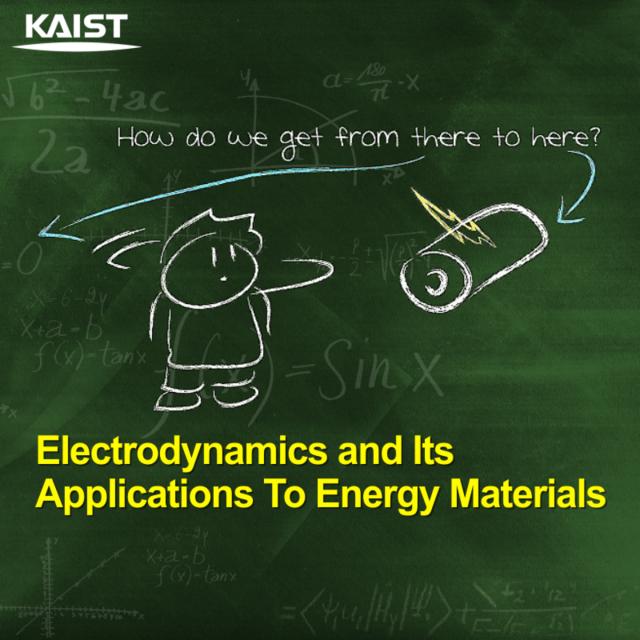
The depth and breadth of electromagnetism, the foundation for many fields including materials science, electrical engineering, and physical chemistry, requires a long, steep, and steady learning curve. This course aims to bridge the gap between the fundamental principles taught in electromagnetism and its practical application to specific fields such as materials, physics, and chemistry related to energy storage and harvesting.

Class Deals by MOOC List - Click here and see Coursera's Active Discounts, Deals, and Promo Codes.

The goal of Electrodynamics: An Introduction is to not only teach electromagnetism but also introduce some mathematical tools which can be used to solve problems in the subject. Within these lecture notes, we review vector calculus and explain how to use fields to visualize the topics we cover. This course is dynamic, as the lectures continuously build on previous notes and a variety of explanations are presented for each solution. Since this is a lower level course, we will focus on the simple concept of electrostatics. This has applications in exploring intermolecular forces, and qualities of capacitors. Through this, we relate electromagnetism to more conventionally studied topics and its application to specific research topics related to energy storage and harvesting.
Course 1 of 4 in the Electrodynamics Specialization.

Syllabus

WEEK 1
Introduction and Basics of Electrostatics
In this module, electrodynamics is introduced by examining the different forces and explaining which are related to electric forces. Furthermore, fields are defined and we differentiate between scalar and vector fields. We cover laws that constitute electrodynamics, specifically Maxwell's equations and the Lorentz force. After explaining how these topics can be illustrated, we also cover how relativity relates to the subject material.

WEEK 2
Introduction to differential calculus of vector fields
This module mainly covers the mathematics behind differential forms of equations. We introduce the ∇ operator and show how it can be used in mathematics. Then, the ∇ operator is proved to be a vector. The Maxwell equations are rewritten in derivative form, and the concepts of divergence and curl are introduced. Finally, we examine the Laplace operator, and other forms of the ∇ operator applied twice.

WEEK 3
Introduction to Vector Integral Calculus
This module explains line integrals and presents some equations where they are important. We explain what the flux and circulation of a field are conceptually and how they can be obtain using the divergence and curl through Gauss' and Stokes' theorems respectively. Finally, we explain the qualities of divergence and curl free fields.

WEEK 4
Introduction to Electrostatic Solutions
This module covers how to simplify Maxwell's equations in the scenario of electrostatics. Then, we discuss how the electric potential can be used and why using a relative value is useful for certain calculations. The flux out of different geometries is presented, as well as how to display field lines and equipotential surfaces.

WEEK 5
The Application of Gauss' Law
This module focusses primarily on electric fields. First, we talk about the mathematical requirements for equilibrium and the implications of finding equilibrium for point charges. Then we move on to describe the electric field coming from different geometries. Finally, we compare the electric fields inside and outside of a conductor and how they create the phenomenon of electric shielding.

Go to Class
MOOC List is learner-supported. When you buy through links on our site, we may earn an affiliate commission.

Related Courses

Vers l'infiniment petit (Coursera) Coursera
École Polytechnique

Vers l'infiniment petit (Coursera)

Partez à la découverte de l'infiniment petit, en compagnie de physiciens et de physiciennes qui vont vous faire découvrir les secrets de la matière quand on l'étudie aux distances les plus courtes, aux énergies les plus élevées. Vous vous initierez aux progrès les plus récents de la recherche en physique nucléaire et de la physique des particules, et vous découvrirez les principes des accélérateurs et des détecteurs avec lesquels on a pu étudier la matière à ces échelles, pour arriver jusqu'à la découverte du boson de Higgs en 2012 auprès du collisionneur de particules du CERN, le LHC.

Jun 15th 2026
4 Weeks
Kinematics: Describing the Motions of Spacecraft (Coursera) Coursera
University of Colorado Boulder

Kinematics: Describing the Motions of Spacecraft (Coursera)

The movement of bodies in space (like spacecraft, satellites, and space stations) must be predicted and controlled with precision in order to ensure safety and efficacy. Kinematics is a field that develops descriptions and predictions of the motion of these bodies in 3D space. This course in Kinematics covers four major topic areas: an introduction to particle kinematics, a deep dive into rigid body kinematics in two parts (starting with classic descriptions of motion using the directional cosine matrix and Euler angles, and concluding with a review of modern descriptors like quaternions and Classical and Modified Rodrigues parameters).

Jun 15th 2026
4 Weeks
Flight Mechanics - Anemobarometry (Coursera) Coursera
ISAE-SUPAERO

Flight Mechanics - Anemobarometry (Coursera)

This course focuses on the physics of the atmosphere and its consequences on speed and altitude measurements. At the end of this course, you will understand precisely the meaning of the speed and altitude indication available to the pilot of an airplane. You will understand the difference between standard and actual atmosphere and be able to perform basic altitude and speed correction computations.

Jun 15th 2026
3 Weeks
Modern Topics in Condensed Matter Physics (Coursera) Coursera
University of Colorado Boulder

Modern Topics in Condensed Matter Physics (Coursera)

This course will begin by discussing superconductivity - a central example of a macroscopic phenomenon. It will then proceed to discuss various modern topics in quantum condensed matter physics, including fractionalization, anyon statistics, topology, and non-equilibrium phases. The course aims to provide learners with an appreciation for some modern topics in condensed matter physics.

Jun 15th 2026
4 Weeks
Introduction to Chemistry: Reactions and Ratios (Coursera) Coursera
Duke University

Introduction to Chemistry: Reactions and Ratios (Coursera)

This is an introductory course for students with limited background in chemistry; basic concepts involved in chemical reactions, stoichiometry, the periodic table, periodic trends, nomenclature, and chemical problem solving will be emphasized with the goal of preparing students for further study in chemistry as needed for many science, health, and policy professions.

Jun 15th 2026
5-12 Weeks
D'un infini à l'autre (Coursera) Coursera
École Polytechnique

D'un infini à l'autre (Coursera)

Partez à la découverte de l'infiniment petit et de l'infiniment grand, en compagnie de physiciens et de physiciennes qui vont vous faire découvrir les liens entre la structure de la matière aux distances les plus petites et l'organisation de l'Univers aux distances les plus grandes ce jour, et entre les outils scientifiques utilisés pour les étudier. Vous découvrirez que de nombreux messagers venus de notre Univers (le photon, les neutrinos, ou encore les rayons cosmiques) sont aussi des objets d'intérêt pour les physiciens qui étudient la matière aux échelles les plus petites.

Jun 15th 2026
4 Weeks
From the Big Bang to Dark Energy (Coursera) Coursera
The University of Tokyo

From the Big Bang to Dark Energy (Coursera)

We have learned a lot recently about how the Universe evolved in 13.7 billion years since the Big Bang. More than 80% of matter in the Universe is mysterious Dark Matter, which made stars and galaxies to form. The newly discovered Higgs-boson became frozen into the Universe a trillionth of a second after the Big Bang and brought order to the Universe.

Jun 15th 2026
4 Weeks
Mécanique du point matériel (Coursera) Coursera
École Polytechnique Fédérale de Lausanne

Mécanique du point matériel (Coursera)

Pour illustrer les concepts introduits dans la première partie, on traite ici des problèmes pour lesquels le système mécanique peut être considéré comme un point matériel. Cette partie couvre notamment les problèmes à traiter en coordonnées cylindriques ou sphériques, le problème des orbites des planètes et les référentiels accélérés.

Jun 15th 2026
5-12 Weeks
电磁学上——恒定电场 (Coursera) Coursera
Peking University

电磁学上——恒定电场 (Coursera)

电磁学是普通物理系列中最重要的基础课之一,是高等学校每一个理工科学生必修课程,本课程包括静电场、恒磁场、电磁感应、电磁介质、电路、麦克斯韦电磁场理论、电磁波等内容,首次系统地向学生介绍“场”的概念和处理“场”的方法,对学生今后学习和工作有深远的影响。本课程作为中国大学先修课(AP课程)向有志于学习物理及相关专业的学有余力的优秀中学生开放,培养学科兴趣,提高科学素养,打下扎实的物理基础。

Jun 15th 2026
5-12 Weeks
Politics and Economics of International Energy (Coursera) Coursera
Sciences Po

Politics and Economics of International Energy (Coursera)

Energy issues have always been important in international relations, but in recent years may have become even more important than in the past due to the widespread awareness of existing limits to energy sources and negative climate impacts. The course discusses global trends in energy consumption and production, various available scenarios for potential developments in the coming decades, the availability of oil reserves and the evolution of the oil industry.

Jun 15th 2026
5-12 Weeks