Foundations of International Psychiatry (Coursera)

Foundations of International Psychiatry (Coursera)

What are some of the skills required when interviewing patients? What information is required when taking a patient history or completing a mental state examination? These are just some of the questions you'll seek answers to as you work through the course material.

Class Deals by MOOC List - Click here and see Coursera's Active Discounts, Deals, and Promo Codes.

Mental health is an important public issue across the world, and the role of the psychiatrist is crucial in helping to address these.
This course aims to give you a more nuanced understanding of the role of a psychiatrist, developing clinical skills and therapeutic relationships. Understanding the impact of mental illness in society and ethics in medicine are some of the key themes central to this course.
This course is designed to provide essential background knowledge and practical skills that apply to any mental health clinical setting.

Syllabus

WEEK 1
Course introduction & communication
Welcome to The University of Melbourne Massive Open Online Course in International Psychiatry. This course has been designed to provide essential background knowledge and practical skills for health professionals working with mentally unwell patients. In this first week of the course, you will learn about the importance of good communication skills.
Working effectively and collaboratively with patients is the goal of every mental health professional. This can often be challenging for practitioners, especially when patients are very unwell or reluctant to seek help. Good communication skills are essential to engage patients and families, and to build therapeutic relationships with our clients. In this module we will look at skills and concepts that come in useful when interviewing patients.

WEEK 2
Clinical skills
Welcome to the Clinical Skills module. The focus of this week's learning will on skills and concepts that come in useful when documenting a psychiatric patient history.

WEEK 3
Mental state examination
The Mental State Examination (MSE) is a core skill in psychiatry, and an integral part of the patient interview. This week we will look at each component of the MSE, and how to classify, interpret, and document the patient’s presentation

WEEK 4
The Biopsychosocial Model
Now that you are familiar with the Mental State Examination, you will be required to write and submit your second peer reviewed assignment for this course - documenting a mental state examination.
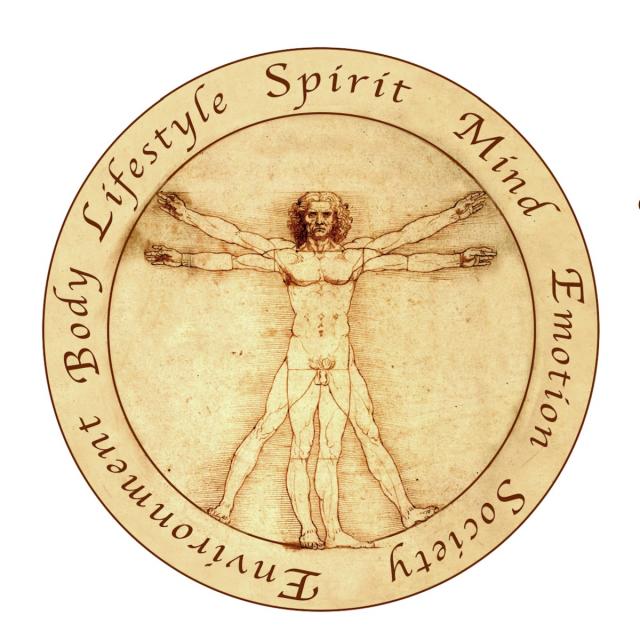
Later this week, we'll take a closer look at 'the biopsychosocial model' - a framework for integrating different aspects of the patient’s life into a wholistic understanding of their mental illness. In this module, you will learn about the model, and apply it to a clinical scenario.

WEEK 5
Psychiatry in Society
Health professionals occupy an important role in society, and there are expectations about how they conduct themselves in this role. Sufferers of mental illness can be particularly vulnerable, and it’s important that the law and professional ethics are followed to protect them. Furthermore, societal and cultural factors have a significant influence on the manifestation and management of mental illnesses. In this module we will explore these important topics.

Go to Class
MOOC List is learner-supported. When you buy through links on our site, we may earn an affiliate commission.

Related Courses

Disease Screening in Public Health (Coursera) Coursera
University of Geneva

Disease Screening in Public Health (Coursera)

Current and future public health is characterized by the increase of chronic and degenerative diseases, corresponding to the worldwide ageing of the population. The increasing prevalence of these conditions together with the long incubation period of the chronic diseases and the restless technological innovations, offer new opportunities to develop strategies for early diagnosis.

Jun 22nd 2026
5-12 Weeks
Public Involvement in Research (Coursera) Coursera
Imperial College London

Public Involvement in Research (Coursera)

This course focuses on participatory approaches in research, known as 'public involvement' in the UK. You'll specifically, consider why citizens and patients would be involved in research and explore participatory approaches across and within the research cycle in more detail, diving into questions such as: What kinds of participation can be undertaken at each of the 7 stages of the cycle? How can you utilise participation in research? What examples of using participatory approaches exist in research?

Jun 24th 2026
4 Weeks
Interprofessional Healthcare Informatics (Coursera) Coursera
University of Minnesota

Interprofessional Healthcare Informatics (Coursera)

Interprofessional Healthcare Informatics is a graduate-level, hands-on interactive exploration of real informatics tools and techniques offered by the University of Minnesota and the University of Minnesota's National Center for Interprofessional Practice and Education. We will be incorporating technology-enabled educational innovations to bring the subject matter to life. Over the 10 modules, we will create a vital online learning community and a working healthcare informatics network.

Jun 22nd 2026
5-12 Weeks
Big Data, Genes, and Medicine (Coursera) Coursera
The State University of New York

Big Data, Genes, and Medicine (Coursera)

This course distills for you expert knowledge and skills mastered by professionals in Health Big Data Science and Bioinformatics. You will learn exciting facts about the human body biology and chemistry, genetics, and medicine that will be intertwined with the science of Big Data and skills to harness the avalanche of data openly available at your fingertips and which we are just starting to make sense of.

Jun 22nd 2026
5-12 Weeks
Chemicals and Health (Coursera) Coursera
Johns Hopkins University

Chemicals and Health (Coursera)

This course covers chemicals in our environment and in our bodies and how they impact our health. It addresses policies and practices related to chemicals, particularly related to how they get into our bodies (exposures), what they do when they get there (toxicology), how we measure them (biomonitoring) and their impact on our health. Most examples are drawn from the US.

Jun 22nd 2026
5-12 Weeks
Dopage : Sports, Organisations et Sciences (Coursera) Coursera
University of Lausanne

Dopage : Sports, Organisations et Sciences (Coursera)

L'objectif du cours est de permettre une compréhension distanciée du dopage. C’est pour atteindre cet objectif que le cours s’appuie sur une approche pluridisciplinaire qui constitue une opportunité d'observer comment diverses disciplines abordent un même objet, selon différents angles et de manière complémentaire. Il s'agit également de donner des repères permettant d'appréhender le dopage dans sa complexité.

Jun 22nd 2026
4 Weeks
Health for All Through Primary Health Care (Coursera) Coursera
Johns Hopkins University

Health for All Through Primary Health Care (Coursera)

This course explores why primary health care is central for achieving Health for All. It provides examples of how primary health care has been instrumental in approaching this goal in selected populations and how the principles of primary health care can guide future policies and actions. Two of the most inspiring, least understood, and most often derided terms in global health discourse are “Health for All” and “Primary Health Care.”

Jun 28th 2026
5-12 Weeks
Principles of fMRI 1 (Coursera) Coursera
Johns Hopkins University

Principles of fMRI 1 (Coursera)

Functional Magnetic Resonance Imaging (fMRI) is the most widely used technique for investigating the living, functioning human brain as people perform tasks and experience mental states. It is a convergence point for multidisciplinary work from many disciplines. Psychologists, statisticians, physicists, computer scientists, neuroscientists, medical researchers, behavioral scientists, engineers, public health researchers, biologists, and others are coming together to advance our understanding of the human mind and brain. This course covers the design, acquisition, and analysis of Functional Magnetic Resonance Imaging (fMRI) data, including psychological inference, MR Physics, K Space, experimental design, pre-processing of fMRI data, as well as Generalized Linear Models (GLM’s).

Jun 22nd 2026
4 Weeks
A Life of Happiness and Fulfillment (Coursera) Coursera
Indian School of Business - ISB

A Life of Happiness and Fulfillment (Coursera)

What are the determinants of a happy and fulfilling life? This is surely one of life’s biggest questions, and a question that has interested many of our ancestors. Buddha famously gave up his kingdom in search of happiness. Several Greek philosophers (from Aristotle to Epicurus and Plato to Socrates) had their own views on what it takes to be happy. And of course, we all have our own theories about happiness too.

Jun 22nd 2026
5-12 Weeks