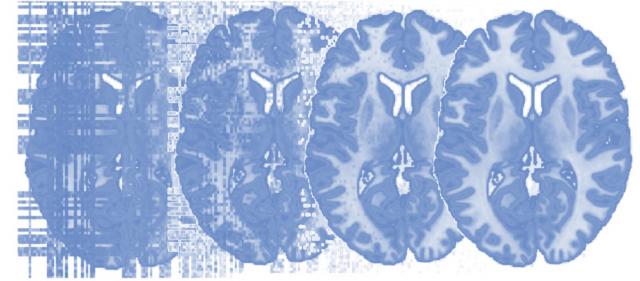
Functional Magnetic Resonance Imaging (fMRI) is the most widely used technique for investigating the living, functioning human brain as people perform tasks and experience mental states. It is a convergence point for multidisciplinary work from many disciplines. Psychologists, statisticians, physicists, computer scientists, neuroscientists, medical researchers, behavioral scientists, engineers, public health researchers, biologists, and others are coming together to advance our understanding of the human mind and brain. This course covers the design, acquisition, and analysis of Functional Magnetic Resonance Imaging (fMRI) data, including psychological inference, MR Physics, K Space, experimental design, pre-processing of fMRI data, as well as Generalized Linear Models (GLM’s).
Class Deals by MOOC List - Click here and see Coursera's Active Discounts, Deals, and Promo Codes.
Course 2 of 4 in the Neuroscience and Neuroimaging Specialization.
Syllabus
WEEK 1: This week we will introduce fMRI, and talk about data acquisition and reconstruction.
WEEK 2: This week we will discuss the fMRI signal, experimental design and pre-processing.
WEEK 3: This week we will discuss the General Linear Model (GLM).
WEEK 4: The description goes here