Exploring Stone Age Archaeology: The Mysteries of Star Carr (FutureLearn)

Offered by University of York,
Exploring Stone Age Archaeology: The Mysteries of Star Carr (FutureLearn)

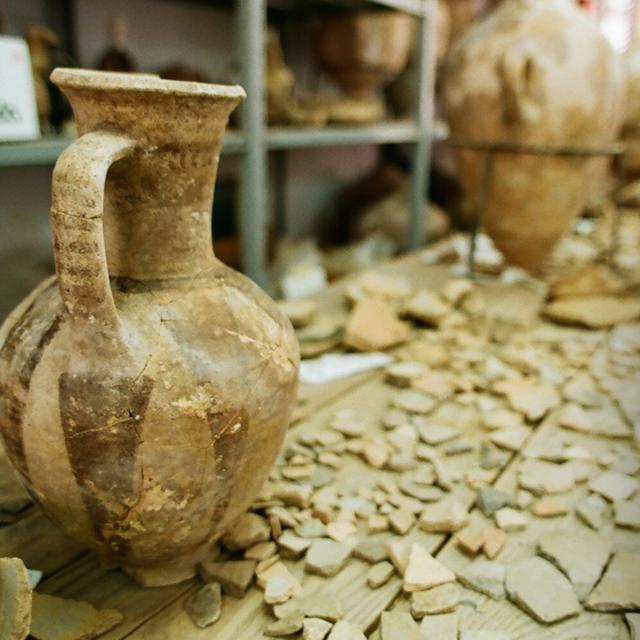
Discover Star Carr, one of the world's most important archaeological sites, and learn what life was like over 10,000 years ago. Learn about the incredible discoveries at Star Carr. Star Carr is one of Britain’s most important archaeological sites. Because of extraordinary conditions of survival, we have uncovered the oldest known house in Britain, the earliest evidence of carpentry in Europe and the oldest complete bow in the world. These and other discoveries help us interpret what life might have been like over 10,000 years ago.

Class Deals by MOOC List - Click here and see FutureLearn's Active Discounts, Deals, and Promo Codes.

On this course you will learn about the excavations of Star Carr, exploring what this site can tell us about where we came from, the origin of everyday things, and how much we have changed.

What topics will you cover?

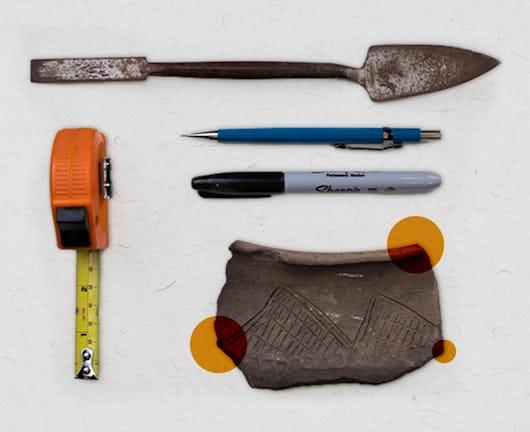
  • The excavations at Star Carr: highlighting how the site was discovered, what has been found and how excavations are undertaken, in order to convey the excitement of discovery.
  • The use of stone: how hunter-gatherers used stone to create tools which were required for every aspect of their daily lives (their Swiss Army knife!)
  • The use of plants: plants were used for everything from making fires to building houses.
  • The use of animals: we explain what animals were in the landscape at that time and how people used them for food, skins for clothing and their bones for artefacts.

What will you achieve?
By the end of the course, you'll be able to...

  • Identify and understand the methods used on an archaeological excavation
  • Evaluate how digital technology, scientific applications and experimental archaeology can be used to investigate the past
  • Apply a range of evidence in order to debate how different artefacts might have been used
  • Describe the site of Star Carr and the main discoveries made there
Go to Class
MOOC List is learner-supported. When you buy through links on our site, we may earn an affiliate commission.

Related Courses

A Global History of Architecture (edX) EdX
MIT,MITx

A Global History of Architecture (edX)

Learn about humanity’s rich architectural history on this journey around the globe – from 100,000 BCE to ca. 1,600 CE. How do we understand architecture? One way of answering this question is by looking through the lens of history, beginning with First Societies and extending to the 16th century. This course in architectural history is not intended as a linear narrative, but rather aims to provide a more global view, by focusing on different architectural "moments."

Oct 18th 2023
5-12 Weeks
Roman Art and Archaeology (Coursera) Coursera
University of Arizona

Roman Art and Archaeology (Coursera)

The objective of this course is to provide an overview of the culture of ancient Rome beginning about 1000 BCE and ending with the so-called "Fall of Rome". We will look at some of the key people who played a role in Rome, from the time of the kings through the Roman Republic and the Roman Empire. We will also focus on the city of Rome itself, as well as Rome's expansion through Italy, the Mediterranean, and beyond.

Jun 1st 2026
5-12 Weeks
Archaeology of Portus: Exploring the Lost Harbour of Ancient Rome (FutureLearn) FutureLearn
University of Southampton

Archaeology of Portus: Exploring the Lost Harbour of Ancient Rome (FutureLearn)

Learn how ancient artefacts, written evidence, excavation and digital technologies are transforming understanding of this harbour. The Roman harbour city of Portus lay at the heart of an empire that extended from Scotland to Iraq. Established by Claudius and enlarged by the emperor Trajan with spoils of the Dacian wars, the port was the conduit for everything the city of Rome required from its Mediterranean provinces: the food and, particularly grain, that fed the largest urban population of the ancient world, as well as luxuries of all kinds, building materials, people and wild animals for the arena.

No sessions available
5-12 Weeks
Hadrian's Wall: Life on the Roman Frontier (FutureLearn) FutureLearn
Newcastle University

Hadrian's Wall: Life on the Roman Frontier (FutureLearn)

Explore the archaeology of the most heavily fortified frontier in the Roman Empire, its people and their lives. Hadrian’s Wall stretches over 73 miles (117 km), from coast to coast in what is now Northern England. The Wall, complemented by a sophisticated system of outposts and coastal watch stations, offers a remarkable glimpse of ancient society. In addition to housing one of the largest concentrations of Roman soldiers anywhere in the Empire’s provinces, Hadrian’s frontier system was home to an incredibly cosmopolitan array of civilians. This six week course offers a comprehensive introduction to Hadrian’s Wall and its people and raises fascinating issues concerning colonisation, cultural transformation, immigration, integration and imperialism.

No sessions available
5-12 Weeks
Discover Palestine (An-Najah National University) Other Providers
An-Najah National University

Discover Palestine (An-Najah National University)

Discover Palestine is the first English language certified Massive Open Online Course (MOOC) about Palestinian history, archaeology, culture, and heritage.
 Discover Palestine will explore the ancient land of Palestine. We will learn about the geographical and ecological makeup of the land, the different types of agriculture and water installations that have been adopted by various groups over the centuries, as well as trade and other relations between groups. We will also learn about the art, architecture and technology of the different periods covered by this course.

No sessions available
5-12 Weeks
Pyramids of Giza: Ancient Egyptian Art and Archaeology (edX) EdX
HarvardX,Harvard University

Pyramids of Giza: Ancient Egyptian Art and Archaeology (edX)

Explore the archaeology, history, art, and hieroglyphs surrounding the famous Egyptian Pyramids at Giza. Learn about Old Kingdom pharaohs and elites, tombs, temples, the Sphinx, and how new technology is unlocking their secrets. Where is Giza? How were the Pyramids built? How did the cemeteries and hundreds of decorated tombs around them develop? What was Giza’s contribution to this first great age of ancient Egyptian civilization, the Old Kingdom?

Self Paced
Self-Paced
Ancient topography, relief and technical analysis of ancient monuments (UNINETTUNO) UNINETTUNO OpenupEd
International Telematic University UNINETTUNO

Ancient topography, relief and technical analysis of ancient monuments (UNINETTUNO)

The course aims to define the goals and the systematic methodological research related to a discipline of historical and archaeological area, such as the Ancient Topography, Survey and technical analysis of ancient monuments, in order to reconstruct the shape and meaning of the ancient anthropic contexts, through the traces that remain in modern urban landscapes.

Self Paced Course - Start anytime
Self-Paced
Humphry Davy: Laughing Gas, Literature, and the Lamp (FutureLearn) FutureLearn
Lancaster University,Royal Institution - RI

Humphry Davy: Laughing Gas, Literature, and the Lamp (FutureLearn)

Discover Humphry Davy and his contribution to science and the arts. Before culture was divided into the sciences and the arts there was a chemist who was also a poet. Sir Humphry Davy (1778-1829) is one of the best known men of science of the nineteenth century: he was the first person to inhale nitrous oxide; he isolated nine chemical elements; and he invented the miners’ safety lamp known as the Davy lamp. This course will consider Davy’s life and career using manuscript sources held at the Royal Institution of Great Britain.

Oct 9th 2023
4 Weeks
Dead Interesting: Uncovering Roman Britain in Old Museum Collections (FutureLearn) FutureLearn
University of Reading,Colchester Musuems

Dead Interesting: Uncovering Roman Britain in Old Museum Collections (FutureLearn)

Explore the archaeology of early Roman Britain an d learn techniques to build a profile of an individual from the first century AD. Uncover the history of early Roman Britain. What did a Roman funeral look, sound, and smell like? And how can you tell just from a person’s remains? Join a research team uncovering exciting new information about cremation burials excavated over 100 years ago in Colchester, the site of Camulodunum, one of Britain’s oldest towns and its first Roman capital city.

Dec 6th 2021
2 Weeks
Corpus Linguistics: Method, Analysis, Interpretation (FutureLearn) FutureLearn
Lancaster University

Corpus Linguistics: Method, Analysis, Interpretation (FutureLearn)

Get a practical introduction to the methodology of corpus linguistics for researchers in the social sciences and humanities. Learn how to build and query corpora in this practical course On this course, you’ll get a practical introduction to corpus linguistics, an extremely versatile methodology of language analysis using computers.

Sep 16th 2024
5-12 Weeks