The Fall and Rise of Jerusalem (Coursera)

Offered by Tel Aviv University,
The Fall and Rise of Jerusalem (Coursera)

The destruction of the First Temple in Jerusalem and the Babylonian Exile were a great catastrophe in the history of the Jewish Nation. What really happened during that dark, fateful age, and how did new opportunities arise from the ashes?

Class Deals by MOOC List - Click here and see Coursera's Active Discounts, Deals, and Promo Codes.

Syllabus

WEEK 1
Introduction to geopolitics and geography of the Ancient Near East
Welcome to the first module of "The Fall and Rise of Jerusalem"! In this module you will be introduced to the geopolitical reality of the time of the Assyrian empire, followed by the Neo-Babylonian. We hope you'll find the videos informative and interesting. We encourage you to use the discussion forums in order to raise any questions or thoughts you might have after watching the videos.

WEEK 2
Judah Under Babylonian Rule
The second module deals with Judah under Babylonian rule. We will learn about the Babylonian Conquest of Hattu-land and Judah, the events that lead to Jehoiakim's revolt and its outcome, and the changes in the Babylonian policy towards Judah following this revolt. You are welcome to raise questions for discussion regarding these topics.

WEEK 3
The Days of the Destruction of Jerusalem
This module deals with Zedekiah's rebellion and the destruction of Judah.You are invited to watch the following units and learn about the Egyptian intervention, the reasons for Zedekiah's revolt, and the history of the destruction of Judah.

WEEK 4
Gedaliah son of Ahikam
In this module we will learn about the transition of the capital city from Jerusalem to Mizpah and the governorship of Gedaliah son of Ahikam in Mizpah following the destruction. We encourage you to use the discussions to ask about anything that isn't clear or raise your own ideas regarding the material you learned.

WEEK 5
Archaeology of the sixth century BCE
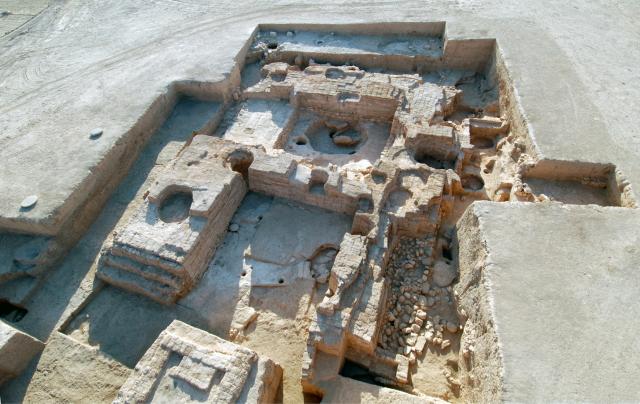
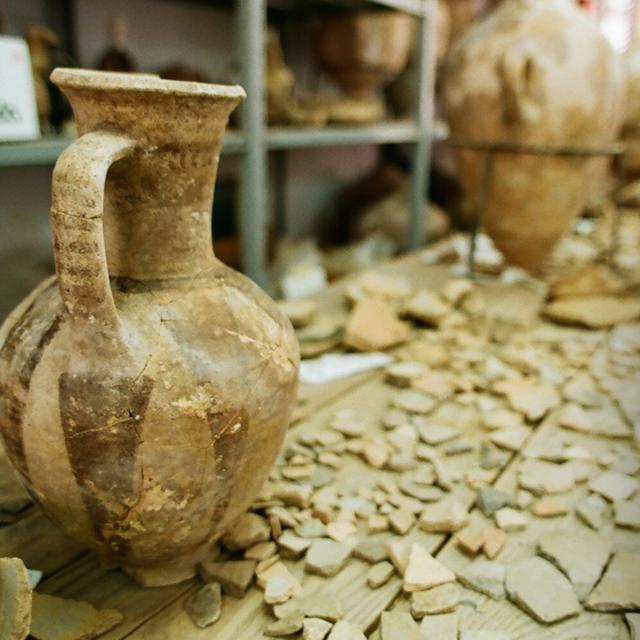
After learning of the days of the destruction and the historical role of Gedaliah son of Ahikam, you are invited to watch the lessons of the fifth module, which deals with the archaeology of the Babylonian Period. We will explore the magnificent finds from Ramat Rahel, the stamp impressions and what they can teach us about continuity or discontinuity in this period and the fate of Jerusalem and Judah following the destruction. I also recommend watching the optional videos which deal with additional interesting research topics.

WEEK 6
The restoration of Jerusalem in the early Persian Period
The last module of our course will deal with different aspects of the Persian period: the cult of Jerusalem, changes in Jerusalem's status, the Judahite diaspora, the fall of Babylon and much more. We hope you will enjoy this final module which closes the story of Jerusalem's fall and rise.

Go to Class
MOOC List is learner-supported. When you buy through links on our site, we may earn an affiliate commission.

Related Courses

Introduction to Typography (Coursera) Coursera
California Institute of the Arts

Introduction to Typography (Coursera)

Typography is the art of manipulating the visual form of language to enrich and control its meaning. It’s an essential area of skill and knowledge for graphic designers. Typography predates modern graphic design by around 500 years; it is rich in rules, conventions, and esoteric terminology—but it remains an exciting space for invention and expression.

Jun 1st 2026
4 Weeks
Introduction to Who Wrote Shakespeare (Coursera) Coursera
University of London,Goldsmiths, University of London

Introduction to Who Wrote Shakespeare (Coursera)

This free course from the University of London explores critical thinking, and the interpretation of texts, through the Shakespeare authorship question. Using doubt about Shakespeare’s authorship as our playground, we will explore the key concept of authorship attribution, while developing skills in literary analysis, interpretation, and argument. Through forensic exploration of key texts, you will learn why Shakespeare’s authorship is questioned, and what evidence is cited on both sides of the debate.

Jun 1st 2026
4 Weeks
Magic in the Middle Ages (Coursera) Coursera
University of Barcelona

Magic in the Middle Ages (Coursera)

Magical thought has always attracted human imagination. In this course we will introduce you to the Middle Ages through a wide conception of magic. Students will have an approach to medieval culture, beliefs and practices from the perspective of History and History of Science. Popular magic, as well as learned magic (alchemy, geomancy and necromancy) will be addressed. Moreover, we will also deal with how eastern practices and texts influenced western culture. In July 2016, the course will contain a brand-new module devoted to astrology. Magic in the Middle Ages offers a captivating overview of medieval society and promotes reflection about certain stereotypes associated with this period.

May 25th 2026
5-12 Weeks
The Bible's Prehistory, Purpose, and Political Future (Coursera) Coursera
Emory University

The Bible's Prehistory, Purpose, and Political Future (Coursera)

With its walls razed to ground by Babylon’s armies, Jerusalem joined a long line of ancient vanquished cities—from Ur and Nineveh and Persepolis to Babylon itself. While some recovered from the destruction, others did not. But none responded to political catastrophe by fashioning the kind of elaborate and enduring monument to their own downfall that we find in the Bible. Most conquered populations viewed their subjugation as a source of shame. They consigned it to oblivion, opting instead to extol the golden ages of the past. The biblical authors in contrast reacted to loss by composing extensive writings that acknowledge collective failure, reflect deeply upon its causes, and discover thereby a ground for collective hope.

Jun 1st 2026
5-12 Weeks
The Holocaust: The Destruction of European Jewry (Coursera) Coursera
University of California, Santa Cruz

The Holocaust: The Destruction of European Jewry (Coursera)

The Holocaust: The Destruction of European Jewry is an adaptation of an on-campus course that has been co-taught by Murray Baumgarten, Distinguished Professor of English and Comparative Literature (Literature Department), and Peter Kenez, Professor Emeritus (History Department), for over 20 years at UC Santa Cruz. In this course, you will explore the Holocaust from the overlapping perspectives of literature and history—through memoirs, historical documents, poetry, documentary footage, filmic representations, and novels.

Jun 1st 2026
5-12 Weeks
The Dynamic Earth: A Course for Educators (Coursera) Coursera
American Museum of Natural History

The Dynamic Earth: A Course for Educators (Coursera)

The AMNH course The Dynamic Earth: A Course for Educators provides students with an overview of the origin and evolution of the Earth. Informed by the recently released Next Generation Science Standards, this course examines geological time scales, radiometric dating, and how scientists “read the rocks.” We will explore dramatic changes in the Earth over the last 4 billion years, including how the evolution of life on Earth has affected its atmosphere. In addition to looking at geology on a global scale, participants will take to their own backyards to explore and share their local geologic history.

Jun 1st 2026
4 Weeks
Data Science Ethics (Coursera) Coursera
University of Michigan

Data Science Ethics (Coursera)

What are the ethical considerations regarding the privacy and control of consumer information and big data, especially in the aftermath of recent large-scale data breaches? This course provides a framework to analyze these concerns as you examine the ethical and privacy implications of collecting and managing big data. Explore the broader impact of the data science field on modern society and the principles of fairness, accountability and transparency as you gain a deeper understanding of the importance of a shared set of ethical values.

Jun 1st 2026
4 Weeks
The History of Modern Israel – Part I: From an Idea to a State (Coursera) Coursera
Tel Aviv University

The History of Modern Israel – Part I: From an Idea to a State (Coursera)

How did the State of Israel come to be? How is it that an idea, introduced in 19th century Europe, became a reality? And how does that reality prevail in the harsh complexities of the Middle East? Presented by Professor Eyal Naveh, with additional units from Professor Asher Sussers' "The Emergence of the Modern Middle East" course, This course will take you on a journey through the history of Modern Israel. In this 1st part of the course we will explore: How did the 19th century idea of a Jewish state become a reality? So the next time you hear about Israel in the news, you will be informed enough about the history of this area to comprehend the many sides and narratives that interact to shape the complex reality of Israel today.

Jun 1st 2026
3 Weeks
Recovering the Humankind's Past and Saving the Universal Heritage (Coursera) Coursera
Sapienza University of Rome

Recovering the Humankind's Past and Saving the Universal Heritage (Coursera)

Archaeology has as its objective the recovery and revival of humankind past, and as its aim the rescue and preservation of cultural heritage. Archaeology is, among human sciences, the discipline with the strongest importance for the rediscovery, but also for the preservation and protection of cultural heritage, as Humankind’s universal patrimony. You will be introduced to the way we ourselves reflect on and are engaged with the study of human past: from the practical and material recovery of ancient traces in the field to the study and interpretation. On the other hand, the discovery of human past implies the correct conservation and presentation for both experts and general public: the study and protection of the past we share every day prevent from any possible destruction, misuse, abuse and thus cancellation of human memory.

Jun 1st 2026
5-12 Weeks