Introduction to Archaeology: Archaeology as Activism (Coursera)

Offered by Rice University,
Introduction to Archaeology: Archaeology as Activism (Coursera)

This course is the fourth and final course in a series on the discipline of Archaeology. It is intended for learners at all stages, including advanced high school, college students, or life-long learners. Basic information about Archaeology and its history are presented in the first introductory course.

Class Deals by MOOC List - Click here and see Coursera's Active Discounts, Deals, and Promo Codes.

The second course teaches common scientific methods used in archaeological research. The third course focuses on forms of interpretation to reconstruct various aspects of the past through archaeological approaches. This final course covers contemporary social issues that archaeologists engage with.
This course is part of the Introduction to Archaeology Specialization.

Syllabus

Introduction to Archaeology as Activism
Hey there! Are you curious about how archaeologists can use their research to make a positive impact on communities? If so, then our fourth course in the "Introduction to Archaeology" called "Archaeology as Activism" is perfect for you! In this course, we'll explore how archaeologists work alongside communities and other groups to improve the lives of people around the world. You'll learn about the tools and knowledge archaeologists use to conduct research that positively impacts modern communities. So, come join us and discover how archaeology can be a powerful force for change in the world today!

Archaeology as Antiracism
Hey there! Let's explore Activism as Archaeology, where every dig site tells a story that's not just ancient history but deeply intertwined with the present. In this module, we'll explore how archaeology isn't just about uncovering artifacts; it's about understanding the social, cultural, and political contexts that shape our past and present. We will also learn to be not just passive observers of the past but active agents of change! By using archaeology as a tool for justice, we're challenging the structures of racial injustice and building a practice rooted in anti-racism. Let's unearth the past, confront the present, and shape a better future together!

Dynamic Coastal Environments of The Past and Present
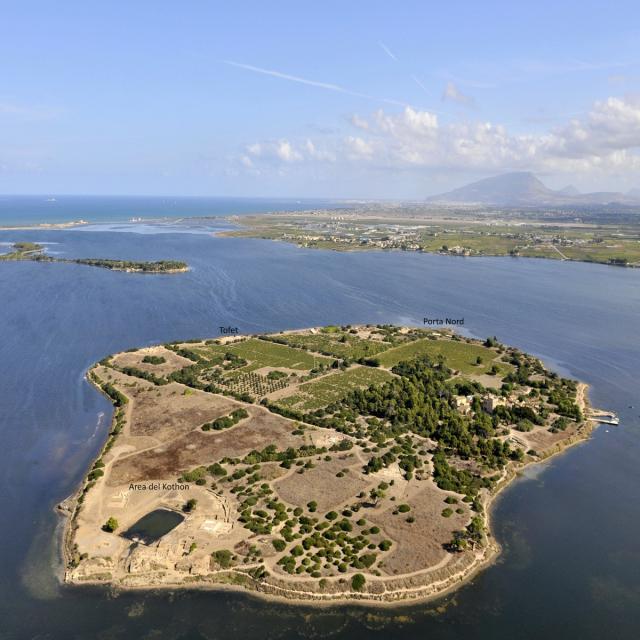
Hey there! Are you interested in learning how past environmental systems can help us better understand our world today? Our study topic will delve into the fascinating realm of applied environmental archaeology, where we explore how archaeology research can inform current concerns about landscapes and climate change. Join us to discover how information about dynamic environments can be relevant and valuable for present people and explore culturally meaningful landscapes through the lens of historical research. Let's dive in!

Archaeological Sites in The Present: Cultural Heritage
Hey there! Have you ever wondered about the cultural heritage of our world? These are the remnants of our ancestors' unique traditions, the tangible pieces of history that connect us to our shared past and must be safeguarded for generations to come. Archaeologists work with cultural heritage specialists, museum experts, public history professionals, and community groups to preserve our heritage for the future. Together, we can weave together the stories of the past, celebrate our diverse heritage, and ensure that these invaluable pieces of history remain intact for future explorers.

Questioning Categories in The Past
Get ready to unlock the secrets of time in archaeology! In this module, we'll dive deep into the fascinating world of chronology – the backbone of archaeological understanding. So, why is chronology so crucial? If we want to understand how and why human societies changed over time, we need to know when things happened! That's where archaeologists come in, using various techniques to construct chronologies that help us order artifacts, sites, and events in time. From relative dating techniques like stratigraphy to absolute methods such as radiocarbon dating, we'll dive into archaeologists' tools to piece together the timeline of human history. Join us as we uncover the inner workings of these methods, their data, and potential limitations.

Final Dig
Congratulations on completing the fourth and final course in the Introduction to Archaeology specialization! You have journeyed through an incredible specialization, delving deep into the fascinating world of archaeology from start to finish. Throughout this course, we have honed our archaeological skills and reflected on the significance of our work in today's world. By embracing an ethical framework and striving to make positive impacts with our research, we have embraced the true essence of archaeology as a force for good. Whether you followed the specialization from the beginning or just joined us for this final chapter, your dedication to exploring the depths of archaeology is commendable. Thank you for participating in this incredible past, present, and future exploration.

Go to Class
MOOC List is learner-supported. When you buy through links on our site, we may earn an affiliate commission.

Related Courses

Biblical Archaeology: The archaeology of ancient Israel and Judah (edX) EdX
IsraelX

Biblical Archaeology: The archaeology of ancient Israel and Judah (edX)

Join me as I share with you my passion for archaeological discovery and learn about the exciting methods of modern archaeology. Explore how archaeology illuminates biblical Israel and Judah, and the archaeological finds relate to the bible. Join me for an introductory course on biblical archaeology of ancient Israel and Judah during the Iron Age (ca. 1200-586 BCE).

Nov 1st 2022
5-12 Weeks
Change of Era: The Origins of Christian Culture through the Lens of Archaeology (FutureLearn) FutureLearn
University of Padova

Change of Era: The Origins of Christian Culture through the Lens of Archaeology (FutureLearn)

Learn about innovative approaches to the study of early Christianity and discover its role in a crucial period of history. Delve into early Christianity. On this four-week course, you’ll gain a better understanding of a crucial period in history – one characterised by deep political, economic, cultural, and environmental transformations in the context of the end of the Western Roman Empire.

Dec 5th 2022
4 Weeks
Forensic Archaeology and Anthropology (FutureLearn) FutureLearn
Durham University

Forensic Archaeology and Anthropology (FutureLearn)

Enter the fascinating world of forensics, and learn how the deceased are located, recovered and analysed using DNA and pathology. Learn the science behind the exhumation and identification of skeletal remains. The location, exhumation and identification of the dead requires highly specialised expertise. On this course, you’ll learn the latest scientific techniques for body location, recovery and analysis.

Oct 4th 2021
5-12 Weeks
Microeconomics: When Markets Fail (Coursera) Coursera
University of Pennsylvania

Microeconomics: When Markets Fail (Coursera)

Perfect markets achieve efficiency: maximizing total surplus generated. But real markets are imperfect. In this course we will explore a set of market imperfections to understand why they fail and to explore possible remedies including as antitrust policy, regulation, government intervention. Examples are taken from everyday life, from goods and services that we all purchase and use. We will apply the theory to current events and policy debates through weekly exercises. These will empower you to be an educated, critical thinker who can understand, analyze and evaluate market outcomes.

Jun 23rd 2026
5-12 Weeks
Discover Palestine (An-Najah National University) Other Providers
An-Najah National University

Discover Palestine (An-Najah National University)

Discover Palestine is the first English language certified Massive Open Online Course (MOOC) about Palestinian history, archaeology, culture, and heritage.
 Discover Palestine will explore the ancient land of Palestine. We will learn about the geographical and ecological makeup of the land, the different types of agriculture and water installations that have been adopted by various groups over the centuries, as well as trade and other relations between groups. We will also learn about the art, architecture and technology of the different periods covered by this course.

No sessions available
5-12 Weeks
Ancient topography, relief and technical analysis of ancient monuments (UNINETTUNO) UNINETTUNO OpenupEd
International Telematic University UNINETTUNO

Ancient topography, relief and technical analysis of ancient monuments (UNINETTUNO)

The course aims to define the goals and the systematic methodological research related to a discipline of historical and archaeological area, such as the Ancient Topography, Survey and technical analysis of ancient monuments, in order to reconstruct the shape and meaning of the ancient anthropic contexts, through the traces that remain in modern urban landscapes.

Self Paced Course - Start anytime
Self-Paced
Pyramids of Giza: Ancient Egyptian Art and Archaeology (edX) EdX
HarvardX,Harvard University

Pyramids of Giza: Ancient Egyptian Art and Archaeology (edX)

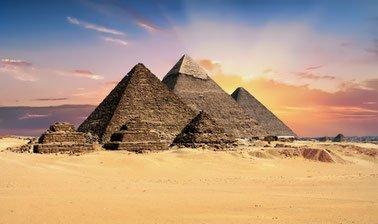
Explore the archaeology, history, art, and hieroglyphs surrounding the famous Egyptian Pyramids at Giza. Learn about Old Kingdom pharaohs and elites, tombs, temples, the Sphinx, and how new technology is unlocking their secrets. Where is Giza? How were the Pyramids built? How did the cemeteries and hundreds of decorated tombs around them develop? What was Giza’s contribution to this first great age of ancient Egyptian civilization, the Old Kingdom?

Self Paced
Self-Paced
Dead Interesting: Uncovering Roman Britain in Old Museum Collections (FutureLearn) FutureLearn
University of Reading,Colchester Musuems

Dead Interesting: Uncovering Roman Britain in Old Museum Collections (FutureLearn)

Explore the archaeology of early Roman Britain an d learn techniques to build a profile of an individual from the first century AD. Uncover the history of early Roman Britain. What did a Roman funeral look, sound, and smell like? And how can you tell just from a person’s remains? Join a research team uncovering exciting new information about cremation burials excavated over 100 years ago in Colchester, the site of Camulodunum, one of Britain’s oldest towns and its first Roman capital city.

Dec 6th 2021
2 Weeks
Recovering the Humankind's Past and Saving the Universal Heritage (Coursera) Coursera
Sapienza University of Rome

Recovering the Humankind's Past and Saving the Universal Heritage (Coursera)

Archaeology has as its objective the recovery and revival of humankind past, and as its aim the rescue and preservation of cultural heritage. Archaeology is, among human sciences, the discipline with the strongest importance for the rediscovery, but also for the preservation and protection of cultural heritage, as Humankind’s universal patrimony. You will be introduced to the way we ourselves reflect on and are engaged with the study of human past: from the practical and material recovery of ancient traces in the field to the study and interpretation. On the other hand, the discovery of human past implies the correct conservation and presentation for both experts and general public: the study and protection of the past we share every day prevent from any possible destruction, misuse, abuse and thus cancellation of human memory.

Jun 1st 2026
5-12 Weeks