Discover Palestine (An-Najah National University)

Discover Palestine (An-Najah National University)

Discover Palestine is the first English language certified Massive Open Online Course (MOOC) about Palestinian history, archaeology, culture, and heritage.
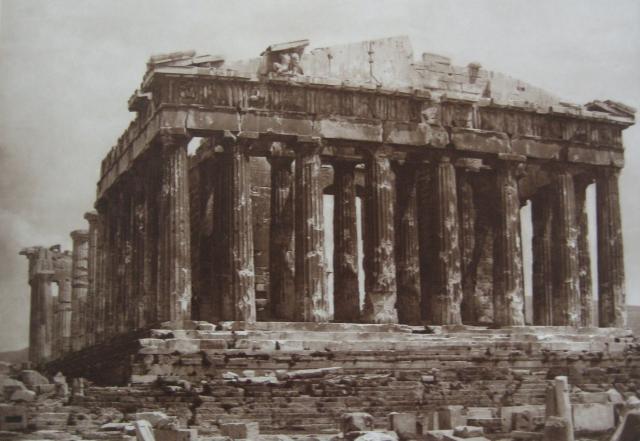
 Discover Palestine will explore the ancient land of Palestine. We will learn about the geographical and ecological makeup of the land, the different types of agriculture and water installations that have been adopted by various groups over the centuries, as well as trade and other relations between groups. We will also learn about the art, architecture and technology of the different periods covered by this course.

From a chronological perspective, the course will cover a period of time extending from the Late Bronze Age to the earliest Islamic periods. In order to add depth to the course, therefore, it will be necessary to focus on some periods more closely than others. Students will be encouraged to deepen their learning experience by exploring some of the more superficially covered periods. If the current state of historical and archaeological research insufficiently developed to permit us to resolve a problem with confidence, we will identify the problem and lay out the evidence as fairly we can. We will also choose several possible ways of referring to areas or the people in it, explaining our choices and methods, e.g., "Palestine," "Canaanites," etc.

The course will focus on conductivities and interrelationships, how each group of people learned from others and how each succeeding period emerged from, and built on, the culture and technology of preceding periods.

Registration is open until October, 15,2019.
Go to Class
MOOC List is learner-supported. When you buy through links on our site, we may earn an affiliate commission.

Related Courses

Applied Public History: Places, People, Stories (Coursera) Coursera
University of London

Applied Public History: Places, People, Stories (Coursera)

This course introduces learners to applied public history: understanding and interpreting the past today, and engaging diverse communities in the practice of making and sharing histories. The course draws on project case studies, expert insights and diverse perspectives to model exciting approaches to researching and sharing the history of places and people. Learners will develop a toolkit to apply in their own practice, by participating in discussion, quizzes, creative activities and mini masterclasses. What kinds of stories can we discover through research into the history of places and people?

Sep 7th 2026
5-12 Weeks
Understanding EU-Russia Relations: Foreign Policy Actors, Institutions and Policy-Making (UT) Other Providers
University of Tartu,Johan Skytte Institute of Political Studies

Understanding EU-Russia Relations: Foreign Policy Actors, Institutions and Policy-Making (UT)

The main aim of the course is to give students an introduction to and overview of the EU’s and Russia’s foreign policy actors, institutions and frameworks of both entities’ interactions. The course combines various formats of e-learning possibilities (video lectures, short audio podcasts, guest video interviews, skills workshops, etc.). Students will have the possiblity to complete weekly quizzes, participate in the course forum and also complete a short mini-project at the end of the course.

No sessions available
5-12 Weeks
Film, Images & Historical Interpretation in the 20th Century: The Camera Never Lies (Coursera) Coursera
University of London,Royal Holloway, University of London

Film, Images & Historical Interpretation in the 20th Century: The Camera Never Lies (Coursera)

This course is a short taster on the topic of the use of Images, Film, and their use in historical interpretation in the 20th century. It is primarily provided for those who have a general interest in history that draws on photojournalism as primary evidence, and films based on historical events.

Sep 7th 2026
5-12 Weeks
Remote food security monitoring (mVAM) Other Providers
Leiden University,mVAM

Remote food security monitoring (mVAM)

Collecting primary data on food security in can be challenging, time consuming and costly ‒ particularly in areas with limited humanitarian access. Remote data collection is a flexible and efficient way to collect food security information and it allows for frequent food security monitoring in unstable areas without putting the enumerators at risk.

Self Paced
Self-Paced
Words Spun Out of Images: Visual and Literary Culture in Nineteenth Century Japan (Coursera) Coursera
The University of Tokyo

Words Spun Out of Images: Visual and Literary Culture in Nineteenth Century Japan (Coursera)

In their ambition to capture “real life,” Japanese painters, poets, novelists and photographers of the nineteenth century collaborated in ways seldom explored by their European contemporaries. This course offers learners the chance to encounter and appreciate behavior, moral standards and some of the material conditions surrounding Japanese artists in the nineteenth century, in order to renew our assumptions about what artistic “realism” is and what it meant.

Sep 7th 2026
4 Weeks
Terrorism and Counterterrorism: Comparing Theory and Practice (Coursera) Coursera
Leiden University

Terrorism and Counterterrorism: Comparing Theory and Practice (Coursera)

Terrorism has arguably been one of the defining factors of our age. It frequently makes headlines, threatening or attacking governments, private business and ordinary citizens. And in many parts of the world, it has been one of the most important threats to peace, security and stability. But what does this exactly mean? What is the nature of this threat? Who or what is threatened, how, by whom and why? What can be done about it or how can we at least limit the impact of terrorism and make sure that terrorists do not make headlines and manage to scare us? These are just a handful of questions that will be addressed in this course that consists of three parts.

Sep 7th 2026
5-12 Weeks
Constructores de Paz (Coursera) Coursera
Universidad de los Andes

Constructores de Paz (Coursera)

El curso Constructores Paz surgió como resultado de la preocupación de algunos profesores de la Universidad de los Andes por hacer un aporte al proceso de construcción de paz en nuestro país y en el mundo, a partir de prácticas personales y cotidianas. En este curso tendrás la oportunidad de reflexionar permanentemente acerca de ti mismo, de tus actitudes y de tus comportamientos, y de cómo tu manera de abordar diferentes situaciones de la vida diaria te llevan a construir paz.

Sep 7th 2026
5-12 Weeks
Reimagining Blackness and Architecture (Coursera) Coursera
The Museum of Modern Art

Reimagining Blackness and Architecture (Coursera)

Architecture structures our daily lives. It shapes our homes, streets, neighborhoods, cities and more. But who gets to create and occupy these spaces? In the United States, a long history of anti-Black racism has created spatial inequalities that are built into the physical environment and erased the stories of Black architects and communities. Reimagining Blackness and Architecture explores the relationship between architecture and Blackness as an identity and a lived experience.

Sep 7th 2026
5-12 Weeks
Søren Kierkegaard - Subjectivity, Irony and the Crisis of Modernity (Coursera) Coursera
University of Copenhagen

Søren Kierkegaard - Subjectivity, Irony and the Crisis of Modernity (Coursera)

In this course created by former associate professor at the Søren Kierkegaard Research Centre, Jon Stewart, we will explore how Kierkegaard deals with the problems associated with relativism, the lack of meaning and the undermining of religious faith that are typical of modern life. His penetrating analyses are still highly relevant today and have been seen as insightful for the leading figures of Existentialism, Post-Structuralism and Post-Modernism.

Sep 14th 2026
5-12 Weeks
The Changing Landscape of Ancient Rome. Archaeology and History of the Palatine Hill (Coursera) Coursera
Sapienza University of Rome

The Changing Landscape of Ancient Rome. Archaeology and History of the Palatine Hill (Coursera)

Studying ancient - as well as medieval or modern - cities basically means telling local urban stories based on the reconstruction of changing landscapes through the centuries. Given the fragmentary nature of archaeological evidence, it is necessary to create new images that would give back the physical aspect of the urban landscape and that would bring it to life again. We are not just content with analyzing the many elements still visible of the ancient city.

Sep 14th 2026
5-12 Weeks
Sustainable high-end tourism (Coursera) Coursera
Universitat Autònoma de Barcelona

Sustainable high-end tourism (Coursera)

Welcome to the sustainable high-end tourism course. Why should you take this course? High-end tourism is a sector and industry that has grown in the last 50 years in an exponential way across the globe. The recent developments in our world -with globalization and sustainability- need to be addressed in this high-end industry. In this course we will have a look at what makes that high-end tourism, what is essential in high-end luxury tourism, and what is not.

Sep 14th 2026
5-12 Weeks
When Disaster Meets Conflict (Coursera) Coursera
Erasmus University Rotterdam

When Disaster Meets Conflict (Coursera)

This MOOC teaches you to develop accountable, high-quality and ethical responses to disaster in conflict-affected areas. The E-course is meant primarily for practitioners, but also open to students or otherwise interested people. It stimulates participants to think about humanitarian aid, DRR and disaster response in contexts where conflict is ongoing, lingering, or has characterized the setting in recent times, as well as about the hard choices and dilemmas faced by humanitarian actors in conflict settings.

Sep 14th 2026
5-12 Weeks