Archaeology and Heritage of Africa (Coursera)

Archaeology and Heritage of Africa (Coursera)

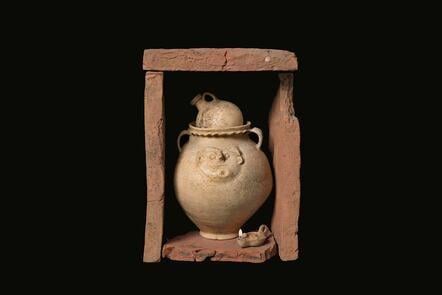
Would you like to know more about the new methods archaeologists are using to study African archaeology? And to learn directly from case studies with researchers working on the continent? Are you interested in knowing the role local communities have in the preservation and protection of heritage sites? By enrolling in this course, you will have the opportunity to learn and explore these and so many other subjects in African Archaeology and Heritage and discover the rich and diverse heritage of Africa.

Class Deals by MOOC List - Click here and see Coursera's Active Discounts, Deals, and Promo Codes.

This course was funded by the German Foreign Office and developed by the German Archaeological Institute (DAI), in collaboration with the Universitat Autònoma de Barcelona (UAB), the Interdisciplinary Center for Archaeology and Evolution of Human Behavior (ICArEHB) in Portugal, and the Eduardo Mondlane University in Mozambique, with input from experts around the world. Africa has a rich cultural heritage spanning tens of thousands of years, including the earliest known fossils of our hominin ancestors, abundant and diverse rock art sites, and some of the oldest civilizations in human history.

Syllabus

WEEK 1
Archaeology and Heritage of Africa
The course is structured into four modules: Introduction to Archaeology and African Archaeology, Archaeological Methods, Heritage Management, and Case Studies, which showcase research projects from Mozambique, Chad, Namibia, and the West African Savanna. Through this course, our goal is to offer easily accessible and high-quality online resources on the subject, as well as to emphasize the relevance and impact of these topics within the wider field of archaeological and heritage studies.
Introduction
During this week you will learn about Archaeology in general and African Archaeology in particular with its own specificities. You will have an introduction to Africa Rock Art and to Africa geographic and climate diversity. Finally, you will learn about the sources for understanding environmental change.

WEEK 2
Introduction to Archaeological Methods
This week's curriculum aims to provide you with an understanding of the various methods used by archaeologists and the interdisciplinary nature of archaeological research. The focus will be on different types of surveys such as ground, aerial, and subsurface surveys, as well as the use of mobile applications during surveying. You will also be introduced to various disciplines such as archaeobotany, animal bone technology and function, zooarchaeology, lithic technology, micromorphology, pottery and archaeometry, human remains including biological anthropology and archaeogenetics, and rock art methodology.

WEEK 3
Heritage Management
This week, you will gain an understanding of the concept of heritage in Africa and its inherent value. The course will teach you how to use heritage as a tool for local development, specifically in the context of sustainable and responsible tourism. You will also explore the management of heritage in Namibia and learn about the Daureb Mountain Guides, who provide an example of heritage management by local communities. Finally, you will discover the work of the German Archaeological Institute (DAI) and ICArEHB in Africa.

WEEK 4
Case Studies
In the final week, you will have the opportunity to apply all the knowledge you have acquired throughout the course to five case studies. These case studies include hunter-gatherer and early farming communities' interactions in Southern Mozambique, archaeobotanical research on cultivated landscapes in the West African Savanna, archaeobotanical research on the de-greening of the Sahara in Northern Chad, the Stone Age of Mozambique in Niassa and Massingir, and the rock paintings of the Upper Brandberg.
Go to Class
MOOC List is learner-supported. When you buy through links on our site, we may earn an affiliate commission.

Related Courses

The Changing Landscape of Ancient Rome. Archaeology and History of the Palatine Hill (Coursera) Coursera
Sapienza University of Rome

The Changing Landscape of Ancient Rome. Archaeology and History of the Palatine Hill (Coursera)

Studying ancient - as well as medieval or modern - cities basically means telling local urban stories based on the reconstruction of changing landscapes through the centuries. Given the fragmentary nature of archaeological evidence, it is necessary to create new images that would give back the physical aspect of the urban landscape and that would bring it to life again. We are not just content with analyzing the many elements still visible of the ancient city.

Aug 17th 2026
5-12 Weeks
Introduction to Archaeology: Archaeology as Activism (Coursera) Coursera
Rice University

Introduction to Archaeology: Archaeology as Activism (Coursera)

This course is the fourth and final course in a series on the discipline of Archaeology. It is intended for learners at all stages, including advanced high school, college students, or life-long learners. Basic information about Archaeology and its history are presented in the first introductory course.

Aug 3rd 2026
5-12 Weeks
Dead Interesting: Uncovering Roman Britain in Old Museum Collections (FutureLearn) FutureLearn
University of Reading,Colchester Musuems

Dead Interesting: Uncovering Roman Britain in Old Museum Collections (FutureLearn)

Explore the archaeology of early Roman Britain an d learn techniques to build a profile of an individual from the first century AD. Uncover the history of early Roman Britain. What did a Roman funeral look, sound, and smell like? And how can you tell just from a person’s remains? Join a research team uncovering exciting new information about cremation burials excavated over 100 years ago in Colchester, the site of Camulodunum, one of Britain’s oldest towns and its first Roman capital city.

Self Paced
2 Weeks
Industrial Policy in the 21st Century: The Challenge for Africa (edX) EdX
SDGAcademyX,SDG Academy

Industrial Policy in the 21st Century: The Challenge for Africa (edX)

Why is there so little industry in Africa? Does it matter? What can we do about it? Hear from economist John Page about the continent’s options for industrialization and the future of economic growth in Africa. In this course from the United Nations University World Institute for Development Economics Research (UNU-WIDER), brought to you by the SDG Academy, you will hear from researcher John Page and other leading voices in development economics about the range of activities known “industries without smokestacks,” and learn how industrial policy that promotes the growth of these industries presents a win-win scenario for economic development in Africa.

Self Paced
Self-Paced
Pyramids of Giza: Ancient Egyptian Art and Archaeology (edX) EdX
HarvardX,Harvard University

Pyramids of Giza: Ancient Egyptian Art and Archaeology (edX)

Explore the archaeology, history, art, and hieroglyphs surrounding the famous Egyptian Pyramids at Giza. Learn about Old Kingdom pharaohs and elites, tombs, temples, the Sphinx, and how new technology is unlocking their secrets. Where is Giza? How were the Pyramids built? How did the cemeteries and hundreds of decorated tombs around them develop? What was Giza’s contribution to this first great age of ancient Egyptian civilization, the Old Kingdom?

Self Paced
Self-Paced
Introduction to Archaeology: Knowing The Past (Coursera) Coursera
Rice University

Introduction to Archaeology: Knowing The Past (Coursera)

This course is an introduction to a series on the discipline of Archaeology. It is intended for learners at all stages, including advanced high school, college students, or life-long learners. Basic information about Archaeology and its history are presented in this course, while the following three courses cover scientific methods, forms of interpretation, and contemporary social issues that archaeologists engage with.

Aug 3rd 2026
4 Weeks
Applied Public History: Places, People, Stories (Coursera) Coursera
University of London

Applied Public History: Places, People, Stories (Coursera)

This course introduces learners to applied public history: understanding and interpreting the past today, and engaging diverse communities in the practice of making and sharing histories. The course draws on project case studies, expert insights and diverse perspectives to model exciting approaches to researching and sharing the history of places and people. Learners will develop a toolkit to apply in their own practice, by participating in discussion, quizzes, creative activities and mini masterclasses. What kinds of stories can we discover through research into the history of places and people?

Aug 10th 2026
5-12 Weeks
Constitutional Struggles in the Muslim World (Coursera) Coursera
University of Copenhagen

Constitutional Struggles in the Muslim World (Coursera)

Learn what motivates the restive Muslim youth from Tunis to Tehran, what political positions Islamists from Mali to Chechnya are fighting for, where the seeming obsession with Islamic law comes from, where the secularists have vanished to, and whether it makes sense to speak of an Islamic state. This course is a survey of the constitutional ideas and institutions that have developed since the mid 19th century throughout predominantly Muslim countries, but its focus will lie on the actors that have dominated this discourse and shaped its outcomes. We will look at the large body of classical writings on the Islamic state only in so far as it is necessary to understand the contemporary debate, but concentrate on the legal and political developments of the 20th and 21st centuries.

Aug 17th 2026
5-12 Weeks
Development and Planning in African Cities: Exploring theories, policies and practices from Sierra Leone (FutureLearn) FutureLearn
University College London,Sierra Leone Urban Research Centre,Njala University

Development and Planning in African Cities: Exploring theories, policies and practices from Sierra Leone (FutureLearn)

As African cities grow, learn how development and planning help urban actors to make cities just and sustainable for all. In the next 35 years, Africa will need to accommodate almost 900 million new urban dwellers. Hundreds of smaller cities are doubling in size every 20 years, half of Africa’s urban dwellers live in informal settlements in precarious conditions, and 75% of these are younger than 35. Our course will explore African cities through the lenses of spatial justice and social diversity, challenging myths and assumptions about urban development and demonstrating how different processes interact and shape the development of a city.

Self Paced
4 Weeks
COVID-19 in Africa: Managing the Outbreak in Primary Care Settings (FutureLearn) FutureLearn
St George's, University of London,Ilara Health

COVID-19 in Africa: Managing the Outbreak in Primary Care Settings (FutureLearn)

Learn how to better manage COVID-19 patients in African primary care settings where patient attendance is down due to COVID-19. Enhance your knowledge of COVID-19 patient care and the virus' impact in Africa. Since the COVID-19 pandemic, there’s been a decrease in primary care attendance noticed across peri-urban settings in Africa.

Self Paced
2 Weeks