Osteoarchaeology: The Truth in Our Bones (Coursera)

Offered by Leiden University,
Osteoarchaeology: The Truth in Our Bones (Coursera)

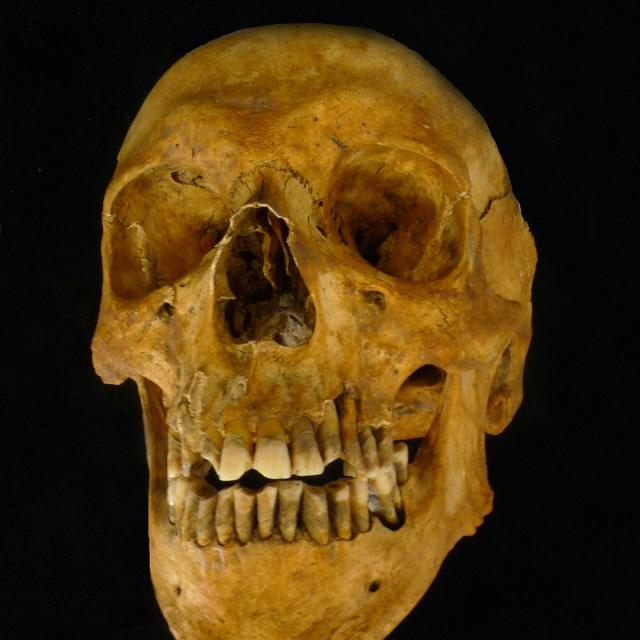
This course is about what we can learn from examining the human skeleton, and how we can use this knowledge to reconstruct the lives of people who lived in the past. In archaeology and anthropology, human skeletal remains can provide unique insights into the past and the present; insights that cannot be gained otherwise.

Class Deals by MOOC List - Click here and see Coursera's Active Discounts, Deals, and Promo Codes.

These insights are explored in five main themes spread out over five weeks of learning. First, it is shown how age-at-death, sex and stature can be estimated by the close examination of (archaeological) skeletal remains. In subsequent modules it is shown how human bones can provide information about the diseases and injuries that people suffered from and what they ate. Also, it is shown how the human skeleton provides information about the kinds of activities that people engaged in and about how they migrated and moved around their landscapes.

In this course, you will examine all aspects of the human skeleton that can provide us with information about these different facets of life. Together we will explore the scientific field that is known as human osteoarchaeology.

  • Human, because it is about us and our ancestors,
  • Osteo, because it is about our bones,
  • Archaeology, because we use this information to better understand the behaviors and events experienced by past people.

During the course, you will decipher the clues left behind in the skeletons of past peoples with the methods and techniques that are presented. You may also discover some clues hidden in your own skeleton and what they reveal about the life that you are living.

Syllabus

WEEK 1
Introduction to the course
Hello and welcome to this course, Osteoarchaeology, the Truth in Our Bones. In this first, introductory module, you will learn about what this course is about and how it is set up. Watch the first three lectures to learn more about what Osteoarchaeology is, and the topics that you will be exploring each week. Read the course documents to find out more about how you will be graded and the tests you will be taking in each module. You will also find some documents that will help you to get the most out of this MOOC. Good luck!
Bones to Biography & Demography
Welcome to the first content module of this course! This week is all about introducing you to the primary things that we can learn from nearly all human skeletons. Who are the people who lived in the past? Are they men, women or children? How old did they become, and how tall did they get? We can answer these questions by studying a range of bones contained in the human skeleton. Here, we will be showing you exactly how to do that, and hope you will learn a lot!
Bones to Biography & Demography: Lesson Choices
Choose one mystery which you will be solving, little by little, throughout the course. This week study the clues to find out if this individual was a man or a woman, and how old and how tall he or she was.

WEEK 2
Bones to Disease and Trauma
Welcome to the second module!
This week is all about disease in the past. How healthy were people really, and what diseases did they suffer from? We will show you how to answer these questions by studying the diseases that can be detected in human skeletal remains. We specifically focus on trauma including bone fractures, but also the diseases rickets and leprosy.
Bones to Disease and Trauma: Lesson Choices
Please continue solving the Mystery that you started in week one. Look at the bony lesions and study them carefully to find out what disease(s) this individual had, and what they were caused by.

WEEK 3
Bones to Diet
Welcome to the third module!
This week is all about diet in the past. What did people eat in the past and in what proportions? Did different groups of people eat different things, and did their diet change throughout time? This week we will show you how to answer such questions by studying the human skeleton. We will be focussing on the analysis of stable isotopes like Carbon and Nitrogen that can be found in human bones and teeth.
Bones to Diet: Lesson Choices
Continue analyzing the skeleton that you chose in week one. Study the values, tables and pictures provided to find out more about the foods that this individual ate and how it affected the composition and appearance of their skeleton.

WEEK 4
Bones to Activity
Welcome to module four!
This week is all about activity. What activities did people perform in the past? How did they move about, and how much? We will be answering these questions by studying many different aspects of the skeleton, like long bones, joints, the spine, and even teeth. We will be showing you what all these marks mean, and what they can tell us today about activities performed in the past.
Bones to Activity: Lesson Choices
Continue solving the Mystery you chose in week one. Study the marks left on the skeleton as a result of activity and you will find out more about what activities this individual performed and the impact it had on their body.

WEEK 5
Bones to Mobility and Migration
Welcome to the last module of this course!
This week is all about mobility and migration, so people moving through the landscape. How much did people relocate, and where did they go? We can answer these questions by looking at the shape of longbones, and by studying the isotopes and the DNA that can be found in human bones. Stick with us to find out how exactly these methods work, and what they reveal about population movements in the past.
Bones to Mobility and Migration: Lesson Choices
This week, decipher the final clues about the case study you chose in week one. Examine the values, figures, tables and graphs provided to find out how mobile this individual was during their life, and if, how, and where they migrated.
Go to Class
MOOC List is learner-supported. When you buy through links on our site, we may earn an affiliate commission.

Related Courses

Magic in the Middle Ages (Coursera) Coursera
University of Barcelona

Magic in the Middle Ages (Coursera)

Magical thought has always attracted human imagination. In this course we will introduce you to the Middle Ages through a wide conception of magic. Students will have an approach to medieval culture, beliefs and practices from the perspective of History and History of Science. Popular magic, as well as learned magic (alchemy, geomancy and necromancy) will be addressed. Moreover, we will also deal with how eastern practices and texts influenced western culture. In July 2016, the course will contain a brand-new module devoted to astrology. Magic in the Middle Ages offers a captivating overview of medieval society and promotes reflection about certain stereotypes associated with this period.

Jun 22nd 2026
5-12 Weeks
Public Involvement in Research (Coursera) Coursera
Imperial College London

Public Involvement in Research (Coursera)

This course focuses on participatory approaches in research, known as 'public involvement' in the UK. You'll specifically, consider why citizens and patients would be involved in research and explore participatory approaches across and within the research cycle in more detail, diving into questions such as: What kinds of participation can be undertaken at each of the 7 stages of the cycle? How can you utilise participation in research? What examples of using participatory approaches exist in research?

Jun 24th 2026
4 Weeks
eHealth: More than just an electronic record (Coursera) Coursera
The University of Sydney

eHealth: More than just an electronic record (Coursera)

The MOOC, "eHealth: More than just an electronic record!", is multidisciplinary in nature, and aims to equip the global audience of health clinicians, students, managers, administrators, and researchers to reflect on the overall impact of eHealth on the integration of care. It explores the breadth of technology application, current and emerging trends, and showcases both local and international eHealth practice and research.

Jun 22nd 2026
5-12 Weeks
A Life of Happiness and Fulfillment (Coursera) Coursera
Indian School of Business - ISB

A Life of Happiness and Fulfillment (Coursera)

What are the determinants of a happy and fulfilling life? This is surely one of life’s biggest questions, and a question that has interested many of our ancestors. Buddha famously gave up his kingdom in search of happiness. Several Greek philosophers (from Aristotle to Epicurus and Plato to Socrates) had their own views on what it takes to be happy. And of course, we all have our own theories about happiness too.

Jun 22nd 2026
5-12 Weeks
Epidemiology: The Basic Science of Public Health (Coursera) Coursera
University of North Carolina

Epidemiology: The Basic Science of Public Health (Coursera)

Often called “the cornerstone” of public health, epidemiology is the study of the distribution and determinants of diseases, health conditions, or events among populations and the application of that study to control health problems. By applying the concepts learned in this course to current public health problems and issues, students will understand the practice of epidemiology as it relates to real life and makes for a better appreciation of public health programs and policies. This course explores public health issues like cardiovascular and infectious diseases – both locally and globally – through the lens of epidemiology.

Jun 22nd 2026
5-12 Weeks
The Science of the Solar System (Coursera) Coursera
Caltech

The Science of the Solar System (Coursera)

Learn about the science behind the current exploration of the solar system in this free class. Use principles from physics, chemistry, biology, and geology to understand the latest from Mars, comprehend the outer solar system, ponder planets outside our solar system, and search for habitability in our neighborhood and beyond. This course is generally taught at an advanced level assuming a prior knowledge of undergraduate math and physics, but the majority of the concepts and lectures can be understood without these prerequisites.

Jun 22nd 2026
5-12 Weeks
Big Data, Genes, and Medicine (Coursera) Coursera
The State University of New York

Big Data, Genes, and Medicine (Coursera)

This course distills for you expert knowledge and skills mastered by professionals in Health Big Data Science and Bioinformatics. You will learn exciting facts about the human body biology and chemistry, genetics, and medicine that will be intertwined with the science of Big Data and skills to harness the avalanche of data openly available at your fingertips and which we are just starting to make sense of.

Jun 22nd 2026
5-12 Weeks
Psychology of Popularity (Coursera) Coursera
University of North Carolina

Psychology of Popularity (Coursera)

The level of popularity you experienced in childhood and adolescence is still affecting you today in ways that you may not even realize. Learn about how psychologists study popularity and how these same concepts can be used in adulthood to be more successful at work, become better parents, and have a happier life.

Jun 22nd 2026
5-12 Weeks
Introduction to the Biology of Cancer (Coursera) Coursera
Johns Hopkins University

Introduction to the Biology of Cancer (Coursera)

Over 500,000 people in the United States and over 8 million people worldwide are dying every year from cancer. As people live longer, the incidence of cancer is rising worldwide and the disease is expected to strike over 20 million people annually by 2030. This open course is designed for people who would like to develop an understanding of cancer and how it is prevented, diagnosed, and treated.

Jun 22nd 2026
5-12 Weeks
Health for All Through Primary Health Care (Coursera) Coursera
Johns Hopkins University

Health for All Through Primary Health Care (Coursera)

This course explores why primary health care is central for achieving Health for All. It provides examples of how primary health care has been instrumental in approaching this goal in selected populations and how the principles of primary health care can guide future policies and actions. Two of the most inspiring, least understood, and most often derided terms in global health discourse are “Health for All” and “Primary Health Care.”

Jun 28th 2026
5-12 Weeks