Archaeology and History of Greek and Roman Art (UNINETTUNO)

Archaeology and History of Greek and Roman Art (UNINETTUNO)

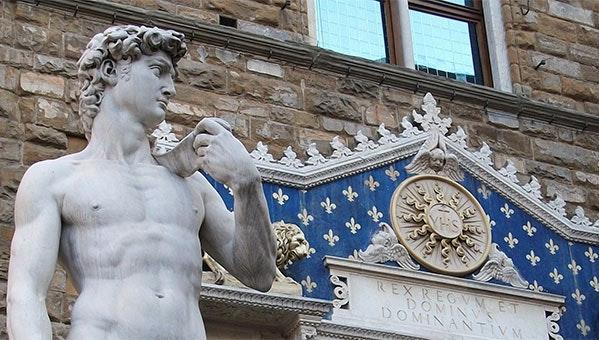
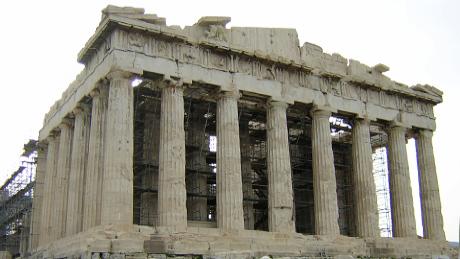
The course aims to offer a wide view of the history of art in Greece and ancient Italy between IX century B.C. and the Severian period, with specific attention to architecture, sculpture, painting and other arts and crafts of the Archaic, Classical, Hellenistic Greece and their reflection in Italy.

As for Italy, the course will first focus on the arts and crafts of Etruscans and southern Italy, to move then to the presentation of the Roman art during the republican and imperial periods.

Go to Class
MOOC List is learner-supported. When you buy through links on our site, we may earn an affiliate commission.

Related Courses

Ancient topography, relief and technical analysis of ancient monuments (UNINETTUNO) UNINETTUNO OpenupEd
International Telematic University UNINETTUNO

Ancient topography, relief and technical analysis of ancient monuments (UNINETTUNO)

The course aims to define the goals and the systematic methodological research related to a discipline of historical and archaeological area, such as the Ancient Topography, Survey and technical analysis of ancient monuments, in order to reconstruct the shape and meaning of the ancient anthropic contexts, through the traces that remain in modern urban landscapes.

Self Paced Course - Start anytime
Self-Paced
Film, Images & Historical Interpretation in the 20th Century: The Camera Never Lies (Coursera) Coursera
University of London,Royal Holloway, University of London

Film, Images & Historical Interpretation in the 20th Century: The Camera Never Lies (Coursera)

This course is a short taster on the topic of the use of Images, Film, and their use in historical interpretation in the 20th century. It is primarily provided for those who have a general interest in history that draws on photojournalism as primary evidence, and films based on historical events.

Nov 2nd 2026
5-12 Weeks
Exploring Beethoven’s Piano Sonatas Part 2 (Coursera) Coursera
Curtis Institute of Music

Exploring Beethoven’s Piano Sonatas Part 2 (Coursera)

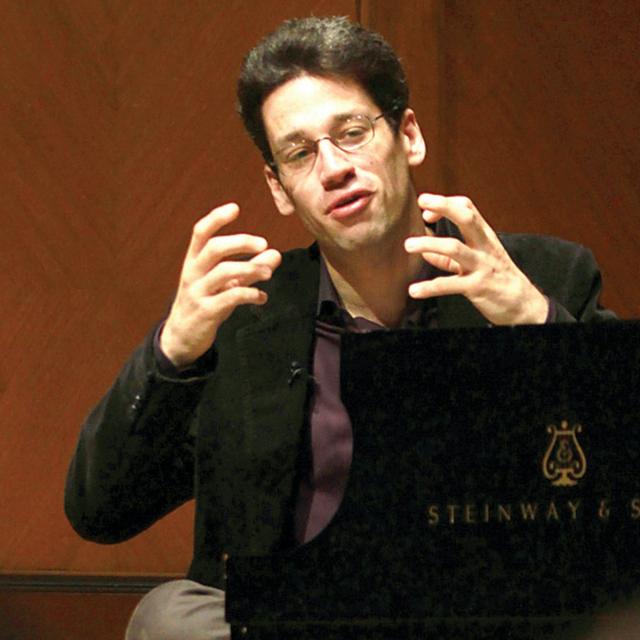
Welcome to Part 2 of Exploring Beethoven's Piano Sonatas! I'm delighted to launch another set of new lectures of this course as Part 2. As before, this class is meant for people of all levels of experience with Beethoven's music (including no experience at all!). Remember that you are able to watch the lectures as many times as you like, at whatever pace is comfortable for you.

Nov 2nd 2026
5-12 Weeks
The Bible's Prehistory, Purpose, and Political Future (Coursera) Coursera
Emory University

The Bible's Prehistory, Purpose, and Political Future (Coursera)

With its walls razed to ground by Babylon’s armies, Jerusalem joined a long line of ancient vanquished cities—from Ur and Nineveh and Persepolis to Babylon itself. While some recovered from the destruction, others did not. But none responded to political catastrophe by fashioning the kind of elaborate and enduring monument to their own downfall that we find in the Bible. Most conquered populations viewed their subjugation as a source of shame. They consigned it to oblivion, opting instead to extol the golden ages of the past. The biblical authors in contrast reacted to loss by composing extensive writings that acknowledge collective failure, reflect deeply upon its causes, and discover thereby a ground for collective hope.

Oct 19th 2026
5-12 Weeks
Reimagining Blackness and Architecture (Coursera) Coursera
The Museum of Modern Art

Reimagining Blackness and Architecture (Coursera)

Architecture structures our daily lives. It shapes our homes, streets, neighborhoods, cities and more. But who gets to create and occupy these spaces? In the United States, a long history of anti-Black racism has created spatial inequalities that are built into the physical environment and erased the stories of Black architects and communities. Reimagining Blackness and Architecture explores the relationship between architecture and Blackness as an identity and a lived experience.

Nov 2nd 2026
5-12 Weeks
The Emergence of the Modern Middle East - Part I (Coursera) Coursera
Tel Aviv University

The Emergence of the Modern Middle East - Part I (Coursera)

This course will review the emergence of the modern Middle East from the fall of the Ottoman Empire, at the end of the First World War to the present. We will discuss the Ottoman legacy in the region and the Western imperial impact on the creation of the Arab state system. The course will review the rise and retreat of Arab nationalism, the problems of internal cohesion of the Arab states, issues of religion and state, and the evolution of Islamist politics. We will also focus on the evolution of the Arab-Israeli conflict and its impact on the region and will conclude with an in depth analysis of the “Arab Spring” by placing these contemporary revolutionary events in their historical context.

Oct 19th 2026
4 Weeks
The Holocaust - An Introduction (II): The Final Solution (Coursera) Coursera
Tel Aviv University,Yad Vashem

The Holocaust - An Introduction (II): The Final Solution (Coursera)

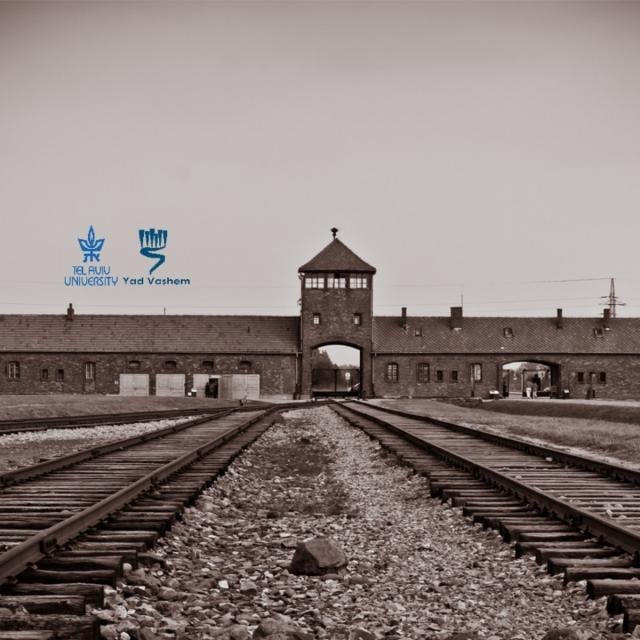
The Holocaust was an inconceivable historical event, which forever robbed Western culture of its innocence. As civilized human beings, we fail to understand how events of such horror could have taken place, and how an idea so inhumanly warped could have spread like wildfire through an entire continent, instigating the systematic annihilation of millions of Jews.

Nov 2nd 2026
3 Weeks
Greek and Roman Mythology (Coursera) Coursera
University of Pennsylvania

Greek and Roman Mythology (Coursera)

Myths are traditional stories that have endured over a long time. Some of them have to do with events of great importance, such as the founding of a nation. Others tell the stories of great heroes and heroines and their exploits and courage in the face of adversity. Still others are simple tales about otherwise unremarkable people who get into trouble or do some great deed. What are we to make of all these tales, and why do people seem to like to hear them? This course will focus on the myths of ancient Greece and Rome, as a way of exploring the nature of myth and the function it plays for individuals, societies, and nations. We will also pay some attention to the way the Greeks and Romans themselves understood their own myths.

Oct 19th 2026
5-12 Weeks