Enlightening the Dark Ages: Early Medieval Archaeology in Italy (FutureLearn)

Offered by University of Padova,
Enlightening the Dark Ages: Early Medieval Archaeology in Italy (FutureLearn)

Learn what innovative methods and tools applied to the material culture of the past can tell us about the Early Middle Ages. Discovering the cultural heritage of Medieval Europe through archaeology
On this archaeology course, you will explore what we can learn about the past through material culture. It focuses on the history of Medieval Europe, from the end of the Roman Empire in the West.

Class Deals by MOOC List - Click here and see FutureLearn's Active Discounts, Deals, and Promo Codes.

This was a time of huge cultural, social, and environmental change.
The course covers a wide range of topics. You’ll explore the significance of changes in medieval food and health, the spread of Christianity in Europe, and migration patterns and social structures.
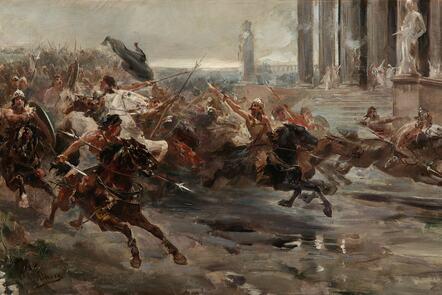
You will gain a sensibility for cultural heritage, focused on artefacts of material culture discovered on archaeological sites. These objects can help us understand the complexities of the late Roman Empire, by now under regular attack from Barbarian tribes.
Through material culture, we can understand how people lived, worshipped, and worked, as the new Germanic kingdoms and culture of Medieval Europe emerged.
You will also learn about the technical side of historical archaeology, covering the latest archaeological tools and techniques.
Explore the history of climate change in the early Middle Ages
This historical archaeology course also considers the history of climate change. We are clearly coming closer to the brink of climate catastrophe in the 21st century. What can we learn about how people in the Early Middle Ages reacted to climate change during their times? More broadly, you’ll consider what the history of Europe can tell us about the present.
This medieval archaeology course is delivered by the University of Padova, a research leader in the field. The University of Padova team has dug some of the most culturally significant Italian archaeological sites.

What topics will you cover?

  • The end of the Roman Empire to the beginning of the Middle Ages
  • The significance of cultural heritage
  • Innovative tools and methods used today in archaeological practice
  • Environmental change and its impact on past societies

Learning on this course
You can take this self-guided course and learn at your own pace. On every step of the course you can meet other learners, share your ideas and join in with active discussions in the comments.

What will you achieve?
By the end of the course, you‘ll be able to...

  • Create a sensibility for cultural heritage, particularly archaeological sites and material culture through a better understanding of their nature and meaning.
  • Compare historical phenomena of the past with those of the present.
  • Explore how innovative scientific methodologies are adding vital information about the past to traditional archaeology
  • Investigate the connections and causations between different historical events

Who is the course for?
This course is suitable for anyone interested in historical archaeology, Medieval Europe, cultural heritage, or the history of climate change.
It would benefit those preparing to study archaeology or who want to explore new archaeological methodologies.

Go to Class
MOOC List is learner-supported. When you buy through links on our site, we may earn an affiliate commission.

Related Courses

Terrorism and Counterterrorism: Comparing Theory and Practice (FutureLearn) FutureLearn
Leiden University

Terrorism and Counterterrorism: Comparing Theory and Practice (FutureLearn)

Delve into the research behind terrorism as you unpack the assumptions and impacts of both terrorism and counterterrorism. Explore terrorism and counterterrorism studies. Terrorism has arguably been one of the defining factors of our age. It frequently makes headlines, threatening or attacking governments, private businesses, and ordinary citizens. In many parts of the world, it has been one of the most important threats to peace, security, and stability – but what does this mean exactly? On this six-week course from Leiden University, you’ll explore the essence of terrorism and discover why it is so difficult to define.

Apr 25th 2022
5-12 Weeks
Lancaster Castle and Northern English History: The View from the Stronghold (FutureLearn) FutureLearn
Lancaster University

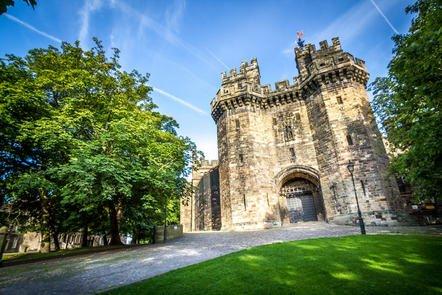
Lancaster Castle and Northern English History: The View from the Stronghold (FutureLearn)

We will use the iconic building of Lancaster Castle to investigate how 2000 years of history has shaped the north-west of England. This course takes an innovative approach to exploring history, focusing on Lancaster Castle as a microcosm of broader trends. This fascinating location provides a wealth of evidence from the remains of Roman forts to its life as a prison and visitor attraction.

Oct 18th 2021
5-12 Weeks
From World War to White Heat: the RAF in the Cold War (FutureLearn) FutureLearn
Royal Holloway, University of London

From World War to White Heat: the RAF in the Cold War (FutureLearn)

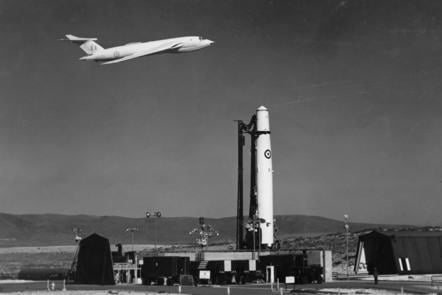
Explore the role that the Royal Air Force played in the Cold War through the collections of the RAF Museums at Hendon and Cosford. This free online course is a collaboration between the Royal Air Force (RAF) Museums and the Department of History at Royal Holloway, University of London. It will introduce you to some of the major turning points in the history of Britain in the post-1945 era.

Self Paced
5-12 Weeks
Exploring Stone Age Archaeology: The Mysteries of Star Carr (FutureLearn) FutureLearn
University of York

Exploring Stone Age Archaeology: The Mysteries of Star Carr (FutureLearn)

Discover Star Carr, one of the world's most important archaeological sites, and learn what life was like over 10,000 years ago. Learn about the incredible discoveries at Star Carr. Star Carr is one of Britain’s most important archaeological sites. Because of extraordinary conditions of survival, we have uncovered the oldest known house in Britain, the earliest evidence of carpentry in Europe and the oldest complete bow in the world. These and other discoveries help us interpret what life might have been like over 10,000 years ago.

Self Paced
4 Weeks
Hadrian's Wall: Life on the Roman Frontier (FutureLearn) FutureLearn
Newcastle University

Hadrian's Wall: Life on the Roman Frontier (FutureLearn)

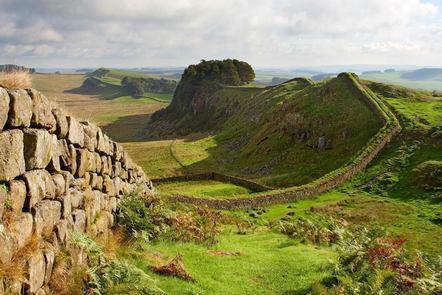
Explore the archaeology of the most heavily fortified frontier in the Roman Empire, its people and their lives. Hadrian’s Wall stretches over 73 miles (117 km), from coast to coast in what is now Northern England. The Wall, complemented by a sophisticated system of outposts and coastal watch stations, offers a remarkable glimpse of ancient society. In addition to housing one of the largest concentrations of Roman soldiers anywhere in the Empire’s provinces, Hadrian’s frontier system was home to an incredibly cosmopolitan array of civilians. This six week course offers a comprehensive introduction to Hadrian’s Wall and its people and raises fascinating issues concerning colonisation, cultural transformation, immigration, integration and imperialism.

Self Paced
5-12 Weeks
Antiquities Trafficking and Art Crime (FutureLearn) FutureLearn
University of Glasgow

Antiquities Trafficking and Art Crime (FutureLearn)

Law

Delve into the seedy underbelly of the art world, looking at smuggling, theft, fakes, and fraud, with this free online course. From fakes and fraud, to thefts and trafficking, art crime has turned archaeological sites in Iraq and Syria into “lunar landscapes”, decapitated Buddha sculptures in Cambodia and left empty frames on museum walls.

No sessions available
3 Weeks
The Life and Afterlife of Mary Queen of Scots (FutureLearn) FutureLearn
University of Glasgow

The Life and Afterlife of Mary Queen of Scots (FutureLearn)

Explore the 16th century life of Mary Queen of Scots, and her place in cultural history in the centuries that followed. Discover the life and lasting legacy of Mary Queen of Scots. Mary Queen of Scots was born and ascended to the throne of Scotland in 1542, before being forced to abdicate in 1567. She was married three times, first to the king of France, and then to two noblemen from the British Isles, one of whom was spectacularly murdered.

Self Paced
3 Weeks
Introduction to Italian (FutureLearn) FutureLearn
Università per Stranieri di Siena - UniStraSi

Introduction to Italian (FutureLearn)

Learn basic Italian and explore Italian culture, with this free online Italian course. Have you been dreaming of visiting cities like Venice, Rome and Florence? Have you always wanted to learn Italian and get to know Italian culture? If so, this course is perfect for you. Over six weeks you’ll develop the skills to interact in common conversational situations. You’ll learn how to introduce yourself, answer simple questions, ask for information, and talk about your interests, food and clothes.

Available Now
5-12 Weeks
Change of Era: The Origins of Christian Culture through the Lens of Archaeology (FutureLearn) FutureLearn
University of Padova

Change of Era: The Origins of Christian Culture through the Lens of Archaeology (FutureLearn)

Learn about innovative approaches to the study of early Christianity and discover its role in a crucial period of history. Delve into early Christianity. On this four-week course, you’ll gain a better understanding of a crucial period in history – one characterised by deep political, economic, cultural, and environmental transformations in the context of the end of the Western Roman Empire.

Self Paced
4 Weeks
Archaeology of Portus: Exploring the Lost Harbour of Ancient Rome (FutureLearn) FutureLearn
University of Southampton

Archaeology of Portus: Exploring the Lost Harbour of Ancient Rome (FutureLearn)

Learn how ancient artefacts, written evidence, excavation and digital technologies are transforming understanding of this harbour. The Roman harbour city of Portus lay at the heart of an empire that extended from Scotland to Iraq. Established by Claudius and enlarged by the emperor Trajan with spoils of the Dacian wars, the port was the conduit for everything the city of Rome required from its Mediterranean provinces: the food and, particularly grain, that fed the largest urban population of the ancient world, as well as luxuries of all kinds, building materials, people and wild animals for the arena.

No sessions available
5-12 Weeks