Change of Era: The Origins of Christian Culture through the Lens of Archaeology (FutureLearn)

Offered by University of Padova,
Change of Era: The Origins of Christian Culture through the Lens of Archaeology (FutureLearn)

Learn about innovative approaches to the study of early Christianity and discover its role in a crucial period of history. Delve into early Christianity. On this four-week course, you’ll gain a better understanding of a crucial period in history – one characterised by deep political, economic, cultural, and environmental transformations in the context of the end of the Western Roman Empire.

Class Deals by MOOC List - Click here and see FutureLearn's Active Discounts, Deals, and Promo Codes.

You’ll explore the emergence of the Christian world through early Christian texts and case studies of archaeological sites, key objects, and inscriptions.
By the end, you’ll understand what methods we can use to study early Christianity, what problems we need to investigate, and why it is important to study the origins of the Christian era.

Explore Christian iconography and buildings
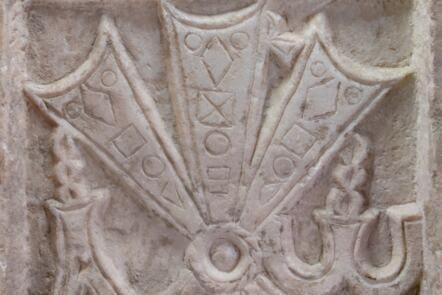
You’ll unpack the origins of Christian iconography and culture before analysing Christian artefacts to understand their historical context and meaning.
You’ll also investigate churches and how we can use archaeology to better understand their meaning, who built them, and why.
With this knowledge, you’ll discover how constructing holy places can help create a sensibility for cultural heritage.

Understand the link between religion and politics
You’ll delve into politics and Christianity to help you investigate the connections and causations between different historical events.
Next, you’ll explore how innovative scientific methodologies are adding vital information to help us gain a better understanding of the past.

Learn from the experts at University of Padova
Throughout the course, you’ll be guided by the Mediaeval archaeologists from the University of Padova.
With their expertise, you’ll understand how to study the origins of Christian culture to gain a deeper insight into history.

Syllabus

Week 1: The origins of a Christian culture
Week 2: The image of a new culture
Week 3: Constantine and the birth of monumental christian architecture
Week 4: Religion and politics in the early christian mediterranean

What will you achieve?
By the end of the course, you‘ll be able to...

  • Create a sensibility for cultural heritage, particularly archaeological sites and material culture through a better understanding of their nature and meaning
  • Explore how innovative scientific methodologies are adding vital information about the past to traditional christian archaeology
  • Interpret christian artefacts within their precise historical context and meaning.
  • Investigate the connections and causations between different historical events
  • Reflect on the meaning of churches in urban and rural contexts–why they were built and what their function was in antiquity
Go to Class
MOOC List is learner-supported. When you buy through links on our site, we may earn an affiliate commission.

Related Courses

Roman Art and Archaeology (Coursera) Coursera
University of Arizona

Roman Art and Archaeology (Coursera)

The objective of this course is to provide an overview of the culture of ancient Rome beginning about 1000 BCE and ending with the so-called "Fall of Rome". We will look at some of the key people who played a role in Rome, from the time of the kings through the Roman Republic and the Roman Empire. We will also focus on the city of Rome itself, as well as Rome's expansion through Italy, the Mediterranean, and beyond.

Aug 24th 2026
5-12 Weeks
At the Origins of the Mediterranean Civilization: Archaeology of the City from the Levant to the West - 3rd-1st millennium BC (Coursera) Coursera
Sapienza University of Rome

At the Origins of the Mediterranean Civilization: Archaeology of the City from the Levant to the West - 3rd-1st millennium BC (Coursera)

Which are the deepest roots of that mix of cultures that we use to call ‘Mediterranean Civilization’? Which are comminglings and exchanges which produced its most complete fruit, i.e. the city, a place for landscape-modelling communities? And which elements did contribute to build up that baulk of customs, ideas, and innovations which compelled to confrontation and hybridizations different peoples for millennia? What did it made, from pottery to metallurgy, from gastronomy to architecture, from art to religion, of a sea a cradle of civilization? Archaeology may help in disentangling such questions, seeking unexpected answers , by tinkering what ancient Mediterranean peoples left buried in the ground.

Aug 24th 2026
5-12 Weeks
Pyramids of Giza: Ancient Egyptian Art and Archaeology (edX) EdX
HarvardX,Harvard University

Pyramids of Giza: Ancient Egyptian Art and Archaeology (edX)

Explore the archaeology, history, art, and hieroglyphs surrounding the famous Egyptian Pyramids at Giza. Learn about Old Kingdom pharaohs and elites, tombs, temples, the Sphinx, and how new technology is unlocking their secrets. Where is Giza? How were the Pyramids built? How did the cemeteries and hundreds of decorated tombs around them develop? What was Giza’s contribution to this first great age of ancient Egyptian civilization, the Old Kingdom?

Self Paced
Self-Paced
Christianity Through Its Scriptures (edX) EdX
HarvardX,Harvard University

Christianity Through Its Scriptures (edX)

Learn about Christianity through a study of its sacred scriptures. We will explore how diverse Christians have interpreted these writings and practiced their teachings over a 2000 year, global history. Christianity is a global religion. From modest beginnings 2,000 years ago, it has grown to encompass nearly a third of the human population. Diverse in languages, cultures, histories and creeds, Christians nonetheless share a common collection of sacred scripture called the Bible.

Self Paced
Self-Paced
Religions From The Inside: Improving Interreligious Dialogue (FutureLearn) FutureLearn
Università della Svizzera italiana

Religions From The Inside: Improving Interreligious Dialogue (FutureLearn)

Explore the value of cooperation between faiths and learn how the five main world religions’ core beliefs relate to each other. Learn how to encourage and benefit from respectful interfaith dialogue. This short course, led by the Faculty of Theology of Lugano in collaboration with USI, will develop your knowledge of what interfaith dialogue means from a philosophical and epistemological point of view, and teach how to enjoy productive interfaith dialogue.

Oct 4th 2021
5-12 Weeks
Burgos: Deciphering Secrets of Medieval Spain (Coursera) Coursera
University of Colorado System

Burgos: Deciphering Secrets of Medieval Spain (Coursera)

This advanced course focuses on two primary goals: (1) appraising how Jews, Christians, and Muslims shaped the history of medieval Spain and (2) mastering the craft of Spanish paleography, the skill of identifying Spanish handwriting in the 11th- through 15th-century manuscripts. Through the lens of the medieval history of Burgos, we dedicate 75% percent of our efforts to developing pragmatic expertise in the interpretation of Carolingian/French/Gothic handwriting.

Jun 24th 2024
5-12 Weeks
Introduction to Archaeology: Knowing The Past (Coursera) Coursera
Rice University

Introduction to Archaeology: Knowing The Past (Coursera)

This course is an introduction to a series on the discipline of Archaeology. It is intended for learners at all stages, including advanced high school, college students, or life-long learners. Basic information about Archaeology and its history are presented in this course, while the following three courses cover scientific methods, forms of interpretation, and contemporary social issues that archaeologists engage with.

Aug 31st 2026
4 Weeks
Toledo: Deciphering Secrets of Medieval Spain (Coursera) Coursera
University of Colorado System

Toledo: Deciphering Secrets of Medieval Spain (Coursera)

This course evaluates the medieval history of Toledo from the era of the Visigoth Kingdom (6th-8th centuries) through its Islamic period (8th to 11th centuries) and into its reintegration into Christian Spain (after 1085 c.e.) In particular, we take note of the cultural and religious transformations that characterized the city with a special effort to understand how many peoples and religions came to settle and live amongst one another.

Jul 1st 2024
5-12 Weeks
Coexistence in Medieval Spain: Jews, Christians, and Muslims (Coursera) Coursera
University of Colorado System

Coexistence in Medieval Spain: Jews, Christians, and Muslims (Coursera)

This course explores Jewish, Christian, and Muslim intercultural relations in Iberia from the Visigothic era (6th century CE) until the creation of Queen Isabel I and King Ferdinand II Catholic Spain (late 15th century). We evaluate the many identities of the peninsula known as Christian Hispania, Jewish Sefarad, and Islamic al-Andalus. We trace the origins and trajectory of conflict between these communities (the Muslim conquest of Spain, Christian Reconquista, prohibitions blocking intermixing of peoples, and expulsions).

Aug 31st 2026
5-12 Weeks
Arch of Titus: Rome and the Menorah (Coursera) Coursera
Yeshiva University

Arch of Titus: Rome and the Menorah (Coursera)

The Arch of Titus: Rome and the Menorah explores one of the most significant Roman monuments to survive from antiquity, from the perspectives of Roman, Jewish and later Christian history and art. The Arch of Titus commemorates the destruction of Jerusalem by the emperor Titus in 70 CE, an event of pivotal importance for the history of the Roman Empire, of Judaism, of Christianity and of modern nationalism. Together with your guide, Professor Steven Fine, you will examine ancient texts and artifacts, gaining skills as a historian as you explore the continuing significance of the Arch of Titus from antiquity to the very present.

Aug 31st 2026
5-12 Weeks
Exploring Stone Age Archaeology: The Mysteries of Star Carr (FutureLearn) FutureLearn
University of York

Exploring Stone Age Archaeology: The Mysteries of Star Carr (FutureLearn)

Discover Star Carr, one of the world's most important archaeological sites, and learn what life was like over 10,000 years ago. Learn about the incredible discoveries at Star Carr. Star Carr is one of Britain’s most important archaeological sites. Because of extraordinary conditions of survival, we have uncovered the oldest known house in Britain, the earliest evidence of carpentry in Europe and the oldest complete bow in the world. These and other discoveries help us interpret what life might have been like over 10,000 years ago.

Self Paced
4 Weeks