The Life and Afterlife of Mary Queen of Scots (FutureLearn)

Offered by University of Glasgow,
The Life and Afterlife of Mary Queen of Scots (FutureLearn)

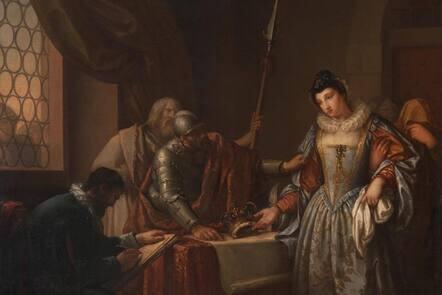
Explore the 16th century life of Mary Queen of Scots, and her place in cultural history in the centuries that followed. Discover the life and lasting legacy of Mary Queen of Scots. Mary Queen of Scots was born and ascended to the throne of Scotland in 1542, before being forced to abdicate in 1567. She was married three times, first to the king of France, and then to two noblemen from the British Isles, one of whom was spectacularly murdered.

Class Deals by MOOC List - Click here and see FutureLearn's Active Discounts, Deals, and Promo Codes.

She would spend close to 20 years imprisoned by her cousin Queen Elizabeth I before being executed for treason. Her son, James I and VI would go on to become the first monarch of both England and Scotland.
The history of Mary Queen of Scots was a dramatic one, even by the 16th century standards of the Tudors and Stuarts.
On this course from the University of Glasgow, you will learn about Mary Queen of Scots’ life You will also explore her afterlife in our shared cultural history, where she still occupies a prominent position.
Mary Queen of Scots, from the 16th to the 21st century
The life of Mary Queen of Scots provides a lens through which we can explore many of the tensions that defined 16th century Scotland and England. This was a period in the history of the British Isles that was characterised by deep political, cultural and religious upheaval.
On this course you will explore the complex forces that led to Mary’s rise and fall from power, and her imprisonment at the hands of a fellow monarch.
You will also explore how Mary Queen of Scots’ life has been memorialised in popular culture, investigating why she is so deeply entrenched into our cultural history.

Syllabus

Week 1: Introducing Mary and her world; her early life
Week 2: Mary, Queen of Scots – 1561-1587
Week 3: ‘In my end is my beginning’: Mary’s Afterlife

Learning on this course
You can take this self-guided course and learn at your own pace. On every step of the course you can meet other learners, share your ideas and join in with active discussions in the comments.
What will you achieve?
By the end of the course, you‘ll be able to...

  • Apply a deep and broad knowledge of the personality of Mary Queen of Scots, of the major events and issues connected to her life and reign
  • Assess the major developments in political, cultural and religious life in Scotland between c. 1542 and c. 1587, using sources in a variety of media to do so
  • Compare the myriad ways in which Mary has been memorialised in popular culture from her own time to the present day
  • Evaluate multiple interpretations of complex historical debates relating to Mary, her reign, and her cultural afterlife

Who is the course for?
This course would suit anyone with a personal or professional interest in the life of Mary Queen of Scots, 16th century history, or cultural history.
It also covers culture, religion, and gender, as well as Anglo-Scottish relations through history.

Go to Class
MOOC List is learner-supported. When you buy through links on our site, we may earn an affiliate commission.

Related Courses

History of Slavery in the British Caribbean (FutureLearn) FutureLearn
University of Glasgow,University of the West Indies - UWI

History of Slavery in the British Caribbean (FutureLearn)

Explore the history and legacy of British colonial slavery and oppression in the Caribbean through historical slave accounts. Learn about Britain’s involvement in the transatlantic slave trade. On this course, you’ll be introduced to the history of slavery and the lived experiences of enslaved people in the British Caribbean.

Self Paced
4 Weeks
Søren Kierkegaard - Subjectivity, Irony and the Crisis of Modernity (Coursera) Coursera
University of Copenhagen

Søren Kierkegaard - Subjectivity, Irony and the Crisis of Modernity (Coursera)

In this course created by former associate professor at the Søren Kierkegaard Research Centre, Jon Stewart, we will explore how Kierkegaard deals with the problems associated with relativism, the lack of meaning and the undermining of religious faith that are typical of modern life. His penetrating analyses are still highly relevant today and have been seen as insightful for the leading figures of Existentialism, Post-Structuralism and Post-Modernism.

Sep 14th 2026
5-12 Weeks
How We Remember War and Violence: Theory and Practice (FutureLearn) FutureLearn
University of Bath

How We Remember War and Violence: Theory and Practice (FutureLearn)

Compare three models of remembering, exploring how the new model of ‘agonistic memory’ can help us better understand conflict. Consider how we recall war and violence and discover a different way to remember. Our memories of conflict are often used against us. Nationalist movements manipulate the story - offering confrontational, harmful perspectives. But there’s a different way.

No sessions available
4 Weeks
World War 1: Paris 1919 - A New World Order? (FutureLearn) FutureLearn
University of Glasgow

World War 1: Paris 1919 - A New World Order? (FutureLearn)

This course reassesses the legacy of the Paris Peace Conference (1919) and how it sought to create a new world order. The Paris Peace Conference of 1919 ended a Great War, but it also designed the post-war future. In 1919, world leaders assembled in Paris redrew the map of the world, partitioned and created countries, and ushered in a new era of international relations. The naivety of the peace-makers of 1919 has been justly criticised. However, in setting up a permanent ‘world organisation’, the League of Nations, they changed the management of world affairs forever…

No sessions available
3 Weeks
Hadrian's Wall: Life on the Roman Frontier (FutureLearn) FutureLearn
Newcastle University

Hadrian's Wall: Life on the Roman Frontier (FutureLearn)

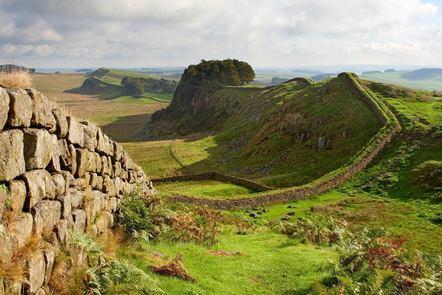
Explore the archaeology of the most heavily fortified frontier in the Roman Empire, its people and their lives. Hadrian’s Wall stretches over 73 miles (117 km), from coast to coast in what is now Northern England. The Wall, complemented by a sophisticated system of outposts and coastal watch stations, offers a remarkable glimpse of ancient society. In addition to housing one of the largest concentrations of Roman soldiers anywhere in the Empire’s provinces, Hadrian’s frontier system was home to an incredibly cosmopolitan array of civilians. This six week course offers a comprehensive introduction to Hadrian’s Wall and its people and raises fascinating issues concerning colonisation, cultural transformation, immigration, integration and imperialism.

Self Paced
5-12 Weeks
Terrorism and Counterterrorism: Comparing Theory and Practice (FutureLearn) FutureLearn
Leiden University

Terrorism and Counterterrorism: Comparing Theory and Practice (FutureLearn)

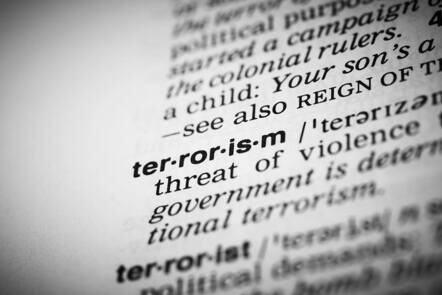
Delve into the research behind terrorism as you unpack the assumptions and impacts of both terrorism and counterterrorism. Explore terrorism and counterterrorism studies. Terrorism has arguably been one of the defining factors of our age. It frequently makes headlines, threatening or attacking governments, private businesses, and ordinary citizens. In many parts of the world, it has been one of the most important threats to peace, security, and stability – but what does this mean exactly? On this six-week course from Leiden University, you’ll explore the essence of terrorism and discover why it is so difficult to define.

Apr 25th 2022
5-12 Weeks
A Question of Time: How We Date Human Evolution (FutureLearn) FutureLearn
Griffith University

A Question of Time: How We Date Human Evolution (FutureLearn)

Discover the role that dating human fossils plays in the reconstruction of human evolution: explore examples from around the world. Uncover the history of our ancestors by dating human fossils. Trace your origins and develop your understanding of human evolution, with this course from the world-leading experts at Griffith University.

No sessions available
2 Weeks
Global Geordies: The North East of England and the World (FutureLearn) FutureLearn
Northumbria University Institute of the Humanities

Global Geordies: The North East of England and the World (FutureLearn)

Get an introduction to the hidden history, culture and people of the North East of England. Where was the light bulb invented? What about the first steam locomotive, or hydroelectricity? They were all invented in the North East of England. This course introduces you to the historical, technological and cultural connections between the people and places of the North East and the wider world.

No sessions available
5-12 Weeks
The Tudors (FutureLearn) FutureLearn
University of Roehampton

The Tudors (FutureLearn)

Go back in time to learn about the dramatic rule of the Tudor monarchs and religious change of the sixteenth century reformation. Uncover the turbulent history of Tudor England and its lasting impact. From magnificence and martyrs to weddings and war, the Tudor period was one of the most eventful in British history. The reigns of the five (or was it six?) monarchs during the late fifteenth to seventeenth century has enthralled historians, students and television and film producers alike.

Self Paced
5-12 Weeks