Archaeology of Portus: Exploring the Lost Harbour of Ancient Rome (FutureLearn)

Archaeology of Portus: Exploring the Lost Harbour of Ancient Rome (FutureLearn)

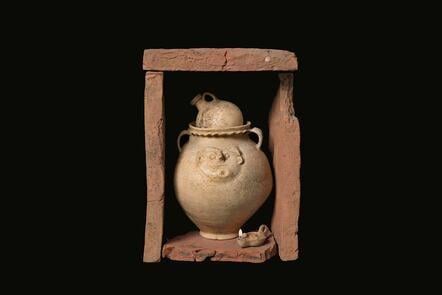
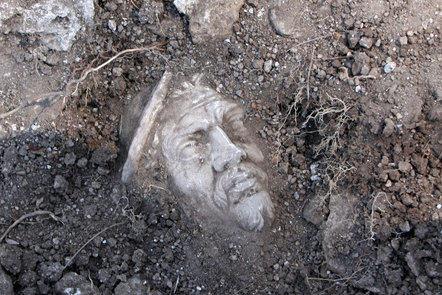
Learn how ancient artefacts, written evidence, excavation and digital technologies are transforming understanding of this harbour. The Roman harbour city of Portus lay at the heart of an empire that extended from Scotland to Iraq. Established by Claudius and enlarged by the emperor Trajan with spoils of the Dacian wars, the port was the conduit for everything the city of Rome required from its Mediterranean provinces: the food and, particularly grain, that fed the largest urban population of the ancient world, as well as luxuries of all kinds, building materials, people and wild animals for the arena.

Class Deals by MOOC List - Click here and see FutureLearn's Active Discounts, Deals, and Promo Codes.

On this course you will chart a journey from the Imperial harbour to its connections across the Mediterranean, learning about what the archaeological discoveries uncovered by the Portus Project tell us about the history, landscape, buildings, and the people of this unique place. Although the site lies in ruins, it has some of the best-preserved Roman port buildings in the Mediterranean, and in this course you will learn to interpret these and the finds discovered within them, using primary research data and the virtual tools of the archaeologist.
Largely filmed on location at Portus, the course will provide you with an insight into the wide range of digital technologies employed to record, analyse and present the site. In addition to the lead educators, our enthusiastic team of student archaeologists will support your learning.


Go to Class
MOOC List is learner-supported. When you buy through links on our site, we may earn an affiliate commission.

Related Courses

Hadrian's Wall: Life on the Roman Frontier (FutureLearn) FutureLearn
Newcastle University

Hadrian's Wall: Life on the Roman Frontier (FutureLearn)

Explore the archaeology of the most heavily fortified frontier in the Roman Empire, its people and their lives. Hadrian’s Wall stretches over 73 miles (117 km), from coast to coast in what is now Northern England. The Wall, complemented by a sophisticated system of outposts and coastal watch stations, offers a remarkable glimpse of ancient society. In addition to housing one of the largest concentrations of Roman soldiers anywhere in the Empire’s provinces, Hadrian’s frontier system was home to an incredibly cosmopolitan array of civilians. This six week course offers a comprehensive introduction to Hadrian’s Wall and its people and raises fascinating issues concerning colonisation, cultural transformation, immigration, integration and imperialism.

Self Paced
5-12 Weeks
Exploring Copyright: History, Culture, Industry (FutureLearn) FutureLearn
International Confederation of Societies of Authors and Composers - CISAC

Exploring Copyright: History, Culture, Industry (FutureLearn)

Understand the importance of copyright and learn its history, from the Renaissance to the Internet, with this free online course. Have you ever thought about how a composer or a writer makes a living? Or how they make money to live their daily lives, just like other people? This course will explore the process of creators becoming professionals: how a marketplace and an industry have grown thanks to inventions like the 15th century printing press.

No sessions available
4 Weeks
Recovering the Humankind's Past and Saving the Universal Heritage (Coursera) Coursera
Sapienza University of Rome

Recovering the Humankind's Past and Saving the Universal Heritage (Coursera)

Archaeology has as its objective the recovery and revival of humankind past, and as its aim the rescue and preservation of cultural heritage. Archaeology is, among human sciences, the discipline with the strongest importance for the rediscovery, but also for the preservation and protection of cultural heritage, as Humankind’s universal patrimony. You will be introduced to the way we ourselves reflect on and are engaged with the study of human past: from the practical and material recovery of ancient traces in the field to the study and interpretation. On the other hand, the discovery of human past implies the correct conservation and presentation for both experts and general public: the study and protection of the past we share every day prevent from any possible destruction, misuse, abuse and thus cancellation of human memory.

Sep 21st 2026
5-12 Weeks
Archaeology: from Dig to Lab and Beyond (FutureLearn) FutureLearn
University of Reading

Archaeology: from Dig to Lab and Beyond (FutureLearn)

Get an introduction to studying archaeology, exploring exciting discoveries in the Vale of Pewsey, near to Stonehenge and Avebury. Chart the progress of an archaeological excavation from dig to lab and beyond. We’ll show you around our field school at the Vale of Pewsey, a relatively untouched site compared to its famous neighbour, Stonehenge.

Self Paced
2 Weeks
The Unbundled University, the Market and Digital Technology (FutureLearn) FutureLearn
University of Leeds,University of Cape Town

The Unbundled University, the Market and Digital Technology (FutureLearn)

What is the future of universities? Explore current issues affecting higher education with a course featuring brand new research. Discover the phenomenon of unbundling and how it affects higher education. Market forces and technology are changing the landscape of higher education. This course, a unique collaboration between two leading universities, explores one of the key changes in the context of global inequality: the unbundling of higher education.

No sessions available
2 Weeks
Exploring Stone Age Archaeology: The Mysteries of Star Carr (FutureLearn) FutureLearn
University of York

Exploring Stone Age Archaeology: The Mysteries of Star Carr (FutureLearn)

Discover Star Carr, one of the world's most important archaeological sites, and learn what life was like over 10,000 years ago. Learn about the incredible discoveries at Star Carr. Star Carr is one of Britain’s most important archaeological sites. Because of extraordinary conditions of survival, we have uncovered the oldest known house in Britain, the earliest evidence of carpentry in Europe and the oldest complete bow in the world. These and other discoveries help us interpret what life might have been like over 10,000 years ago.

Self Paced
4 Weeks
Enlightening the Dark Ages: Early Medieval Archaeology in Italy (FutureLearn) FutureLearn
University of Padova

Enlightening the Dark Ages: Early Medieval Archaeology in Italy (FutureLearn)

Learn what innovative methods and tools applied to the material culture of the past can tell us about the Early Middle Ages. Discovering the cultural heritage of Medieval Europe through archaeology On this archaeology course, you will explore what we can learn about the past through material culture. It focuses on the history of Medieval Europe, from the end of the Roman Empire in the West.

Self Paced
4 Weeks
Internet of Things for Active Aging (FutureLearn) FutureLearn
Taipei Medical University

Internet of Things for Active Aging (FutureLearn)

Learn about how the Internet of Things can help people aging well with this free online course. The Internet of Things (IoT) includes many new digital health technologies, from apps to wearable devices to home sensors - devices that are expected to revolutionize healthcare in the near future. But when will they become truly useful and usable for those with the most at stake: older adults with multiple medical problems? This is just one of the questions we will tackle on this course.

Apr 4th 2022
4 Weeks
Copyright: História, Cultura, Indústria (FutureLearn) FutureLearn
International Confederation of Societies of Authors and Composers - CISAC

Copyright: História, Cultura, Indústria (FutureLearn)

Entenda a importância do Copyright e sua história da Renascença à Internet. Você já pensou como um compositor ou um escritor ganha a vida? Este curso explora a história do processo de profissionalização dos criadores. Você vai aprender como a legislação sobre copyright se desenvolveu a partir da ideia de que a obra artística é propriedade de seu criador. Você vai descobrir como o avanço na comunicação, a começar pela invenção da máquina de imprimir no século 15, possibilitou o crescimento das indústrias criativas.

No sessions available
4 Weeks