Lancaster Castle and Northern English History: The View from the Stronghold (FutureLearn)

Offered by Lancaster University,
Lancaster Castle and Northern English History: The View from the Stronghold (FutureLearn)

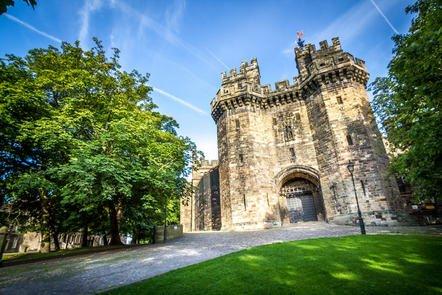
We will use the iconic building of Lancaster Castle to investigate how 2000 years of history has shaped the north-west of England. This course takes an innovative approach to exploring history, focusing on Lancaster Castle as a microcosm of broader trends. This fascinating location provides a wealth of evidence from the remains of Roman forts to its life as a prison and visitor attraction.

Class Deals by MOOC List - Click here and see FutureLearn's Active Discounts, Deals, and Promo Codes.

Our engaging educators respond to the castle and its surroundings in relation to their research interests, such as medieval Anglo-Scottish warfare, the witchcraft trials of the seventeenth century and the achievements of prison reformers.
Join us to uncover this castle’s vital role in northern English history over many centuries.

What topics will you cover?

  • The Roman coastal fort and its relationship to the northern frontier
  • The Norman Castle: its role in Anglo-Scottish warfare and the emergence of the Duchy of Lancaster
  • The Castle’s role as a prison for the Lancashire Witches, in the context of post-Reformation history
  • The role as a debtors’ prison in the eighteenth and nineteenth centuries, and changes in prison organisation
  • The First and Second World Wars
  • The importance of the castle to the region’s heritage

What will you achieve?
By the end of the course, you'll be able to...

  • Reflect on the long sweep of history in relation to one site
  • Interpret the regional context of broader historical trends
  • Evaluate historical debates critically
  • Explain the relationship between famous events or individuals and deeper social and political developments
  • Explore several different types of source material
Go to Class
MOOC List is learner-supported. When you buy through links on our site, we may earn an affiliate commission.

Related Courses

World War 1: Trauma, Memory, Controversy (FutureLearn) FutureLearn
The Open University

World War 1: Trauma, Memory, Controversy (FutureLearn)

Explore the traumatic effects of WW1 on soldiers and civilians. Discover how we remember and debate the history of this war. In this free online course, you will study the social, cultural, medical and diplomatic history of the First World War. Topics range from physical and mental trauma suffered by combatants to the traumatic experiences of civilians in wartime.

Self Paced
4 Weeks
How We Remember War and Violence: Theory and Practice (FutureLearn) FutureLearn
University of Bath

How We Remember War and Violence: Theory and Practice (FutureLearn)

Compare three models of remembering, exploring how the new model of ‘agonistic memory’ can help us better understand conflict. Consider how we recall war and violence and discover a different way to remember. Our memories of conflict are often used against us. Nationalist movements manipulate the story - offering confrontational, harmful perspectives. But there’s a different way.

No sessions available
4 Weeks
World War 1: Paris 1919 - A New World Order? (FutureLearn) FutureLearn
University of Glasgow

World War 1: Paris 1919 - A New World Order? (FutureLearn)

This course reassesses the legacy of the Paris Peace Conference (1919) and how it sought to create a new world order. The Paris Peace Conference of 1919 ended a Great War, but it also designed the post-war future. In 1919, world leaders assembled in Paris redrew the map of the world, partitioned and created countries, and ushered in a new era of international relations. The naivety of the peace-makers of 1919 has been justly criticised. However, in setting up a permanent ‘world organisation’, the League of Nations, they changed the management of world affairs forever…

No sessions available
3 Weeks
Personalised Care: Peer Leadership Foundation - Step Two (FutureLearn) FutureLearn
Personalised Care Group at NHS England and NHS Improvement

Personalised Care: Peer Leadership Foundation - Step Two (FutureLearn)

Further explore personalised care in the NHS and how you can help others to benefit. Learn more about personalised care so you can help others to benefit. You will learn about the changing culture in the NHS and the shift from ‘what’s the matter with you’ to ‘what matters to you?’ You will see further real-life examples of personalised care in practice and learn about the role of policy, guidance, legislation and good practice in delivering personalised care.

Oct 31st 2022
4 Weeks
The Scottish Highland Clans: Origins, Decline and Transformation (FutureLearn) FutureLearn
University of Glasgow

The Scottish Highland Clans: Origins, Decline and Transformation (FutureLearn)

Explore fascinating Scottish history by learning about the Highland clans and how clanship has changed across hundreds of years. Discover the important history of the Highland clans. The Highland, Gaelic speaking clans are a vital part of Scotland’s history. They also shape how the world imagines Scotland today.

Self Paced
3 Weeks
Discover the Hidden History of York (FutureLearn) FutureLearn
University of York

Discover the Hidden History of York (FutureLearn)

Investigate York’s cultural and social history and the pivotal events and people that helped define a nation. Uncover fascinating facts about the city of York, from medieval times to today. York is a city bursting with engaging and unusual episodes from its rich and diverse history. On this three-week course, you’ll delve into the city’s past and learn about some of the most interesting events and people to have contributed to York’s story.

Self Paced
3 Weeks
Learning from the Past: A Guide for the Curious Researcher (FutureLearn) FutureLearn
University of Birmingham,The University of Nottingham,British Library

Learning from the Past: A Guide for the Curious Researcher (FutureLearn)

Learn how to understand the past to explain the present, and get to know the amazing sources and resources of the British Library. Discover sources that help you understand the past, and explain the present! The language of history determines how we view our world and understand urgent issues, such as the environment, conflict and human rights.

Available now
3 Weeks
Accounting for Death in War: Separating Fact from Fiction (FutureLearn) FutureLearn
Royal Holloway, University of London,Every Casualty Counts

Accounting for Death in War: Separating Fact from Fiction (FutureLearn)

Discover the main methods used to account for war deaths, how they've been used and practice using them yourself. Calculating the number of deaths during a war is a difficult, but necessary, task - having accurate information is crucial for political and societal debates and decisions. On this course you will explore the methods currently used to account for war deaths and then apply these methods to particular wars.

Self Paced
3 Weeks
From World War to White Heat: the RAF in the Cold War (FutureLearn) FutureLearn
Royal Holloway, University of London

From World War to White Heat: the RAF in the Cold War (FutureLearn)

Explore the role that the Royal Air Force played in the Cold War through the collections of the RAF Museums at Hendon and Cosford. This free online course is a collaboration between the Royal Air Force (RAF) Museums and the Department of History at Royal Holloway, University of London. It will introduce you to some of the major turning points in the history of Britain in the post-1945 era.

Self Paced
5-12 Weeks
Global Geordies: The North East of England and the World (FutureLearn) FutureLearn
Northumbria University Institute of the Humanities

Global Geordies: The North East of England and the World (FutureLearn)

Get an introduction to the hidden history, culture and people of the North East of England. Where was the light bulb invented? What about the first steam locomotive, or hydroelectricity? They were all invented in the North East of England. This course introduces you to the historical, technological and cultural connections between the people and places of the North East and the wider world.

No sessions available
5-12 Weeks