FUN

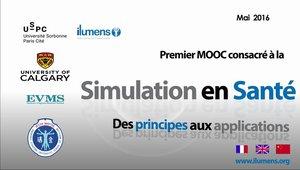
Simulation en Santé, des principes aux applications (FUN)

Simulation en Santé, des principes aux applications (FUN)

Le Mooc « Simulation en Santé » a pour ambition de donner à des non spécialistes un ensemble de connaissances permettant d'appréhender la simulation appliquée aux métiers de la santé, ses principes, ses outils, ses bonnes pratiques, et pour les plus motivés les premières données essentielles pour aborder un cours d’instructeur en simulation (Train the trainer program) et devenir demain formateur en simulation en santé.

Ce cours a pour objectif d’apporter l’ensemble des outils permettant aux professionnels de santé de :

  • Appréhender l’impact de la simulation pour l’amélioration de la qualité et la sécurité des soins,
  • Comprendre les principes éducatifs propres à la simulation (apprentissage par l’erreur, classe inversée, jamais la première fois sur un patient),
  • Défendre le projet de créer un programme de formation en simulation ou un centre,
  • Comprendre les différents outils, leurs avantages et inconvénients, et leur utilisation adaptée à des problématiques spécifiques,
  • Mettre en place une séance de simulation, notamment en écrivant son propre scénario,
  • Apprendre les différents éléments essentiels de compétences non techniques impliquées dans la bonne pratique médicale
  • Appréhender les bonnes pratiques du debriefing, et commencer à s’y exercer sur des vidéos exemples.

Ce MOOC est le fruit d’une collaboration internationale entre l’Université Sorbonne Paris Cité et son laboratoire de simulation (iLUMENS, Prs Antoine Tesniere et Alexandre Mignon), l’Université de Calgary et son centre de simulation KidSims (Pr Vincent Grant), l’Université East Virginia (Pr Donald Combs), et l’Université Jio Tong de Shanghai et son centre de simulation (Pr Rujiun Pan).
Go to Class
MOOC List is learner-supported. When you buy through links on our site, we may earn an affiliate commission.

Related Courses

HIV Science (FUN) FUN
Institut Pasteur

HIV Science (FUN)

Since the start of the epidemic HIV has infected over 75 million people and provoked more than 35 million deaths. Today, although HIV replication can be controlled by antiretroviral treatment, HIV infection remains an outstanding global health issue, with 36.7 million infected people and 1 million HIV-related deaths in 2016, according to WHO. Half of the infected population does not have access to antiretroviral treatment and 2 million new infections are registered every year. In addition there is currently no cure for HIV and antiretroviral treatment needs to be maintained for life. In this MOOC we will review different aspects of HIV infection: from its biological origin and its identification as the causative agent of AIDS to the perspectives of eradication.

No sessions available
5-12 Weeks
Chemicals and Health (Coursera) Coursera
Johns Hopkins University

Chemicals and Health (Coursera)

This course covers chemicals in our environment and in our bodies and how they impact our health. It addresses policies and practices related to chemicals, particularly related to how they get into our bodies (exposures), what they do when they get there (toxicology), how we measure them (biomonitoring) and their impact on our health. Most examples are drawn from the US.

Nov 9th 2026
5-12 Weeks
"Care for carers" Aider une personne âgée : un rôle à part entière. Conseils et soutien (FUN) FUN
Université Fédérale Toulouse Midi-Pyrénées

"Care for carers" Aider une personne âgée : un rôle à part entière. Conseils et soutien (FUN)

This course is entended for anyone engaged in a care relationship with older people in disability or dependency situations, whether formal or informal caregivers. This module is part of Care Campus, a unique partner ship of academic institutions companies cities and governemental agencies that aim to improve the quality of care of older citizens in Europe.

No sessions available
5-12 Weeks
The Social Context of Mental Health and Illness (Coursera) Coursera
University of Toronto

The Social Context of Mental Health and Illness (Coursera)

Learn how social factors promote mental health, influence the onset and course of mental illness, and affect how mental illnesses are diagnosed and treated. This course explores how our understanding of mental health and illness has been influenced by social attitudes and social developments in North America and around the world. The course begins by situating our contemporary mental health practices in historical context, then looks at different aspects of mental health, mental illness and mental health services and their connections to what’s going on in our social environment.

Nov 9th 2026
5-12 Weeks
De l'atome à l'humain : à la racine des mots scientifiques (FUN) FUN
Université de Lorraine

De l'atome à l'humain : à la racine des mots scientifiques (FUN)

Ce cours en ligne gratuit porte donc sur l’étymologie du vocabulaire scientifique et médical. Il s’adresse aux lycéens se préparant à la PACES, aux formations paramédicales, aux études scientifiques, aux STAPS... Il s’adresse également aux étudiants de ces différentes filières, ainsi qu’à toute personne intéressée par l’étymologie.

Sep 27th 2021
4 Weeks
Tuberculosis (FUN) FUN
Institut Pasteur

Tuberculosis (FUN)

To provide an up-to-date overview of the disease, the Institut Pasteur has created a MOOC dedicated to Tuberculosis. This course will provide a knowledge base that goes from the basics of TB to the current state of knowledge on various aspects of tuberculosis: the clinical picture, epidemiology, pediatric TB, factors affecting susceptibility to the disease, including HIV, diabetes and human genetics, immunology, vaccines, diagnosis, current and future ways to detect drug resistance, and how to treat drug sensitive and multi-drug resistant strains.

Sep 7th 2021
5-12 Weeks
Curanderismo: Global & Cultural Influences of Traditional Healing (Coursera) Coursera
University of New Mexico

Curanderismo: Global & Cultural Influences of Traditional Healing (Coursera)

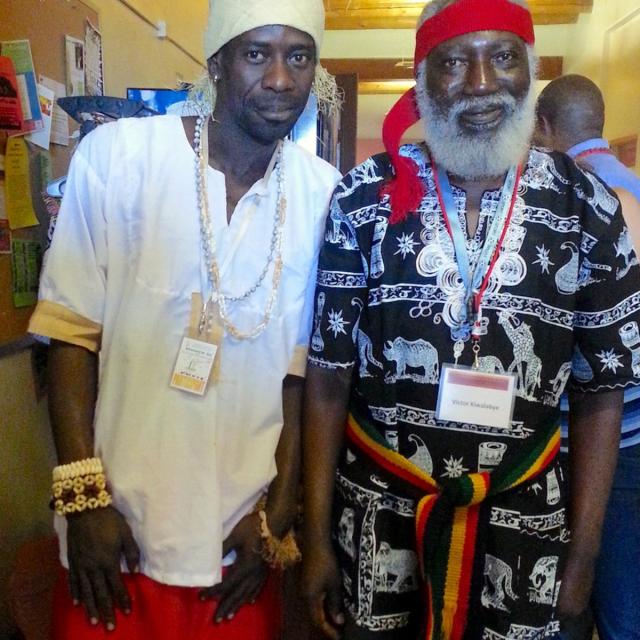
As the last of four courses on Curanderismo, the art of Hispanic/Latino traditional medicine, this course focuses specifically on traditional healing using different techniques of many countries around the world. As an educational and cultural platform, this course will share a number of traditional global perspectives.

Nov 9th 2026
5-12 Weeks
Medical Neuroscience (Coursera) Coursera
Duke University

Medical Neuroscience (Coursera)

Medical Neuroscience explores the functional organization and neurophysiology of the human central nervous system, while providing a neurobiological framework for understanding human behavior. In this course, you will discover the organization of the neural systems in the brain and spinal cord that mediate sensation, motivate bodily action, and integrate sensorimotor signals with memory, emotion and related faculties of cognition. The overall goal of this course is to provide the foundation for understanding the impairments of sensation, action and cognition that accompany injury, disease or dysfunction in the central nervous system. The course will build upon knowledge acquired through prior studies of cell and molecular biology, general physiology and human anatomy, as we focus primarily on the central nervous system.

Nov 9th 2026
13-24 Weeks
Diagnosis and prognosis biomarkers in global health (FUN) FUN
Institut Pasteur

Diagnosis and prognosis biomarkers in global health (FUN)

Biomarkers are the subject of considerable interest by scientists and researchers worldwide: they determine the use of targeted treatments (a major therapeutic advance in medicine), allow to measure the evolution of a disease or to indicate a particular physiological event. The aim of this MOOC is to review the interest of biomarkers for public health, based in particular on the research activities of the thirty-three institutes of the Institut Pasteur international network.

No sessions available
4 Weeks
Méditation et médecine en 2021 : éloge du care ? (FUN) FUN
Université de Paris

Méditation et médecine en 2021 : éloge du care ? (FUN)

Un parcours en 5 semaines pour Cultiver le prendre soin - S'interroger, Se nourrir, Ressentir, Respirer. Etudiantes en médecines, nous avons rencontré la méditation de pleine conscience comme une manière de rentrer en résonance, un moment avec soi, un souffle, une respiration, une manière de prendre soin de nous, pour mieux prendre soin des autres. Touchées par la vie, la mort, l’humain, l’impermanence, le doute, la peur, l'échec…Aujourd’hui femmes, médecins, nous l’avons transmis aux étudiants par l'enseignement.

Feb 5th 2022
5-12 Weeks