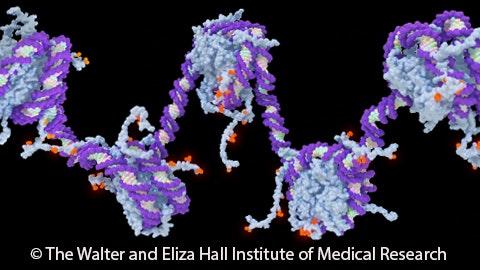
While the human genome sequence has transformed our understanding of human biology, it isn’t just the sequence of your DNA that matters, but also how you use it! How are some genes activated and others are silenced? How is this controlled? The answer is epigenetics.
Class Deals by MOOC List - Click here and see Coursera's Active Discounts, Deals, and Promo Codes.
pigenetics has been a hot topic for research over the past decade as it has become clear that aberrant epigenetic control contributes to disease (particularly to cancer). Epigenetic alterations are heritable through cell division, and in some instances are able to behave similarly to mutations in terms of their stability. Importantly, unlike genetic mutations, epigenetic modifications are reversible and therefore have the potential to be manipulated therapeutically. It has also become clear in recent years that epigenetic modifications are sensitive to the environment (for example diet), which has sparked a large amount of public debate and research.
This course will give an introduction to the fundamentals of epigenetic control. We will examine epigenetic phenomena that are manifestations of epigenetic control in several organisms, with a focus on mammals. We will examine the interplay between epigenetic control and the environment and finally the role of aberrant epigenetic control in disease.
All necessary information will be covered in the lectures, and recommended and required readings will be provided. There are no additional required texts for this course.
Syllabus
WEEK 1
Introduction to Epigenetic Control
An introduction to and definition of epigenetic control of gene expression, and its importance in normal development. We will learn what chromatin is, and how its composition and packaging can alter gene expression. We’ll also discuss the best-characterised epigenetic modification, DNA methylation, and how it is not only implicated in regulating gene expression, but also in maintaining genome stability.
WEEK 2
Epigenetic Modifications and Organisation of the Nucleus
We’ll discuss the molecular mechanisms for regulating gene expression in some detail, from how the DNA is packaged at a local level, right up to how the chromatin is positioned within the nucleus. We’ll learn about the chromatin modifications implicated in gene silencing and activation, the role of non-coding RNA, and higher order chromatin structures. This week will provide you with a good understanding of the basic mechanisms that will help you understand the processes we discuss throughout the rest of the course.
WEEK 3
Dosage Compensation
X chromosome inactivation is a really well-characterised epigenetic process that is now used as a model system to study epigenetic processes that are relevant more broadly. This is because it uses many epigenetic mechanisms, at many levels, to achieve really stable silencing of a whole chromosome. We’ll learn about this process and how it occurs in a mouse in great detail, which will greatly add to the mechanistic understanding gained in week two. We will then briefly discuss alternate mechanisms for dosage compensation that occur in other organisms.
WEEK 4
Genomic Imprinting and Epigenetic Reprogramming
We’ll learn about the two important periods during development for the erasure and resetting of the epigenome. There are two well-characterised features that are treated differently during epigenetic reprogramming; imprinted genes and repeats. We’ll learn about mechanisms for genomic imprinting, and study three examples in more depth.
WEEK 5
The Influence of the Environment on Epigenetic Control
We start to look at some of the big areas of interest in human epigenetics, including environmental influence on the epigenome, reprogramming of somatic cells back to stem cells, cloning, and potential transgenerational epigenetic inheritance. We’ll discuss what is known to happen to the epigenome during these process, and look at some seminal case studies.
WEEK 6
Mechanisms of Environmental Influence on Epigenetic Control and Transgenerational Epigenetic Inheritance Through the Gametes
A look at the mechanisms underlying some of the observations we discussed in week 5, through the study of model organisms. We’ll learn about metastable epialleles, which have allowed the study of transgenerational epigenetics in mice, and provided some evidence for transgenerational epigenetics in mammals.
WEEK 7
Cancer Epigenetics
This week we’ll bring together much of what we’ve learned in previous weeks of the course, to understand how the epigenome is affected, and can also affect, cancer development and progression. We’ll then go on to discuss the potential therapeutic benefits that can come from using epigenetic biomarkers, and targeting epigenetic modifiers in cancer.