Evolution Today (Coursera)

Evolution Today (Coursera)

In this course you will learn how evolution works. You will develop an understanding of evolutionary processes and their formative power. You will see how evolution has shaped biodiversity, and continuously influences our daily life. Evolution impacts human endeavors as varied as medicine, agriculture, psychology, economy, and culture. It is the major unifying principle for biology and a fundamental natural law.

Class Deals by MOOC List - Click here and see Coursera's Active Discounts, Deals, and Promo Codes.

In five weeks we will make evolution accessible for you and help you to recognize evolutionary processes around you, in nature as well as in society. We make use of the unique collection of Naturalis, the natural history museum in Leiden, but also take you to the field. Using classical and up-to-date examples, we will show you how scientists address evolutionary questions. In the last module, we will have a look at the future. How will humans evolve? And how do we influence our own evolution and that of other organisms?
This course is aimed at anybody with a drive to obtain a deeper, broader, and pragmatic understanding of evolution, including high-school students, BSc (undergraduate) biology students, MSc (graduate) students from other disciplines, medical professionals, conservation officers and educators in museums, libraries, national parks, and schools.

Syllabus

WEEk 1
Welcome to the course Evolution Today
Great that you are joining us! In this course you will learn about Evolution. Before you start with this course we invite you to first take a look around and meet your fellow learners. We would like to know what brings you here and what you would like to get out of the course.Good luck & we hope you will enjoy studying in this course!

WEEK 2
Do we change?
In this module, you are going to learn that a very powerful mechanism, natural selection, leads to evolutionary change. We are going to have a detailed look at what is required for this natural selection. And, knowing these conditions, we can judge whether traits in humans are evolving at the moment. This is a surprisingly simple module. I am looking forward to discuss human evolution with you at the end!

WEEK 3
How do we change?
This is a real puzzle-module. We are going to decipher the language of DNA, and see that mutations in this DNA lead to new variation. As we saw, variation is the raw material for natural selection. Thus, take your pen and pencil and unravel with me the code of your own DNA!

WEEK 4
Who is this "we" anyway?
In the first two modules, we have asked ourselves whether we experience evolutionary change, and if so, how this change comes about. In this module, we will explore who this "we" is anyway: is it us, the individual? Is it our species? Our genes? Who is in charge here?

WEEK 5
How have we (and haven't we) changed?
In this module, we will take a look at the limitations to evolution. Despite the strength of the process of natural selection, some things simply are not possible. Evolution has to play by the rules, and this module will explore what those rules are.

WEEK 6
How will we change?
In this module, we will have a look at the future. How will humans evolve, and, as our impact on the world increases, how will we affect the evolution of other organisms?
Go to Class
MOOC List is learner-supported. When you buy through links on our site, we may earn an affiliate commission.

Related Courses

Pensamiento Científico (Coursera) Coursera
Universidad Nacional Autónoma de México

Pensamiento Científico (Coursera)

¿El pensamiento científico es sólo para científicos? Su utilidad va mucho más allá, ayudando a las personas a tomar mejores decisiones todos los días. El objetivo de este curso es fomentar en pensamiento científico en los alumnos para ayudarles a tomar mejores decisiones profesionales, personales y sociales.

Aug 3rd 2026
5-12 Weeks
Bugs 101: Insect-Human Interactions (Coursera) Coursera
University of Alberta

Bugs 101: Insect-Human Interactions (Coursera)

Of all the animals on earth, which are the strongest for their size? What about the fastest? Who were the first animals to evolve flight? Insects take all of these titles and more! As the most abundant animals on the planet, insects and other arthropods affect our lives in so many ways. From beneficial interactions like pollination and biological pest control, to the transmission of life threatening diseases; this course will teach you about the big ways that these little arthropods impact our lives.

Aug 17th 2026
13-24 Weeks
Introduction to Systems Biology (Coursera) Coursera
Icahn School of Medicine at Mount Sinai

Introduction to Systems Biology (Coursera)

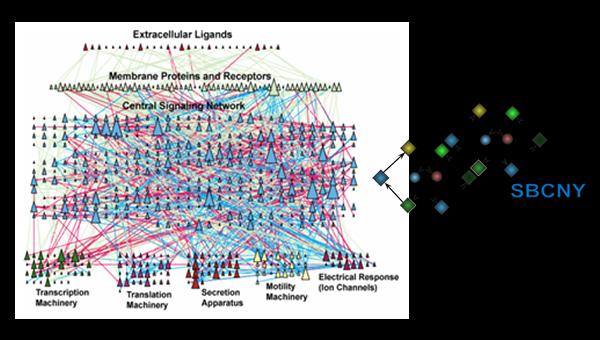
This course will introduce the student to contemporary Systems Biology focused on mammalian cells, their constituents and their functions. Biology is moving from molecular to modular. As our knowledge of our genome and gene expression deepens and we develop lists of molecules (proteins, lipids, ions) involved in cellular processes, we need to understand how these molecules interact with each other to form modules that act as discrete functional systems.

Aug 10th 2026
5-12 Weeks
Nanotechnology and Nanosensors, Part 1 (Coursera) Coursera
Technion - Israel Institute of Technology

Nanotechnology and Nanosensors, Part 1 (Coursera)

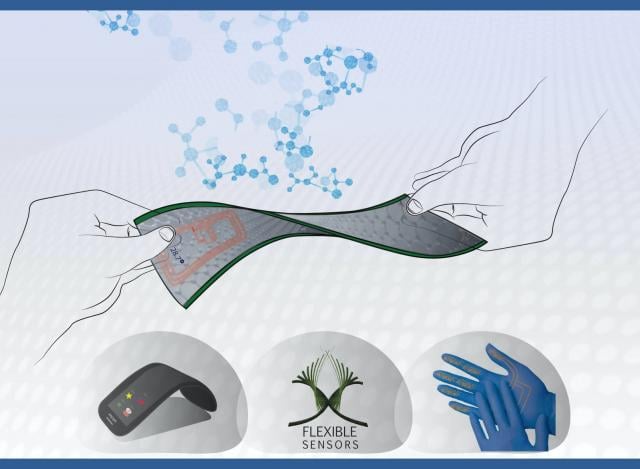
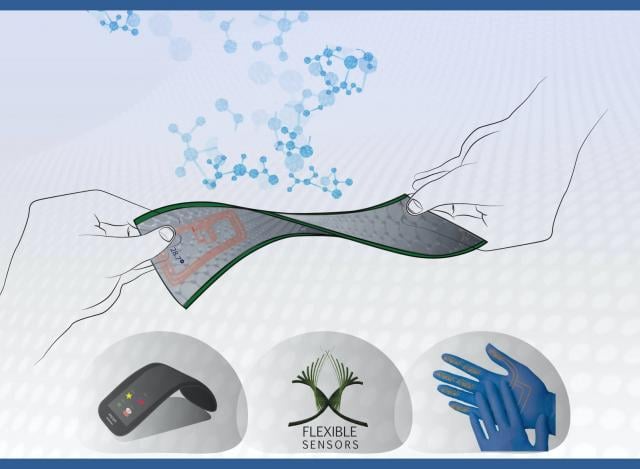
Nanotechnology and nanosensors are broad, interdisciplinary areas that encompass (bio)chemistry, physics, biology, materials science, electrical engineering and more. The present course will provide a survey on some of the fundamental principles behind nanotechnology and nanomaterials and their vital role in novel sensing properties and applications. The course will discuss interesting interdisciplinary scientific and engineering knowledge at the nanoscale to understand fundamental physical differences at the nanosensors.

Aug 10th 2026
5-12 Weeks
DNA Decoded (Coursera) Coursera
McMaster University

DNA Decoded (Coursera)

Are you a living creature? Then, congratulations! You’ve got DNA. But how much do you really know about the microscopic molecules that make you unique? Why is DNA called the “blueprint of life”? What is a “DNA fingerprint”? How do scientists clone DNA? What can DNA teach you about your family history? Are Genetically Modified Organisms (GMOs) safe? Is it possible to revive dinosaurs by cloning their DNA?

Aug 10th 2026
4 Weeks
Finding Mutations in DNA and Proteins (Bioinformatics VI) (Coursera) Coursera
University of California, San Diego

Finding Mutations in DNA and Proteins (Bioinformatics VI) (Coursera)

In previous courses in the Specialization, we have discussed how to sequence and compare genomes. This course will cover advanced topics in finding mutations lurking within DNA and proteins. In the first half of the course, we would like to ask how an individual's genome differs from the "reference genome" of the species.

Aug 17th 2026
5-12 Weeks
Ecosystem Services: a Method for Sustainable Development (Coursera) Coursera
University of Geneva

Ecosystem Services: a Method for Sustainable Development (Coursera)

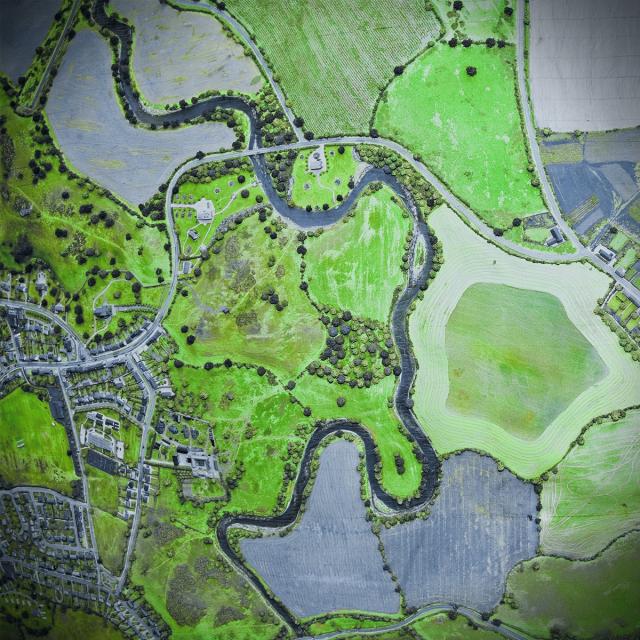
Ecosystem services are a way of thinking about – and evaluating – the goods and services provided by nature that contribute to the well-being of humans. This MOOC will cover scientific (technical), economic, and socio-political dimensions of the concept through a mix of theory, case-studies, interviews with specialists and a serious-game.

Aug 10th 2026
5-12 Weeks
Aeroecology: Exploring Biodiversity with Radar (Coursera) Coursera
University of Leeds

Aeroecology: Exploring Biodiversity with Radar (Coursera)

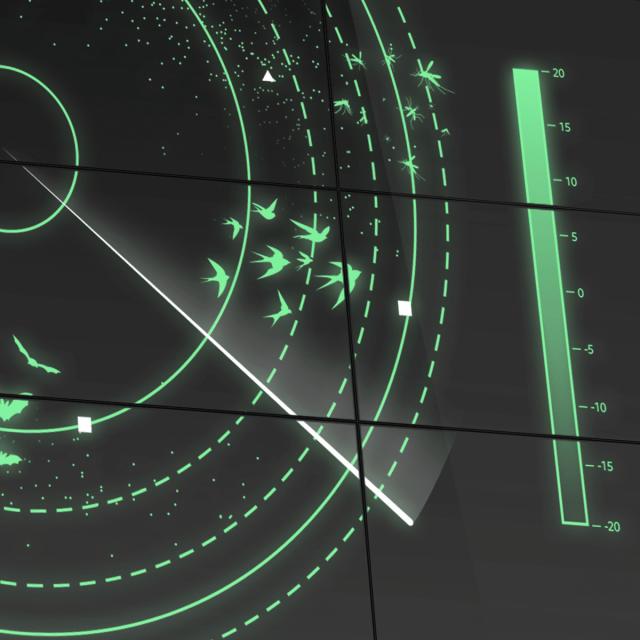
Learn how aeroecology, a discipline that studies airborne life forms, has been revolutionised with the use of radar with this unique course. This course is designed to help scientists, researchers as well as ecology enthusiasts to develop skills in using radar to explore biodiversity. You will explore the origins and evolution of radar from a military technology to a powerful tool with multiple scientific applications, including aeroecology. You will then be introduced to studying global biodiversity trends and learn how to evaluate traditional methods and emerging technologies used by scientists to monitor the natural world.

Aug 10th 2026
2 Weeks
Nanotechnology and Nanosensors, Part 2 (Coursera) Coursera
Technion - Israel Institute of Technology

Nanotechnology and Nanosensors, Part 2 (Coursera)

Learn about novel sensing tools that make use of nanotechnology to screen, detect and monitor various events in personal or professional life. Together, we will lay the groundwork for infinite innovative applications, starting from diagnosis and treatments of diseases, continuing with quality control of goods and environmental aspects, and ending with monitoring security issues.

Aug 10th 2026
5-12 Weeks