Emergent Phenomena in Science and Everyday Life (Coursera)

Emergent Phenomena in Science and Everyday Life (Coursera)

Before the advent of quantum mechanics in the early 20th century, most scientists believed that it should be possible to predict the behavior of any object in the universe simply by understanding the behavior of its constituent parts. For instance, if one could write down the equations of motion for every atom in a system, it should be possible to solve those equations (with the aid of a sufficiently large computing device) and make accurate predictions about that system’s future.

Class Deals by MOOC List - Click here and see Coursera's Active Discounts, Deals, and Promo Codes.

However, there are some systems that defy this notion. Consider a living cell, which consists mostly of carbon, hydrogen, and oxygen along with other trace elements. We can study these components individually without ever imagining how combining them in just the right way can lead to something as complex and wonderful as a living organism! Thus, we can consider life to be an emergent property of what is essentially an accumulation of constituent parts that are somehow organized in a very precise way.
This course lets you explore the concept of emergence using examples from materials science, mathematics, biology, physics, and neuroscience to illustrate how ordinary components when brought together can collectively yield unexpected, surprising behaviors.
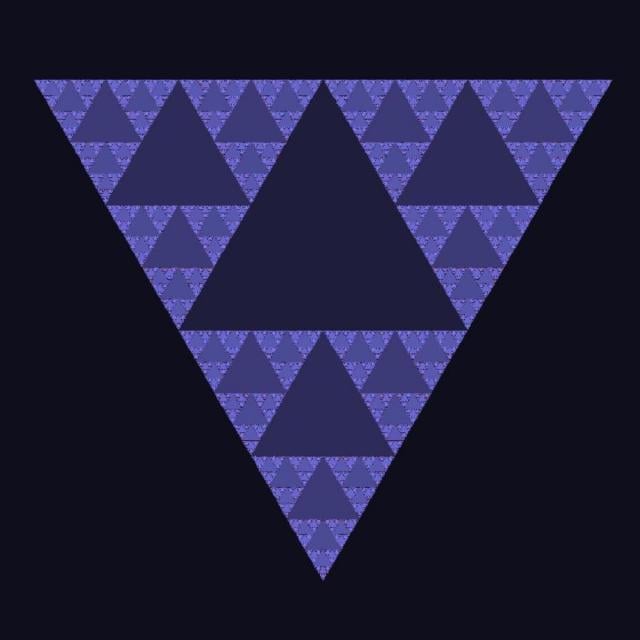
Note: The fractal image (Sierpinkski Triangle) depicted on the course home page was generated by a software application called XaoS 3.4, which is distributed by the Free Software Foundation under a GNU General Public License.
Upon completing this course, you will be able to:

  1. Explain the difference in assumptions between an emergent versus reductive approach to science.
  2. Explain why the reductivist approach is understood by many to be inadequate as a means of describing and predicting complex systems.
  3. Describe how the length scale used to examine a phenomenon can contribute to how you analyze and understand it.
  4. Explain why the search for general principles that explain emergent phenomena make them an active locus of scientific investigation.
  5. Discuss examples of emergent phenomena and explain why they are classified as emergent.

Syllabus

WEEK 1
Welcome - Let's Get Started
In this module we'll introduce the concept of emergence and provide an orientation to how this course will proceed.

WEEK 2
The Mystery of Foam
Can a substance be both a solid and a liquid? In this module we’ll take a close look at our first emergent phenomena, complex fluids.

WEEK 3
Chaotic Dynamics
Are seemingly random events truly random? In this module, we'll examine ways that deterministic processes can produce the appearance of randomness.

WEEK 4
Pattern Formation and Systems Biology
Have you ever wondered why tigers have spots and leopards have spots? This module helps to explain how these and other patterns form in nature.

WEEK 5
Quantum Coherence, Many-Body States, and Quantum Computing
How can we study quantum events from both a reductionist and emergent perspective? This module takes a look at the atomic and quantum level of some everyday phenomena.

WEEK 6
Consciousness
One of the most awe inspiring emergent phenomena is how consciousness emerges from complex collections of atoms and molecules. In this module, we’ll take a look at how the various regions of our brain coordinate and interact to produce consciousness.

Go to Class
MOOC List is learner-supported. When you buy through links on our site, we may earn an affiliate commission.

Related Courses

Epidemics - the Dynamics of Infectious Diseases (Coursera) Coursera
Pennsylvania State University

Epidemics - the Dynamics of Infectious Diseases (Coursera)

Not so long ago, it was almost guaranteed that you would die of an infectious disease. In fact, had you been born just 150 years ago, your chances of dying of an infectious disease before you've reached the tender age of 5 would have been extremely high. Since then, science has come a long way in understanding infectious diseases - what they are, how they spread, and how they can be prevented. But diseases like HIV/AIDS, Malaria, Tuberculosis, or the flu are still major killers worldwide, and novel emerging diseases are a constant threat to public health. In addition, the bugs are evolving. Antibiotics, our most potent weapon against bacterial infections, are losing their power because the bacteria are becoming resistant. In this course, we'll explore the major themes of infectious diseases dynamics.

Jun 22nd 2026
5-12 Weeks
Mindfulness para ser más efectivo (Coursera) Coursera
UBITS

Mindfulness para ser más efectivo (Coursera)

La consciencia cobra vital importancia en la creación de estados de bienestar, armonía y paz, permitiendo disminuir los niveles de estrés, ansiedad y depresión que causa pensar en el pasado, presente o futuro. Así, este curso te brinda herramientas del mindfulness para que puedas centrar tu atención y energía en el aquí y el ahora, disfrutando y viviendo el momento presente.

Jun 22nd 2026
5-12 Weeks
Introducción a la Psicología (Coursera) Coursera
Universidad Austral

Introducción a la Psicología (Coursera)

¿Qué es el inconsciente? ¿Qué es la autoestima? ¿Qué es el apego y cómo incide en los vínculos adultos ? ¿Cómo funciona nuestro cerebro y cómo se modifica a lo largo de la vida? En este curso se abordarán estos interrogantes y diversos temas vinculados con la Psicología desde una mirada académica y mediante el estudio de los principales autores que han realizado significativos aportes a esta ciencia.

Jun 22nd 2026
5-12 Weeks
Finding Hidden Messages in DNA (Bioinformatics I) (Coursera) Coursera
University of California, San Diego

Finding Hidden Messages in DNA (Bioinformatics I) (Coursera)

This course begins a series of classes illustrating the power of computing in modern biology. Please join us on the frontier of bioinformatics to look for hidden messages in DNA without ever needing to put on a lab coat. In the first half of the course, we investigate DNA replication, and ask the question, where in the genome does DNA replication begin? We will see that we can answer this question for many bacteria using only some straightforward algorithms to look for hidden messages in the genome.

Jun 22nd 2026
5-12 Weeks
Introduction to Psychology (Coursera) Coursera
University of Toronto

Introduction to Psychology (Coursera)

This course highlights the most interesting experiments within the field of psychology, discussing the implications of those studies for our understanding of the human mind and human behavior. We will explore the brain and some of the cognitive abilities it supports like memory, learning, attention, perception and consciousness. We will examine human development - both in terms of growing up and growing old - and will discuss the manner in which the behavior of others affect our own thoughts and behavior.

Jun 15th 2026
5-12 Weeks
Specialty Topics: Biology Across Disciplines (Coursera) Coursera
University of Colorado Boulder

Specialty Topics: Biology Across Disciplines (Coursera)

In this course, we will explore the applicability and relationship of biology to the arts, business, and psychology. First, we’ll discuss art as a foundational practice to biology and how biology as a science can explain how we interact with the arts, in particular, our experiences making and listening to music. Next, we will discuss the business of biology and how research is funded and the process of clinical trials and human subjects research.

Jun 22nd 2026
5-12 Weeks
The Science of the Solar System (Coursera) Coursera
Caltech

The Science of the Solar System (Coursera)

Learn about the science behind the current exploration of the solar system in this free class. Use principles from physics, chemistry, biology, and geology to understand the latest from Mars, comprehend the outer solar system, ponder planets outside our solar system, and search for habitability in our neighborhood and beyond. This course is generally taught at an advanced level assuming a prior knowledge of undergraduate math and physics, but the majority of the concepts and lectures can be understood without these prerequisites.

Jun 22nd 2026
5-12 Weeks