Living with Dementia: Impact on Individuals, Caregivers, Communities and Societies (Coursera)

Living with Dementia: Impact on Individuals, Caregivers, Communities and Societies (Coursera)

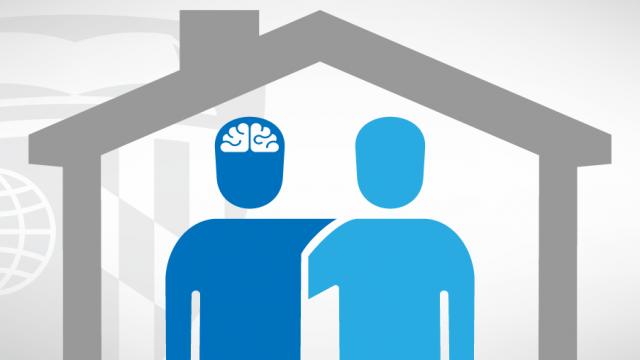
Health professionals and students, family caregivers, friends of and affected individuals, and others interested in learning about dementia and quality care will benefit from completing the course. Led by Drs. Nancy Hodgson and Laura Gitlin, participants will acquire foundational knowledge in the care of persons with Alzheimer’s Disease and other neurocognitive disorders.

Class Deals by MOOC List - Click here and see Coursera's Active Discounts, Deals, and Promo Codes.

Suggested Readings:

Syllabus

WEEK 1
About Dementia
In this module, we introduce learners to dementia. We present a socio-ecological framework for understanding the live experience of dementia and by which this course is organized. We discuss the global impact, pathophysiology, and stages of dementia.

WEEK 2
Impact on the Person
In this module, we focus on the impact of dementia for individuals. You will learn about common unmet needs of persons with dementia as well as the impact of core clinical features such as behavioral and psychological symptoms. Also, you will learn ways to support quality of life of a person with dementia.

WEEK 3
Caregiving and the Home Environment
In this module, we expand our lens to consider family caregivers’ needs. You will learn the psychosocial impact of caring for a person with dementia and the role of stress. We provide examples of how to reduce stress, use the physical environment to support care tasks and well-being, and examine the potential role of technologies to improve dementia care.

WEEK 4
Community Level
ln this module, we examine the community level. We discuss how the interprofessional team plays a key role in providing comprehensive dementia care. Also, we examine the concept of dementia-friendly communities and provide some examples from around the world.

WEEK 5
Society at Large
In this module, we provide an overview of national plans and policies. We identify elements of key plans and review the impact of such plans from a global perspective. You will also have the opportunity to develop an action plan that addresses an unmet need that you identify either in your home, community, or place of work.


Go to Class
MOOC List is learner-supported. When you buy through links on our site, we may earn an affiliate commission.

Related Courses

Voice Disorders: What Patients and Professionals Need to Know (Coursera) Coursera
Icahn School of Medicine at Mount Sinai

Voice Disorders: What Patients and Professionals Need to Know (Coursera)

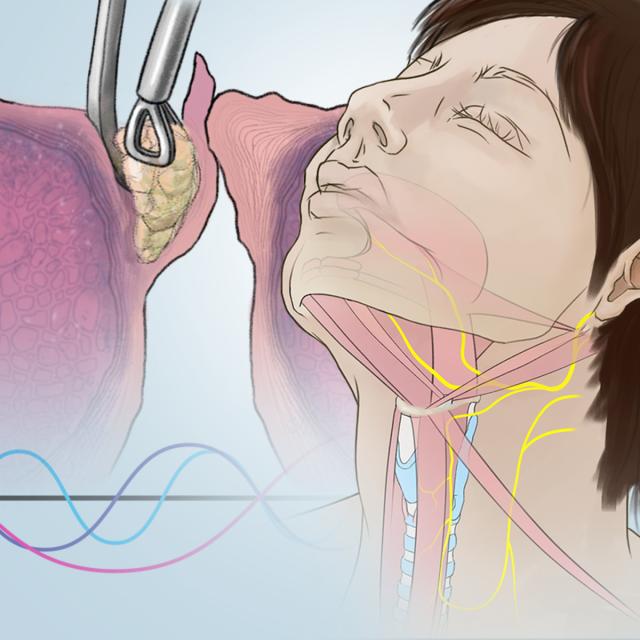
Knowledge regarding vocal production physiology and management options for voice disorders have experienced rapid growth over the past 40 years. This growth has resulted in a knowledge gap amongst patients and practitioners. Entirely new subspecialties of laryngology under otolaryngology and vocology under speech-language pathology have developed in response to this gap. This MOOC (Massive Open Online Course) is designed to educated patients, allied healthcare providers, vocal trainers/coaches, general medical practitioners and otolaryngologists.

Jun 8th 2026
5-12 Weeks
Genomics: Decoding the Universal Language of Life (Coursera) Coursera
University of Illinois at Urbana-Champaign

Genomics: Decoding the Universal Language of Life (Coursera)

What is a genome? A genome contains all of the information that a cell needs to develop, function, and reproduce itself, and all the information needed for those cells to come together to form a person, plant, or animal. Genomes contain an organism’s complete set of genes, and also the even tinier genetic structures that help regulate when and how those genes are used. The ability to regrow a torn ligament, the clues that might predict the onset of mental illness, the nutritional potential of crops, and even the history of life itself, are all encoded in genomes. By taking this course, you will discover how scientists are deciphering the language of genomes to learn how to develop sustainable food and fuel supplies, improve disease treatment and prevention, and protect our environment.

Jun 8th 2026
5-12 Weeks
HI-FIVE: Health Informatics For Innovation, Value & Enrichment (Clinical Perspective) (Coursera) Coursera
Columbia University

HI-FIVE: Health Informatics For Innovation, Value & Enrichment (Clinical Perspective) (Coursera)

HI-FIVE (Health Informatics For Innovation, Value & Enrichment) Training is a 12-hour online course designed by Columbia University in 2016, with sponsorship from the Office of the National Coordinator for Health Information Technology (ONC). The training is role-based and uses case scenarios. Also, it has additional, optional modules on other topics of interest or relevance. Although we suggest to complete the course within a month's timeframe, the course is self-paced and so you can start and finish the course at anytime during a month's time period. No additional hardware or software are required for this course.

Jun 8th 2026
4 Weeks
Service Transformed: Lessons in U.S. Veteran Centered Care (Coursera) Coursera
University of Michigan

Service Transformed: Lessons in U.S. Veteran Centered Care (Coursera)

Improving health care for veterans has become a matter of national attention and has gained increasing attention from the medical community. With the current surge of veterans reintegrating into civilian society it is critical to improve the training of the next cadre of providers who will provide care for our veterans. It is widely known that veterans receive care in all aspects of the health system, thus providers in veteran focused care facilities, military health serves and civilian locals must be aware of the unique needs of veterans. It is perhaps even more important to educate civilian providers who may be unfamiliar with the unique physical, mental and emotional needs related to military service.

Jun 8th 2026
5-12 Weeks
Introduction to the Biology of Cancer (Coursera) Coursera
Johns Hopkins University

Introduction to the Biology of Cancer (Coursera)

Over 500,000 people in the United States and over 8 million people worldwide are dying every year from cancer. As people live longer, the incidence of cancer is rising worldwide and the disease is expected to strike over 20 million people annually by 2030. This open course is designed for people who would like to develop an understanding of cancer and how it is prevented, diagnosed, and treated.

Jun 8th 2026
5-12 Weeks
Easing the burden of obesity, diabetes and cardiovascular disease (Coursera) Coursera
The University of Sydney

Easing the burden of obesity, diabetes and cardiovascular disease (Coursera)

This course is multidisciplinary in nature, and aims to equip the global audience of interested lay people, people with chronic disease, public health researchers, health clinicians, students, administrators, and researchers to reflect on the overall impact of the burden of chronic disease. It shows how all chronic diseases (obesity, diabetes, cardiovascular disease, chronic obstructive pulmonary disease, and cancer) are related by a set of common causes, and that such diseases should be tackled, not individually, but as part of a complex system, with interrelated contributing factors. These factors are genetic, environmental, psychological, economic, social, developmental, and media related.

Jun 8th 2026
5-12 Weeks
Primeros Auxilios Psicológicos (PAP) (Coursera) Coursera
Universitat Autònoma de Barcelona

Primeros Auxilios Psicológicos (PAP) (Coursera)

Este curso on-demand (ABIERTO, se puede cursar en cualquier momento), impartido en castellano por la Universidad Autónoma de Barcelona y el Centro de Crisis de Barcelona, está destinado a entrenar en la aplicación de primeros auxilios psicológicos (PAP) a personas afectadas por situaciones altamente estresantes, abarcando tanto emergencias cotidianas (incidentes críticos estadísticamente frecuentes que afectan de manera muy intensa: un accidente de tráfico, una hospitalización, una agresión o la muerte traumática o repentina de una persona, etc.) como emergencias comunitarias y/o masivas (sucesos infrecuentes, que afectan a muchas personas o a una comunidad entera y que sobrepasan con mucho lo que sucede habitualmente en ella: una catástrofe natural, un accidente ferroviario o aéreo o un atentado).

Jun 8th 2026
5-12 Weeks
Health Concepts in Chinese Medicine (Coursera) Coursera
The Hong Kong University of Science and Technology - HKUST

Health Concepts in Chinese Medicine (Coursera)

Chinese Medicine and Modern Medicine are two distinct medical systems, yet they both aim at the prevention and treatment of human diseases. With this in mind, we should understand the practice of Chinese Medicine in the context of Modern Medicine. In this course, we explore the basic theories underlying the practice of Chinese Medicine, compare and contrast the use of Chinese Medicine and Modern Medicine in Preventive Health, and discuss how to restore a healthy condition and understand the pharmacological basis of different types of Chinese tonifying herbs.

Jun 8th 2026
5-12 Weeks
Soul Beliefs: Causes and Consequences - Unit 3: How Does It All End? (Coursera) Coursera
Rutgers University

Soul Beliefs: Causes and Consequences - Unit 3: How Does It All End? (Coursera)

Throughout history, the vast majority of people around the globe have believed they have, however defined, a “soul.” While the question of whether the soul exists cannot be answered by science, what we can study are the causes and consequences of various beliefs about the soul and its prospects of surviving the death of the body. Why are soul and afterlife beliefs so common in human history? Are there adaptive advantages to assuming souls exist?

Jun 8th 2026
5-12 Weeks
PrEParing: PrEP for Providers and Patients (Coursera) Coursera
Johns Hopkins University

PrEParing: PrEP for Providers and Patients (Coursera)

Pre-Exposure Prophylaxis (PrEP) using the antiretroviral medication emtricitibine/tenofovir approved in countries around the world is a highly effective means of reducing transmission of HIV through sexual encounters and needle sharing. This Johns Hopkins University course PrEPares you with essential information, concepts and practical advice regarding PrEP from leaders in the field. A first of its kind learning opportunity, both providers and patients learn from the same experts through content that meets the needs of both audiences, while facilitating the opportunity for a shared community space.

Jun 8th 2026
5-12 Weeks