Severe to Profound Intellectual Disability: Circles of Care and Education (Coursera)

Severe to Profound Intellectual Disability: Circles of Care and Education (Coursera)

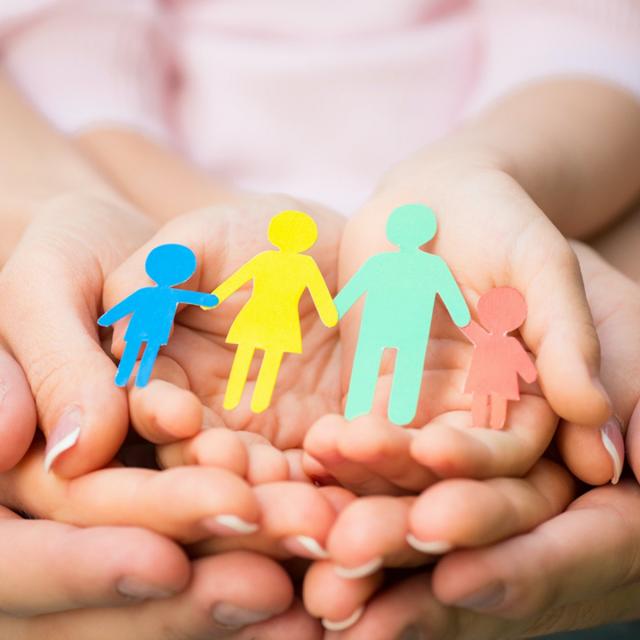
This course is about caring for and educating children (and youth) with severe to profound intellectual disability. We use the idea of 'circles' to position the child at the center of the many levels of support needed. Around the child are circles of care and education - such as the parents, family, friends, caregivers, educators, health care workers and others such as neighbors, business owners and community members.

Class Deals by MOOC List - Click here and see Coursera's Active Discounts, Deals, and Promo Codes.

Each one has an important role to play in the life of a person with an intellectual disability and can be seen as a caregiver and educator. Although this course is aimed particularly at caregivers who work at a special centre or in a private home, each person in the circle of care and education plays a valuable role and will find the course useful.
During the course you can gain greater understanding about intellectual disability, levels of severity of intellectual disability and the history of intellectual disability. You will also start to understand how you can support children and youth with severe to profound intellectual disability so that they can reach their full potential and become participating members of society. We look at lifelong learning by exploring brain development, the learning process and how to maximise the opportunities for learning.
With input from a range of experts, we consider how best learning can be facilitated. This includes looking at children’s learning support needs, how to go about planning activities for the learning programme as well as how to empower multiple people who work in a team to care and educate children with severe to profound intellectual disability.
In the last week, we focus on rights, advocacy and relationships of care. Empowering and caring for caregivers themselves is a key focus of the course.

Syllabus

WEEK 1
Who is the child with severe to profound intellectual disability?
This week focuses on understanding the child (or person) with severe to profound intellectual disability. We will look at the definitions and terms related to intellectual disability and provide an overview of the history of intellectual disability. We will also explore how the needs and rights of children with severe to profound intellectual disability can be supported, with a particular emphasis on their right to education. We invite you to comment in the discussion forum, check your knowledge in the practice quizzes and take the graded quiz at the end of the week.

WEEK 2
Lifelong learning
Lifelong learning is an approach that views everyday living as providing children with severe to profound intellectual disability opportunities to learn. With input from several experts, we'll explore how children with severe to profound intellectual disability can learn with appropriate support, what can be done to best facilitate the learning process and the importance of the learning environment. Attitudes and communication are highlighted as being central to creating effective environments for learning. Researchers also report on their findings from a local study on intellectual disability and life long learning in South Africa. At the end of this week, there are additional readings, a forum for discussion and a graded quiz.

WEEK 3
Facilitating learning
This week we look at the learning support needs of children with severe to profound intellectual disability. We consider how to set up learning programmes and integrate different skills and activities. We look at how to change or adapt these programmes to meet the specific needs of mixed groups of children and those in different stages of learning. We also explore the role of structure and routine in creating effective learning environments. Lastly, we look at empowering the caring team, to support the development of children with severe to profound intellectual disability. At the end of this week, you will be asked to critically evaluate a learning programme and review the assignment of peers.

WEEK 4
Rights, advocacy and relationships of care
This final week focuses on the relationships of care. We explore ways of giving agency to children with severe to profound intellectual disability who have been central to advocacy campaigns for their full inclusion in society. We also hear from caregivers who are, in many cases the key advocates for persons with intellectual disability. The circle of care for the caregiver is discussed, highlighting how they too need to be cared for and empowered. At the end of this week, there is a graded quiz. You may also choose to do the optional Honors Peer Review assignment.
Go to Class
MOOC List is learner-supported. When you buy through links on our site, we may earn an affiliate commission.

Related Courses

Lymphoedema: Monitoring & Intervention After Breast Cancer (Coursera) Coursera
Macquarie University

Lymphoedema: Monitoring & Intervention After Breast Cancer (Coursera)

Lymphoedema following breast cancer treatment is a poorly understood and under-researched condition which can significantly impact physical and psychological function, reduce quality of life and result in substantial cost burdens to both patients and the healthcare system. In these interactive modules we will cover an introduction to lymphoedema, lymphatic physiology and anatomy, assessment and treatment, as well as utilise case studies to understand the prospective surveillance and early intervention model of care in breast cancer rehabilitation.

Sep 7th 2026
4 Weeks
Curanderismo: Traditional Healing Using Plants (Coursera) Coursera
University of New Mexico

Curanderismo: Traditional Healing Using Plants (Coursera)

As one of four courses on Curanderismo, the art of Hispanic/Latino traditional medicine, this course focuses specifically on the use of plants in traditional healing. As an educational and cultural platform, this course will share the history, influences, and contributions of traditional medicine. Trained traditional healers will share their knowledge of the healing properties of plants commonly found in the Southwestern United States and Mexico through practical applications that can still be used today.

Sep 14th 2026
5-12 Weeks
Introduction to Hearing Loss (Coursera) Coursera
Icahn School of Medicine at Mount Sinai

Introduction to Hearing Loss (Coursera)

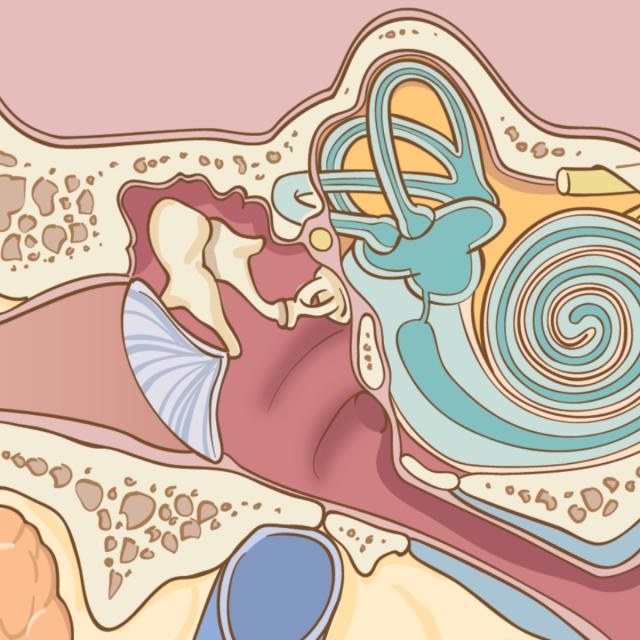
Welcome to Introduction to Hearing Loss. Disorders of the ear range from simple, easily treated entities (such as wax or cerumen impaction) to the highly complex (such as permanent hearing loss). Many of these disorders manifest with similar symptoms and may be difficult to differentiate without a basic understanding of the anatomy of the ear and auditory pathway.

Sep 7th 2026
4 Weeks
Ecosystems of California (Coursera) Coursera
University of California, Santa Cruz

Ecosystems of California (Coursera)

This course surveys the diversity, structure and functioning of California’s ecosystems through time and the ways they have influenced and responded to human activities and stewardship. Topics include ecosystem drivers such as climate, soils, and land use history; human and ecological prehistory of the state; comparative marine, freshwater, and terrestrial ecosystem dynamics; and managed ecosystems such as range, fisheries and agriculture in California.

Sep 7th 2026
5-12 Weeks
Psychological First Aid (Coursera) Coursera
Johns Hopkins University

Psychological First Aid (Coursera)

Learn to provide psychological first aid to people in an emergency by employing the RAPID model: Reflective listening, Assessment of needs, Prioritization, Intervention, and Disposition. Utilizing the RAPID model (Reflective listening, Assessment of needs, Prioritization, Intervention, and Disposition), this specialized course provides perspectives on injuries and trauma that are beyond those physical in nature. The RAPID model is readily applicable to public health settings, the workplace, the military, faith-based organizations, mass disaster venues, and even the demands of more commonplace critical events, e.g., dealing with the psychological aftermath of accidents, robberies, suicide, homicide, or community violence.

Sep 7th 2026
5-12 Weeks
Anatomy of the Abdomen and Pelvis; a journey from basis to clinic. (Coursera) Coursera
Leiden University,Leiden University Medical Center

Anatomy of the Abdomen and Pelvis; a journey from basis to clinic. (Coursera)

In this anatomy course you will explore the organs involved in our food digestion and discover the common causes of abdominal and pelvic pain. The latest graphics and animations will help you to find new insights and understanding of this part of the body, that has been the focus of anatomical research for centuries and presently arouses renewed scientific interest. You will explore the 3D anatomy of the organs from a basic level, providing thorough anatomical understanding, to its advanced application in surgical procedures.

Sep 7th 2026
5-12 Weeks
Community Awareness Course: Sexuality and Disability (Coursera) Coursera
University of Minnesota

Community Awareness Course: Sexuality and Disability (Coursera)

This community awareness course from the University of Minnesota Program on Human Sexuality will provide you with a solid introduction to human sexuality for those living with disabilities. Often there are assumptions that the disabled or differently abled people are not sexual, do not have sexual needs, or cannot be involved sexually. In this professionally produced one-hour course, you'll learn about the basics of disabilities and human sexuality.

Sep 7th 2026
5-12 Weeks
Essentials of Global Health (Coursera) Coursera
Yale University

Essentials of Global Health (Coursera)

Essentials of Global Health is a comprehensive introduction to global health. It is meant to introduce you to this topic in well-structured, clear and easy to understand ways. Much of the course will focus on five questions: What do people get sick, disabled and die from; Why do they suffer from these conditions? Which people are most affected? Why should we care about such concerns? What can be done to address key health issues, hopefully at least cost, as fast as possible, and in sustainable ways?

Sep 7th 2026
5-12 Weeks
The Oral Cavity: Portal to Health and Disease (Coursera) Coursera
University of Pennsylvania

The Oral Cavity: Portal to Health and Disease (Coursera)

This course will focus on the interprofessional realtionship of dentistry and medicine. For each session, the medical specialist will present a broad overview of specific disease entity which will be followed by a dental educator discussing the relevant oral manifestations and implications. The final module of each session will be devoted to the interaction between the dental and other health care professionals.

Sep 7th 2026
5-12 Weeks
Understanding Medical Research: Your Facebook Friend is Wrong (Coursera) Coursera
Yale University

Understanding Medical Research: Your Facebook Friend is Wrong (Coursera)

How can you tell if the bold headlines seen on social media are truly touting the next big thing or if the article isn't worth the paper it's printed on? Understanding Medical Studies, will provide you with the tools and skills you need to critically interpret medical studies, and determine for yourself the difference between good and bad science. The course covers study-design, research methods, and statistical interpretation. It also delves into the dark side of medical research by covering fraud, biases, and common misinterpretations of data. Each lesson will highlight case-studies from real-world journal articles.

Sep 7th 2026
5-12 Weeks
Mind Control: Managing Your Mental Health During COVID-19 (Coursera) Coursera
University of Toronto

Mind Control: Managing Your Mental Health During COVID-19 (Coursera)

Never in the history of humanity have so many people been feeling intense anxiety related to COVID-19 and the world it will leave in its wake. The intent of this course is to give you a deeper understanding of the anxiety reaction as it relates to various aspects of our current life, ranging from our consumption of news to the way we talk to our children about this. I will also give you clear strategies for managing and, in fact, turning off the anxiety response at least for short periods.

Sep 7th 2026
4 Weeks
Introduction to Systems Biology (Coursera) Coursera
Icahn School of Medicine at Mount Sinai

Introduction to Systems Biology (Coursera)

This course will introduce the student to contemporary Systems Biology focused on mammalian cells, their constituents and their functions. Biology is moving from molecular to modular. As our knowledge of our genome and gene expression deepens and we develop lists of molecules (proteins, lipids, ions) involved in cellular processes, we need to understand how these molecules interact with each other to form modules that act as discrete functional systems.

Sep 7th 2026
5-12 Weeks