EdX

Backyard Meteorology: The Science of Weather (edX)

Backyard Meteorology: The Science of Weather (edX)

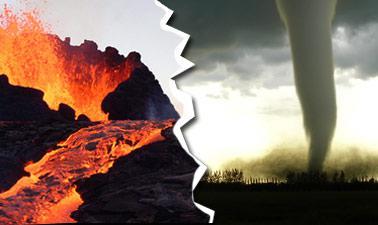
Learn to forecast the weather just by looking out your window. The weather forecasts we see every day are based on an army of meteorological sensing networks and intensive computer modeling. Before the rise of these technologies, predictions were made by methods like discerning cloud formations and wind directions.

Class Deals by MOOC List - Click here and see EdX's Active Discounts, Deals, and Promo Codes.

This course will explore the science behind weather systems by teaching the observational skills needed to make a forecast without using instruments or computer models. We'll discuss the physical processes driving weather and the global forces that shape global climate systems. Finally, we will examine the limits of prediction in both human observations and computer models.
Can the flap of a butterfly's wings in Brazil set off a tornado in Texas? Take this course to find out!

What you'll learn

  • The role of air, water, and wind in weather systems
  • How to estimate local wind speed and direction
  • How to avoid being struck by lightning
  • How to identify cloud types and features
  • How to describe the attributes of thunderstorms and tornadoes
  • How to collect and interpret data and observations to predict the next day's weather
  • The benefits and drawbacks of weather prediction methods
  • The butterfly effect and its application to weather systems

Syllabus

  • Physical processes in weather systems
  • Winds, weather masses, clouds, fronts in the temperate zones
  • Other weather systems
  • Weather predictions: Linear and non-linear systems

Go to Class
MOOC List is learner-supported. When you buy through links on our site, we may earn an affiliate commission.

Related Courses

Water and Wastewater Treatment Engineering: Biochemical Technology (edX) EdX
Tsinghua University,TsinghuaX

Water and Wastewater Treatment Engineering: Biochemical Technology (edX)

Learn the basic principles and characteristics of biochemical technology in water and wastewater treatment engineering. Biochemical technology in water and wastewater treatment engineering is essential in the field of water treatment. In this environmental studies course you will learn the basic principles and characteristics of biochemical technology.

Self Paced
Self-Paced
Sustainable Energy: Design a Renewable Future (edX) EdX
Delft University of Technology,DelftX

Sustainable Energy: Design a Renewable Future (edX)

Learn how to make the transition to 100% renewable energy from wind, solar and biomass for electricity, heat and fuels for a sustainable future. A transition to sustainable energy is needed for our climate and welfare. In this engineering course, you will learn how to assess the potential for energy reduction and the potential of renewable energy sources like wind, solar and biomass. You’ll learn how to integrate these sources in an energy system, like an electricity network and take an engineering approach to look for solutions and design a 100% sustainable energy system.

Self Paced
Self-Paced
Introduction to Water and Climate (edX) EdX
Delft University of Technology,DelftX

Introduction to Water and Climate (edX)

Water is a crucial element in climate and for society. Find out about the latest engineering interventions for water management in rivers, coasts and the urban environment. Water is essential for life on Earth and of crucial importance for society. Water also plays a major role in affecting climate. Its natural cycle, from ocean to atmosphere by evaporation, then by precipitation back to land returning via rivers and aquifers to the oceans, has a decisive impact on regional and global climate patterns.

Self Paced
Self-Paced
Making Sense of Climate Science Denial (edX) EdX
University of Queensland,UQx

Making Sense of Climate Science Denial (edX)

Climate change is real, so why the controversy and debate? Learn to make sense of the science and to respond to climate change denial. In public discussions, climate change is a highly controversial topic. However, in the scientific community, there is little controversy with 97% of climate scientists concluding humans are causing global warming.

Self Paced
Self-Paced
The Chemistry of Life (edX) EdX
Kyoto University,KyotoUx

The Chemistry of Life (edX)

Learn how to generate ideas at the interface between chemistry and biology. Chemistry and biology are traditionally taught as separate subjects at the high school level, where students memorize fundamental scientific principles that are universally accepted. However, at the university level and in industry, we learn that science is not as simple as we once thought. We are constantly confronted by questions about the unknown and required to use creative, integrated approaches to solve these problems.

Self Paced
Self-Paced
A Resilient Future: Science and Technology for Disaster Risk Reduction (edX) EdX
École Polytechnique Fédérale de Lausanne

A Resilient Future: Science and Technology for Disaster Risk Reduction (edX)

Discover how science and technology help us reduce disaster risk and increase resilience. This course aims to introduce participants to existing and emerging technologies suitable for disaster risk reduction while promoting the overall aim of sustainable development. The course focuses on three main natural hazards- floods, landslides and earthquakes. It also discusses the challenges and limits of adapting and adopting technologies depending on context (Global North and Global South) with examples from Switzerland, Nepal, Colombia, Philippines and other countries.

Self Paced
Self-Paced
Drinking Water Treatment (edX) EdX
Delft University of Technology,DelftX

Drinking Water Treatment (edX)

Learn about urban water services, focusing on conventional technologies for drinking water treatment. This course focuses on conventional technologies for drinking water treatment. Unit processes, involved in the treatment chain, are discussed as well as the physical, chemical and biological processes involved.

Self Paced
Self-Paced
Science & Cooking: From Haute Cuisine to Soft Matter Science (chemistry) (edX) EdX
HarvardX,Harvard University

Science & Cooking: From Haute Cuisine to Soft Matter Science (chemistry) (edX)

Top chefs and Harvard researchers explore how everyday cooking and haute cuisine can illuminate basic principles in chemistry, physics, and engineering. Learn about food molecules and how chemical reactions can affect food texture and flavor. During each module of this course, chefs reveal the secrets behind some of their most famous culinary creations — often right in their own restaurants. Inspired by such cooking mastery, the Harvard team will then explain the science behind the recipe.

Self Paced
Self-Paced
Science: A Work in Progress (edX) EdX
Smithsonian,SmithsonianX

Science: A Work in Progress (edX)

Science: A Work in Progress - shows how science isn’t produced through one linear method, but through an interconnected set of practices, and examines ways that teachers can make learning science in the classroom more authentic. This online workshop: Science: A Work in Progress, is based on ideas presented in Good Thinking! an original animated series developed by the Smithsonian Science Education Center.

Self Paced
Self-Paced