EdX

Representations of HIV/AIDS (edX)

Representations of HIV/AIDS (edX)

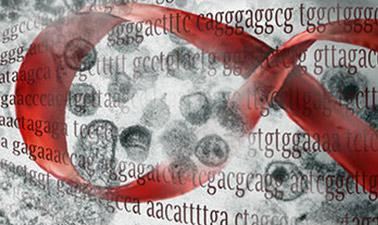
We will explore how HIV/AIDS has been portrayed in diverse genres through the perspectives of the scientist and the literary critic. This class engages students in a transdisciplinary conversation about representations of HIV/AIDS: in science writing, journalism, visual art, literature, drama, and popular culture.

Class Deals by MOOC List - Click here and see EdX's Active Discounts, Deals, and Promo Codes.

We believe that scientists and cultural critics can learn valuable lessons from one another, even as they create their own responses to HIV/AIDS. Today, over 30 years since the first scientific reports of HIV/AIDS, the pandemic remains a major health concern throughout the world.

But, rays of hope have led to speculation that an AIDS-free generation may be possible. In such a timely moment, it is essential for us to connect across the "two cultures" as we consider the social and scientific implications of HIV/AIDS.

What you'll learn

  • The basics of how to do literary analysis and how to read a scientific article
  • The basics of the biology of HIV/AIDS
  • What the arts and sciences have in common in creating knowledge
  • How words and images reflect the evolving history of HIV/AIDS
  • What we can learn from the personal experiences of those living with HIV/AIDS
  • Current developments and controversies in HIV/AIDS and how the arts & sciences have responded to them
  • Why it matters that artists & scientists talk to one another

Go to Class
MOOC List is learner-supported. When you buy through links on our site, we may earn an affiliate commission.

Related Courses

An Introduction to Evidence-Based Undergraduate STEM Teaching (edX) EdX
CornellX,Cornell University

An Introduction to Evidence-Based Undergraduate STEM Teaching (edX)

Learn how to implement evidence-based teaching strategies in your university classroom as well as effective methods for assessing teaching and learning. This course is designed to provide future STEM faculty, graduate students and post-doctoral fellows with an introduction to effective teaching strategies and the research that supports them.

Jun 17th 2024
5-12 Weeks
Open Science: Sharing Your Research with the World (edX) EdX
Delft University of Technology,DelftX

Open Science: Sharing Your Research with the World (edX)

Explore ways to apply Open Science principles to academic work - including your own. Learn how to share your research effectively and responsibly, building greater visibility and impact. You can become a more visible, effective and impactful researcher by sharing your research data and publications openly. In this course, you will learn the objectives, main concepts, and benefits of Open Science principles along with practices for open data management and open data sharing.

Oct 25th 2023
5-12 Weeks
The Chemistry of Life (edX) EdX
Kyoto University,KyotoUx

The Chemistry of Life (edX)

Learn how to generate ideas at the interface between chemistry and biology. Chemistry and biology are traditionally taught as separate subjects at the high school level, where students memorize fundamental scientific principles that are universally accepted. However, at the university level and in industry, we learn that science is not as simple as we once thought. We are constantly confronted by questions about the unknown and required to use creative, integrated approaches to solve these problems.

Self Paced
Self-Paced
Global Warming Science (edX) EdX
MIT,MITx

Global Warming Science (edX)

Learn about the physics, chemistry, biology, and geology of the earth’s climate system. Global Warming Science teaches you about the risks and uncertainties of future climate change by examining the science behind the earth’s climate. You will be able to answer such questions as, “What is the Greenhouse Effect?” and “How and why has earth’s climate changed through geologic history?”

No sessions available
13-24 Weeks
AP® Biology - Part 2: Genetics (edX) EdX
Rice University,RiceX

AP® Biology - Part 2: Genetics (edX)

The second course in a comprehensive series designed to prepare you for the AP Biology exam, focusing on genetics and DNA. Preparing for the AP Biology exam requires a deep understanding of many different topics in biology as well as an understanding of the format of the AP exam and the types of questions it asks. This course is Part 2 of the AP Biology series designed to prepare you for the AP Biology exam.

No sessions available
5-12 Weeks
Human Anatomy: Musculoskeletal Cases (edX) EdX
HarvardX,Harvard University

Human Anatomy: Musculoskeletal Cases (edX)

Learn the anatomy basic to understanding five musculoskeletal injuries commonly seen in primary care medicine and orthopedic clinical specialty practice. Follow hypothetical patients from injury to operating room. Human Anatomy: Musculoskeletal Cases invites students to join medical and basic science faculty at Harvard Medical School (HMS) to learn about musculoskeletal injuries commonly seen in clinical practice.

Self Paced
Self-Paced
Quantitative Biology Workshop (edX) EdX
MIT,MITx

Quantitative Biology Workshop (edX)

A workshop-style introduction to tools used in biological research. Discover how to analyze data using computational methods. Do you have an interest in biology and quantitative tools? Do you know computational methods but do not realize how they apply to biological problems? Do you know biology but do not understand how scientists really analyze complicated data? 7.QBWx: Quantitative Biology Workshop is designed to give learners exposure to the application of quantitative tools to analyze biological data at an introductory level.

Self Paced
Self-Paced
Cell Biology: Transport (edX) EdX
MIT,MITx

Cell Biology: Transport (edX)

How do we know what we know about cells? Enhance your scientific thinking and data analysis skills with this in-depth adventure through cell biology. This is the first cell biology course in a four-part series. How do we know what we know about cells at a molecular level and how can we use that knowledge to design experiments to test hypotheses in cell biology?

Feb 8th 2022
5-12 Weeks
Drawing Nature, Science and Culture: Natural History Illustration 101 (edX) EdX
The University of Newcastle, Australia,NewcastleX

Drawing Nature, Science and Culture: Natural History Illustration 101 (edX)

Learn how to see and draw nature like an illustrator. Build observational and visual interpretation skills in an interactive and enjoyable way. Whether an aspiring scientific or medical illustrator or someone who enjoys drawing nature’s wonders, this first-of-its-kind MOOC course is for you. The field of Natural History Illustration is about observing and illustrating subjects from nature, science and culture, with their linkages to the environment being central.

Feb 22nd 2023
5-12 Weeks
Super-Earths And Life (edX) EdX
HarvardX,Harvard University

Super-Earths And Life (edX)

Learn about the Earth, life, and how we can search for life elsewhere in the universe. Are we alone in this universe? What new information and observations on exoplanets have we discovered? In the past decade, astronomers have made incredible advances in the discovery of planets outside our solar system. Thirty years ago, we knew only of the planets in our own solar system. Now we know of thousands circling nearby stars.

Self Paced
Self-Paced
Fundamentals of Neuroscience, Part 2: Neurons and Networks (edX) EdX
HarvardX,Harvard University

Fundamentals of Neuroscience, Part 2: Neurons and Networks (edX)

Discover what makes your brain tick in this second part of a four-part introductory series in Neuroscience. Neurons in isolation are fascinating and complicated, but the real magic of neuroscience happens in the interaction between neurons. In this course, we examine how neurons pass signals to one another and how complex dynamics can result from just a few neurons arranged in relatively simple circuits.

Self Paced
Self-Paced