The Arctic as a System (Coursera)

The Arctic as a System (Coursera)

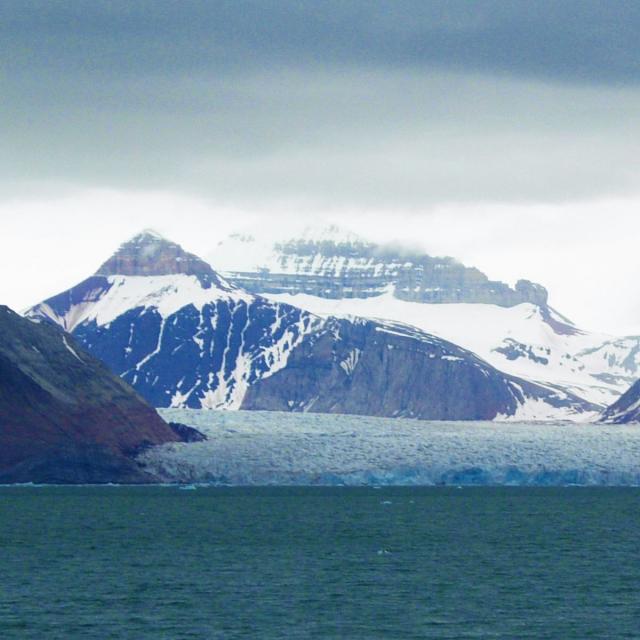
In this course you will first learn about the Arctic as a geographic region, the peoples the Arctic, and the long history of Arctic settlement and exploration. Attention then turns to key features of the Arctic environment – its climate and weather, features of the ocean, sea ice, lands and the Greenland Ice Sheet, and some of the rapid changes being observed.

Class Deals by MOOC List - Click here and see Coursera's Active Discounts, Deals, and Promo Codes.

Learning Objectives: Appreciate the long history of the Arctic and its peoples. Recognize and recall the physical geography of the Arctic, including major features of the Arctic Ocean and Arctic lands. Describe the key climate and environmental elements of the Arctic, including its sea ice cover, patterns of temperature, precipitation, snow cover, land ice, permafrost and vegetation, physical processes giving rise to these features, and how they are changing.
Course 1 of 3 in the Arctic Climate, Environ. & Geographies of a Changing North Specialization

Syllabus

WEEK 1
Introduction to the Arctic
This module provides a basic introduction to the Arctic. It starts with a description of the Arctic as a geographical region, followed by an overview of some of the pronounced changes unfolding in the region. History provides context. As such, we then explore how our knowledge of the Arctic has been built, starting with early explorations and events and then moving through the Cold War and into the present.

WEEK 2
Arctic Climate Basics
To understand the Arctic system and the changes taking place, we need to become familiar with some of the basic climate drivers and features of the region, starting with solar energy, polar night and the midnight sun. Attention then turns to spatial patterns of temperature, precipitation and cloudiness.

WEEK 3
The Arctic Ocean
The Arctic region is an ocean surrounded by land, and to understand the Arctic, we need to understand the Arctic Ocean. We start with discussing Arctic Ocean basics - its shallow shelf sea and deep basins, and then move on to discuss the ocean's floating ice cover. As we will learn, the ice cover grows and shrinks with the seasons and is in near constant motion, squeezing together to form sea ice ridges and keels and pulling apart to form leads.

WEEK 4
The Arctic Lands
As we will learn in this module, the Arctic lands are highly varied. we'll first explore the Greenland Ice sheet. Attention then turns to tundra, boreal forest and the typically ill-defined Arctic treeline. We will learn that a number of very large rivers drain into the Arctic Ocean, having prominent influences on the ocean. Finally, we'll explore permafrost, the perennially frozen ground that underlies most of the Arctic lands.

WEEK 5
The Arctic Atmosphere
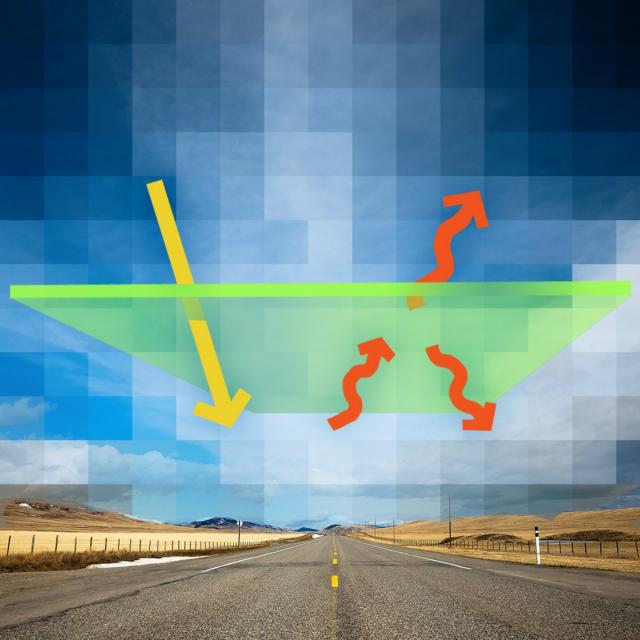
In this module we'll learn all about Arctic weather, including storms and whiteouts. We will also learn that the Arctic, as a "heat sink" plays a key role in shaping weather patterns for the northern hemisphere as a whole. We'll then explore the concept of teleconnections - links between weather conditions between widely separated locations. Finally, we'll briefly review the Arctic's energy budget.
Go to Class
MOOC List is learner-supported. When you buy through links on our site, we may earn an affiliate commission.

Related Courses

The History of Modern Israel - Part II: Challenges of Israel as a sovereign state (Coursera) Coursera
Tel Aviv University

The History of Modern Israel - Part II: Challenges of Israel as a sovereign state (Coursera)

This course deals with the Israeli politics, economy, society and culture, since its creation in 1948 till today. It analyzes the construction of the Israeli historical narrative as an identity-building narrative, intending to inculcate a collective memory to a diverse society. We will focus on key events and essential components that shaped the Israeli society from the fifties till the present. We will also discuss the changes that the Israeli society experiences in its almost seventy years of existence and how it affects its politics and culture.

Jun 22nd 2026
5-12 Weeks
Climate change education: sustainable environments (Coursera) Coursera
Inter-American Development Bank - IDB

Climate change education: sustainable environments (Coursera)

In this course, we explore the components of landscapes and natural disasters. We emphasize human actions that impact the environment, both in terms of modification and preservation. Additionally, we explore concepts related to cities, megacities, and sustainable environments. The course also delves into the connection between the environment, health, and diseases.

Jun 22nd 2026
3 Weeks
Structuring Values in Modern China (Coursera) Coursera
The Chinese University of Hong Kong

Structuring Values in Modern China (Coursera)

This sequence of four courses will propose a multi-disciplinary approach to the study of Chinese cultural history conceived of as a succession of modes of rationality (philosophical, bureaucratic, and economic). The focus will be on the moments of paradigm shift from one mode of rationality to another. For each of these moments, cultural facts and artifacts—thought, literature, ritual—will be examined in relationship to changing social, political, and economic systems.

Jun 22nd 2026
5-12 Weeks
Miracles of Human Language: An Introduction to Linguistics (Coursera) Coursera
Leiden University,Meertens Instituut - KNAW

Miracles of Human Language: An Introduction to Linguistics (Coursera)

Everywhere, every day, everybody uses language. There is no human society, no matter how small or how isolated, which does not employ a language that is rich and diverse. This course introduces you to linguistics, featuring interviews with well-known linguists and with speakers of many different languages. Join us to explore the miracles of human language!

Jun 22nd 2026
5-12 Weeks
William Shakespeare's Twelfth Night: Comedy, Conflict, and Community (Coursera) Coursera
University of Colorado Boulder

William Shakespeare's Twelfth Night: Comedy, Conflict, and Community (Coursera)

This course introduces and explores William Shakespeare’s classic comedy, Twelfth Night. Interviews with actors who appeared in the Colorado Shakespeare Festival’s 2019 production of Twelfth Night, as well as lectures by scholars and theater professionals who work and teach at the University of Colorado Boulder, offer students insight into Shakespeare’s artistic vision and its applications.

Jun 22nd 2026
5-12 Weeks
Journey of the Universe: The Unfolding of Life (Coursera) Coursera
Yale University

Journey of the Universe: The Unfolding of Life (Coursera)

Journey of the Universe weaves together the discoveries of the evolutionary sciences together with humanities such as history, philosophy, art, and religion. The course draws on the Emmy-award winning film, Journey of the Universe, and the book from Yale University Press. Journey explores cosmic evolution as a creative process based on connection, interdependence, and emergence. It examines a range of dynamic interactions in the unfolding of galaxies, Earth, life, and human communities. It investigates ways in which we understand evolutionary processes and the implications for humans and our ecological future.

Jun 22nd 2026
5-12 Weeks
Arctic Economy (Coursera) Coursera
University of Alberta,UiT The Arctic University of Norway

Arctic Economy (Coursera)

Arctic communities have diverse histories and roles in local, regional and global economies. However, the scope and scale of globalization has increased so quickly that vulnerable Arctic communities are facing new kinds of challenges to their survival. In this 3-week MOOC, a unique collaboration between the University of Alberta and UiT The Arctic University of Norway, you will investigate the challenges faced by Indigenous, North American, Russian and Nordic Arctic communities in a modern world. So join us as we venture above the 60th parallel North, and explore how these fascinating communities adjust to change while maintaining their ways of life, socio-economic histories, and cultural traditions.

Jun 22nd 2026
4 Weeks
Coexistence in Medieval Spain: Jews, Christians, and Muslims (Coursera) Coursera
University of Colorado System

Coexistence in Medieval Spain: Jews, Christians, and Muslims (Coursera)

This course explores Jewish, Christian, and Muslim intercultural relations in Iberia from the Visigothic era (6th century CE) until the creation of Queen Isabel I and King Ferdinand II Catholic Spain (late 15th century). We evaluate the many identities of the peninsula known as Christian Hispania, Jewish Sefarad, and Islamic al-Andalus. We trace the origins and trajectory of conflict between these communities (the Muslim conquest of Spain, Christian Reconquista, prohibitions blocking intermixing of peoples, and expulsions).

Jun 22nd 2026
5-12 Weeks