Global Warming II: Create Your Own Models in Python (Coursera)

Offered by University of Chicago,
Global Warming II: Create Your Own Models in Python (Coursera)

This class provides a series of Python programming exercises intended to explore the use of numerical modeling in the Earth system and climate sciences. The scientific background for these models is presented in a companion class, Global Warming I: The Science and Modeling of Climate Change. This class assumes that you are new to Python programming (and this is indeed a great way to learn Python!), but that you will be able to pick up an elementary knowledge of Python syntax from another class or from on-line tutorials.

Class Deals by MOOC List - Click here and see Coursera's Active Discounts, Deals, and Promo Codes.

Syllabus

Week 1
Time-Dependent Energy Balance Model
This class is intended to complement a Coursera class called Global Warming I: The Science and Modeling of Climate Change, which presents much of the background to the material here. In this class you'll be using spreadsheets (maybe) and Python (definitely) to do some simple numerical calculations on topics in Earth System Science. The model you'll be working on this week is based on material from Unit 3 of that class, called First Climate Model.

Week 2
Iterative Runaway Ice-Albedo Feedback Model
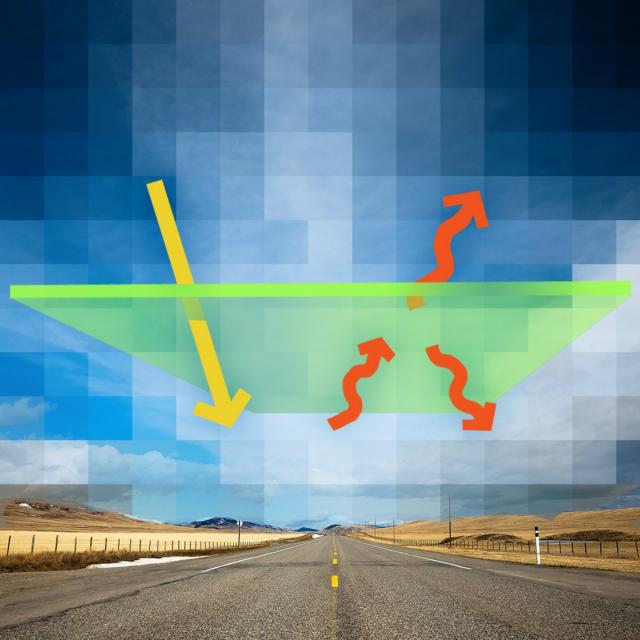
The ideas behind this model were explained in Unit 7, Feedbacks, in Part I of this class. First we get to generate simple linear "parameterization" functions of planetary albedo and the latitude to which ice forms (colder = lower latitude ice). Second, for any given value of the solar constant, L, we'll use iteration to find consistent values of albedo and T, to show the effect of the ice albedo feedback on Earth's temperature, running away to fall into the dreaded "snowball Earth".

Week 3
Ice Sheet Dynamics
Ice flows like extra-thick molasses, downhill. The shape of the ice sheet (altitude versus distance across) is determined by the relationship between ice surface slope and the flow rate of the ice.

Week 4
Pressure, Rotation, and Fluid Flow
Planetary rotation and fluid flow were explained in Part I of this class, Unit 6, on Weather and Climate.

Week 5
A Model of Climate Changes Today
Background for this model was presented in Part I of this class, Unit 9, The Perturbed Carbon Cycle.
Go to Class
MOOC List is learner-supported. When you buy through links on our site, we may earn an affiliate commission.

Related Courses

Python for Data Science, AI & Development (Coursera) Coursera
IBM

Python for Data Science, AI & Development (Coursera)

Kickstart your learning of Python for data science, as well as programming in general, with this beginner-friendly introduction to Python. Python is one of the world’s most popular programming languages, and there has never been greater demand for professionals with the ability to apply Python fundamentals to drive business solutions across industries.

Jun 9th 2026
5-12 Weeks
Energy, Environment, and Everyday Life (Coursera) Coursera
University of Illinois at Urbana-Champaign

Energy, Environment, and Everyday Life (Coursera)

This course teaches you everything you need to know about energy, the environment, and at least a number of things in everyday life. It starts by talking about energy itself and where it comes from. This includes how much we have, who has it, who uses it, and what that all means. The video clips are produced in a fast-paced multimedia format during which Professor Ruzic throws in fun and demonstrations. There are multiple-choice questions to check your understanding and some more in-depth exercises to guide you deeper into the subject.

Jun 8th 2026
5-12 Weeks
Machine Learning: Regression (Coursera) Coursera
University of Washington

Machine Learning: Regression (Coursera)

Case Study - Predicting Housing Prices. In our first case study, predicting house prices, you will create models that predict a continuous value (price) from input features (square footage, number of bedrooms and bathrooms,...). This is just one of the many places where regression can be applied. Other applications range from predicting health outcomes in medicine, stock prices in finance, and power usage in high-performance computing, to analyzing which regulators are important for gene expression.

Jun 8th 2026
5-12 Weeks
Deploying Machine Learning Models (Coursera) Coursera
University of California, San Diego

Deploying Machine Learning Models (Coursera)

In this course we will learn about Recommender Systems (which we will study for the Capstone project), and also look at deployment issues for data products. By the end of this course, you should be able to implement a working recommender system (e.g. to predict ratings, or generate lists of related products), and you should understand the tools and techniques required to deploy such a working system on real-world, large-scale datasets.

Jun 8th 2026
4 Weeks
The Arctic as a System (Coursera) Coursera
University of Colorado Boulder

The Arctic as a System (Coursera)

In this course you will first learn about the Arctic as a geographic region, the peoples the Arctic, and the long history of Arctic settlement and exploration. Attention then turns to key features of the Arctic environment – its climate and weather, features of the ocean, sea ice, lands and the Greenland Ice Sheet, and some of the rapid changes being observed.

Jun 8th 2026
5-12 Weeks
Data Analysis and Visualization (Coursera) Coursera
University at Buffalo,The State University of New York

Data Analysis and Visualization (Coursera)

By the end of this course, learners are provided a high-level overview of data analysis and visualization tools, and are prepared to discuss best practices and develop an ensuing action plan that addresses key discoveries. It begins with common hurdles that obstruct adoption of a data-driven culture before introducing data analysis tools (R software, Minitab, MATLAB, and Python). Deeper examination is spent on statistical process control (SPC), which is a method for studying variation over time. The course also addresses do’s and don’ts of presenting data visually, visualization software (Tableau, Excel, Power BI), and creating a data story.

Jun 8th 2026
4 Weeks
Basic Data Processing and Visualization (Coursera) Coursera
University of California, San Diego

Basic Data Processing and Visualization (Coursera)

This is the first course in the four-course specialization Python Data Products for Predictive Analytics, introducing the basics of reading and manipulating datasets in Python. In this course, you will learn what a data product is and go through several Python libraries to perform data retrieval, processing, and visualization.

Jun 8th 2026
5-12 Weeks
Databases and SQL for Data Science with Python(Coursera) Coursera
IBM

Databases and SQL for Data Science with Python(Coursera)

Much of the world's data resides in databases. SQL (or Structured Query Language) is a powerful language which is used for communicating with and extracting data from databases. A working knowledge of databases and SQL is a must if you want to become a data scientist. The purpose of this course is to introduce relational database concepts and help you learn and apply foundational knowledge of the SQL language. It is also intended to get you started with performing SQL access in a data science environment.

Jun 8th 2026
4 Weeks
Climate Adaptation in Africa (Coursera) Coursera
University of Cape Town

Climate Adaptation in Africa (Coursera)

This course explores why climate change adaptation is important in the African context. Africa is considered one to be one of the most vulnerable regions to climate change. Historically, climate-related hazards such as drought, flooding, pest and disease outbreaks, coastal storms and heat waves have had devastating impacts on people and the environment in which they live.

Jun 8th 2026
5-12 Weeks