The Holocaust - An Introduction (II): The Final Solution (Coursera)

The Holocaust - An Introduction (II): The Final Solution (Coursera)

The Holocaust was an inconceivable historical event, which forever robbed Western culture of its innocence. As civilized human beings, we fail to understand how events of such horror could have taken place, and how an idea so inhumanly warped could have spread like wildfire through an entire continent, instigating the systematic annihilation of millions of Jews.

Class Deals by MOOC List - Click here and see Coursera's Active Discounts, Deals, and Promo Codes.

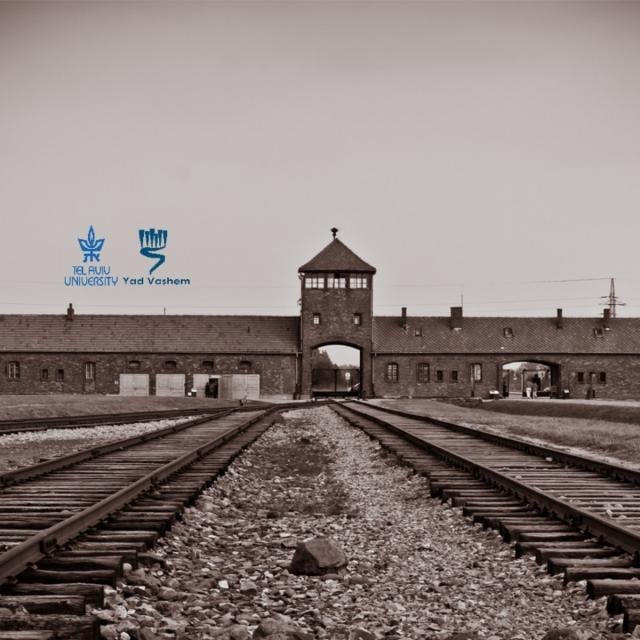
This free online course was produced jointly by Tel Aviv University and Yad Vashem – the World Holocaust Remembrance Center. This course is the second of the two courses and covers three themes in its three weeks:
Week 1: The Final Solution
We’ll look at the cultural and mental processes that paved the way to the comprehensive and systematic mass murder of Jews in Europe – that is, the Final Solution. As part of this hard lesson we will discuss the various characteristics of the murder sites and death camps, and reveal selected aspects of the horror that occurred in them.
Week 2: Jewish and Non-Jewish Responses to the Holocaust
We will try to explore questions regarding knowledge about the application of the Final Solution, as well as a variety of responses and annihilation of victims, local populations and perpetrators.
Week 3: The End of the War
We will dedicate this lesson to the events that occurred in the last years of the Holocaust, as well as questions of memory, commemoration and future research.
We strongly recommend that you register for The Holocaust - An Introduction (I): Nazi Germany: Ideology, The Jews and the World. Taking both parts of the course would enable you to obtain a fuller and more comprehensive knowledge about The Holocaust.
This online course is offered in an innovative, multi-level format, comprising:
Comprehensive lectures by leading researchers from Tel Aviv University and Yad Vashem.
A wealth of voices and viewpoints presented by guest lecturers
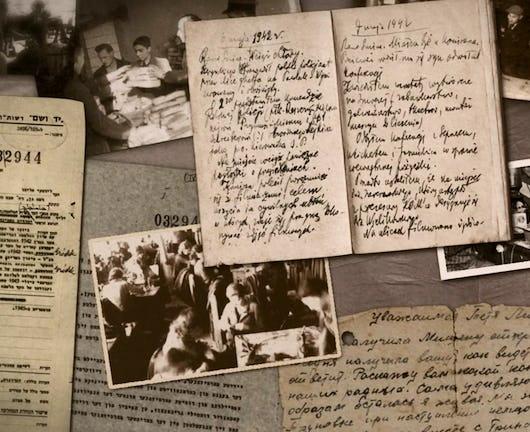
Numerous documents, photos, testimonies and works of art from the time of the Holocaust.
Novel learning experience: Crowdsourcing – involving the learners themselves in the act of collecting and shaping information, via unique, exciting online assignments.

Syllabus

WEEK 1
The Final Solution and the Drive for Eliminating All Jews and All Perceived Jewish "Influences"
This lesson will be devoted to the cultural and mental processes which paved the way to the comprehensive and systematic mass murder of Jews. We will deal with the specific decision-making process regarding the murder of the entire European Jewry, the implementation of the initial murder, the broadening circle of killing, and the early Jewish reactions to the "Final Solution".

WEEK 2
Jewish and Non-Jewish Responses to the Holocaust
We will look at a broad spectrum of questions, including: "As Lambs to the Slaughter"? Choiceless choices? Did the world remain silent? Why were Auschwitz and Birkenau not bombed? And more. Discussion of the various issues and frameworks will challenge the existing definitions regarding resistance and rescue, and examine patterns of cooperation with persecutors alongside rebellious acts by Jews and non-Jews alike. As part of this important discussion, we will return to our previous examination of the Jewish leadership and re-evaluate the responses of various Jewish leaders to the annihilation campaign, while pointing out the complexities of the subject matter.

WEEK 3
The Free World, the last months, the Aftermath and the Implications
This lesson will describe the steps taken by Nazi Germany, with the Allied advance across Europe, to increase efforts to exterminate the Jews and to destroy all evidence of their crimes. We will deal with questions of memory and commemoration, examine the significance of the Holocaust for different audiences, and present the latest research in the field of Holocaust studies.
Go to Class
MOOC List is learner-supported. When you buy through links on our site, we may earn an affiliate commission.

Related Courses

Cultural Competence - Aboriginal Sydney (Coursera) Coursera
The University of Sydney

Cultural Competence - Aboriginal Sydney (Coursera)

This course explores some of the key themes and capabilities of cultural competence by exploring Aboriginal experiences and narratives of Sydney. Australia was ‘claimed’ for the British Crown in 1770, by Captain James Cook, but the invasion began in earnest when the First Fleet of British arrived in 1788 and established a penal colony in Sydney.

Jun 22nd 2026
5-12 Weeks
Plagues, Witches, and War: The Worlds of Historical Fiction (Coursera) Coursera
University of Virginia

Plagues, Witches, and War: The Worlds of Historical Fiction (Coursera)

A unique and exciting introduction to the genre and craft of historical fiction, for curious students, aspiring authors--anyone with a passion for the past. Read classics of the genre, encounter bestselling writers of historical fiction, and discover your own historical archive while interacting with a global community of interested readers.

Jun 22nd 2026
5-12 Weeks
Organising an Empire: The Assyrian Way (Coursera) Coursera
Ludwig-Maximilians-Universität München

Organising an Empire: The Assyrian Way (Coursera)

Discover the mighty kingdom of Assyria, which came to be the world’s first great empire three thousand years ago. From the 9th to the 7th centuries BC, during the imperial phase of Assyria’s long history, modern day northern Iraq was the central region of a state reaching from the Mediterranean Sea to the Persian Gulf, and incorporating what is now Iraq, Syria, and Lebanon, as well as half of Israel, and wide parts of south-eastern Turkey, and Western Iran.

Jun 15th 2026
5-12 Weeks
What Is Contemporary Art? (Coursera) Coursera
The Museum of Modern Art

What Is Contemporary Art? (Coursera)

What is contemporary art? In this course, you’ll consider this question through more than 70 works of art made between 1980 and the present, with a focus on art from the past decade. You’ll hear directly from artists, architects, and designers from around the globe about their creative processes, materials, and inspiration.

Jun 22nd 2026
5-12 Weeks
The Modern and the Postmodern (Part 2) (Coursera) Coursera
Wesleyan University

The Modern and the Postmodern (Part 2) (Coursera)

This course examines how the idea of "the modern" develops at the end of the 18th century in European philosophy and literature, and how being modern (or progressive, or hip) became one of the crucial criteria for understanding and evaluating cultural change. Are we still in modernity, or have we moved beyond the modern to the postmodern?

Jun 15th 2026
5-12 Weeks
The Changing Landscape of Ancient Rome. Archaeology and History of the Palatine Hill (Coursera) Coursera
Sapienza University of Rome

The Changing Landscape of Ancient Rome. Archaeology and History of the Palatine Hill (Coursera)

Studying ancient - as well as medieval or modern - cities basically means telling local urban stories based on the reconstruction of changing landscapes through the centuries. Given the fragmentary nature of archaeological evidence, it is necessary to create new images that would give back the physical aspect of the urban landscape and that would bring it to life again. We are not just content with analyzing the many elements still visible of the ancient city.

Jun 22nd 2026
5-12 Weeks
Arctic Economy (Coursera) Coursera
University of Alberta,UiT The Arctic University of Norway

Arctic Economy (Coursera)

Arctic communities have diverse histories and roles in local, regional and global economies. However, the scope and scale of globalization has increased so quickly that vulnerable Arctic communities are facing new kinds of challenges to their survival. In this 3-week MOOC, a unique collaboration between the University of Alberta and UiT The Arctic University of Norway, you will investigate the challenges faced by Indigenous, North American, Russian and Nordic Arctic communities in a modern world. So join us as we venture above the 60th parallel North, and explore how these fascinating communities adjust to change while maintaining their ways of life, socio-economic histories, and cultural traditions.

Jun 22nd 2026
4 Weeks
Søren Kierkegaard - Subjectivity, Irony and the Crisis of Modernity (Coursera) Coursera
University of Copenhagen

Søren Kierkegaard - Subjectivity, Irony and the Crisis of Modernity (Coursera)

In this course created by former associate professor at the Søren Kierkegaard Research Centre, Jon Stewart, we will explore how Kierkegaard deals with the problems associated with relativism, the lack of meaning and the undermining of religious faith that are typical of modern life. His penetrating analyses are still highly relevant today and have been seen as insightful for the leading figures of Existentialism, Post-Structuralism and Post-Modernism.

Jun 22nd 2026
5-12 Weeks
The Kennedy Half Century (Coursera) Coursera
University of Virginia

The Kennedy Half Century (Coursera)

When John F. Kennedy entered the presidential limousine at Love Field in Dallas, Texas on November 22, 1963, he began his ride into history. That journey continues even today and we call it the Kennedy legacy. This course will explore the Presidency, assassination, and lasting legacy of President John F. Kennedy. Students will learn how JFK’s life, administration, and tragic death have influenced the general public, the media, and each of the nine U.S. presidents who followed.

Jun 22nd 2026
4 Weeks