Anthropometry, Biomechanics, and Motor Skills in User Design (Coursera)

Anthropometry, Biomechanics, and Motor Skills in User Design (Coursera)

Course 5 examines the role of anthropometrics, biomechanics and motor skills in human performance as well as key factors that influence how humans produce and sense motion, and how these can be applied to training and testing performance.

Class Deals by MOOC List - Click here and see Coursera's Active Discounts, Deals, and Promo Codes.

This course is part of the Human Factors & Usability Engineering: Designing for Humans Specialization.

What you'll learn
You will be introduced to types of controls, be able to understand and identify key factors that influence how humans produce & sense motion.

Syllabus

Course Introduction
This course explores anthropometry, biomechanics, and motor skills. You will learn about measuring human body dimensions and characteristics, known as anthropometrics, and how these measurements are used in design. The course covers factors influencing motion production and perception, including open- and closed-loop control and stimulus-response compatibility. You will also explore the applications of motion-tracking technologies in training and testing human performance.

Module 1: Anthropometry & Ergonomics
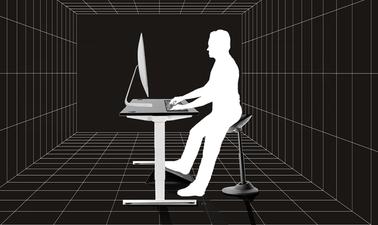
Module 1 explores anthropometry and ergonomics, covering the measurement of human body dimensions and the importance of anthropometric data in fields like product design and workspace layout. The module also focuses on ergonomics, the science of designing products and environments to fit human capabilities and enhance safety and efficiency. You will learn about the principles and goals of ergonomics, as well as ergonomic design considerations for creating user-centered products and workspaces.

Module 2: Ergonomics Research 1 - Office Design and Exercise
In Module 2, we dive into the realm of ergonomics research, exploring various applications in different settings. We begin with Lesson 1, focusing on office design and exercise, aiming to create the perfect ergonomic workspace. Moving on to Lesson 2, we shift our attention to factories and industrial settings. In Lesson 3, we turn our focus to the healthcare sector.

Module 3: Intro to Biomechanics
In this module, we explore the field of biomechanics, which focuses on studying the mechanics and movement of the human body. We will cover various aspects of biomechanics, including its definition, applications in different domains, and methods for analyzing human movement. By the end of this module, you will have a solid understanding of biomechanics principles and how they are used to study and analyze human motion.

Module 4: Biomechanics Applications
Module 4 focuses on the practical applications of biomechanics in various fields. It explores how biomechanics can be utilized to optimize performance, prevent injuries, and enhance movement in sports, rehabilitation, ergonomics, and other contexts.


Go to Class
MOOC List is learner-supported. When you buy through links on our site, we may earn an affiliate commission.

Related Courses

Quantitative Methods (Coursera) Coursera
University of Amsterdam

Quantitative Methods (Coursera)

Discover the principles of solid scientific methods in the behavioral and social sciences. Join us and learn to separate sloppy science from solid research! This course will cover the fundamental principles of science, some history and philosophy of science, research designs, measurement, sampling and ethics. The course is comparable to a university level introductory course on quantitative research methods in the social sciences, but has a strong focus on research integrity. We will use examples from sociology, political sciences, educational sciences, communication sciences and psychology.

Sep 14th 2026
5-12 Weeks
Build Better Products with a Human-Centered Product Backlog (openSAP) OpenSAP
SAP

Build Better Products with a Human-Centered Product Backlog (openSAP)

Join this free online course to learn how to build better products by balancing human needs, business values, and technical feasibilities with a human-centered product backlog. The world is becoming more complex and digital transformation is radically changing people’s lives. This in turn leads to rising expectations for products and services that are expected to help users get their job done – both at work and in their private lives. Hence, product organizations have to change the way they build products.

Jun 21st 2022
4 Weeks
Ergonomics in Design (edX) EdX
The Hong Kong University of Science and Technology - HKUST,HKUSTx

Ergonomics in Design (edX)

The course is designed to provide a basic understanding of ergonomics in design through the introduction of human anatomy, anthropometry, and modeling techniques with the aim of improving safety, productivity, comfort and health of people. Ergonomics is the application of scientific information about people in order to design products and systems so that they are safe, productive, comfortable and healthy for people to use.

Self Paced
Self-Paced
Human-Centered Design for Work at a Distance: Prototype Solutions (edX) EdX
The University of British Columbia,UBCx

Human-Centered Design for Work at a Distance: Prototype Solutions (edX)

Draw from human-centered design tools learned in Human-Centered Design for Work at a Distance: Toolbox Essentials to identify and solve real-world case studies for individuals reinventing their work at a distance. This course builds on the teachings in Human-Centered Design for Work at a Distance: Toolbox Essentials. It must be completed before enrolling in this course.

Self Paced
Self-Paced
eHealth: Combining Psychology, Technology and Health (FutureLearn) FutureLearn
University of Twente

eHealth: Combining Psychology, Technology and Health (FutureLearn)

How can technology make you healthy? Learn about the design, application, implementation and evaluation of eHealth. eHealth refers to the use of technologies to improve well-being, health, and healthcare. It is an umbrella term that captures concepts about the health context, technology, and people. In this free online course, we will provide you with insight into the domain of eHealth, describe methods to develop eHealth, and explain theories that enable behaviour change and facilitate implementation.

Available now
5-12 Weeks
Human Factors in AI (Coursera) Coursera
Duke University

Human Factors in AI (Coursera)

This third and final course of the AI Product Management Specialization by Duke University's Pratt School of Engineering focuses on the critical human factors in developing AI-based products. The course begins with an introduction to human-centered design and the unique elements of user experience design for AI products.

Aug 31st 2026
4 Weeks
Human-Centered Design: an Introduction (Coursera) Coursera
University of California, San Diego

Human-Centered Design: an Introduction (Coursera)

In this course, you will learn how to design technologies that bring people joy, rather than frustration. You'll learn several techniques for rapidly prototyping and evaluating multiple interface alternatives -- and why rapid prototyping and comparative evaluation are essential to excellent interaction design. You'll learn how to conduct fieldwork with people to help you get design ideas. How to make paper prototypes and low-fidelity mock-ups that are interactive -- and how to use these designs to get feedback from other stakeholders like your teammates, clients, and users. Armed with these design-thinking strategies, you’ll be able to do more creative human-centered design in any domain.

Aug 24th 2026
4 Weeks