Physical Theatre: Exploring the Slap (FutureLearn)

Offered by University of Leeds,
Physical Theatre: Exploring the Slap (FutureLearn)

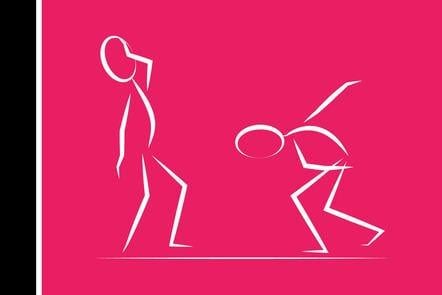
Learn about Meyerhold’s form of physical theatre, biomechanics, and understand and perform ‘The Slap’. This course introduces you to world-renowned Russian director Meyerhold’s technique of biomechanics. It invites you to study and experience first-hand his revolutionary biomechanical étude, ‘The Slap’.

Class Deals by MOOC List - Click here and see FutureLearn's Active Discounts, Deals, and Promo Codes.

Through a mixture of video, animation, discussion forums and practical exercises you will begin to understand Meyerhold’s Russian actor training technique – a two-minute repeatable exercise used to develop balance, awareness and expression. You will be invited to explore your own response to this unique approach to training and will share these responses with your fellow learners.

What topics will you cover?

  • Meyerhold and the Russian Revolution: why biomechanics was invented and why he felt it was necessary
  • Exploring ‘the Slap’ through biomechanical training exercises known as études
  • Meyerhold in action: working safely by preparing using warm up techniques
  • ‘The Slap’ in action: techniques for the ‘shake and shake’, ‘slap and taking aim’, and ‘the slap and return to neutral’
  • Production of a video, image or prose demonstrating actions from the études

Learning on this course
You can take this self-guided course and learn at your own pace. On every step of the course you can meet other learners, share your ideas and join in with active discussions in the comments.

What will you achieve?

  • Explore and discuss events in Russia during the first half of the 20th century to help understand the development of Russian theatre, and the lives of Meyerhold and his contemporaries.
  • Assess your understanding of biomechanics and the études.
  • Reflect on the week’s learning by contributing to the discussion regarding moving in a biomechanical manner.
  • Perform the biomechanics and études warm up activities.
  • Explore the three components of ‘the Slap’.
  • Develop your physical experience of moving biomechanically.
  • Investigate historical examples of writing, still images and moving images and consider how you would like to record your experiences.
  • Assess your understanding by completing the test which concludes the course.

Who is the course for?
This course is part of the Going to University collection which has been specifically designed for students at schools and colleges. They provide a taster of undergraduate study at the University of Leeds and help students to decide which subject to study at university.
Completion of the courses will also enhance students’ university applications.
The courses can also be used as a teachers’ classroom enrichment resource.
Courses in this collection are also great for people that want an introduction in the specific subjects discussed in each course.

Go to Class
MOOC List is learner-supported. When you buy through links on our site, we may earn an affiliate commission.

Related Courses

A Beginner’s Guide to Film Genres (FutureLearn) FutureLearn
Film Distributors' Association

A Beginner’s Guide to Film Genres (FutureLearn)

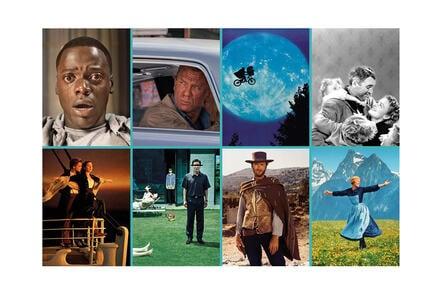
Explore what genre means in film and how it shapes both the narrative and the audience’s response to the story on screen. Discover how cinematic experiences are shaped by the conventions of film genre. Whether you’re considering a career in the film industry or you want to improve your movie knowledge, this four-week course will prepare you to examine critical approaches to genre films and theory.

Self Paced
4 Weeks
Dementia and the Arts: Sharing Practice, Developing Understanding and Enhancing Lives (FutureLearn) FutureLearn
University College London,Created Out of Mind

Dementia and the Arts: Sharing Practice, Developing Understanding and Enhancing Lives (FutureLearn)

Explore, challenge and shape your perceptions of dementia through science and the creative arts. Creating a society that supports and includes those of us who are living with a dementia is a major challenge - and opportunity. In this course you will discover how the arts can create a common ground between people, and in doing so, learn what we can all do to improve the quality of life and care for people living with different dementias.

Self Paced
4 Weeks
Shakespeare: On the Page and in Performance (edX) EdX
Wellesley College,WellesleyX

Shakespeare: On the Page and in Performance (edX)

An introduction to Shakespeare that combines literary study with theatrical analysis to understand both Shakespeare’s continuing popularity and his greatness. Shakespeare wrote for a popular audience and was immensely successful. Shakespeare is also rightly regarded as one of the greatest playwrights the world has known. This course will try to understand both Shakespeare’s popularity and his greatness by starting from a simple premise: that the fullest appreciation of Shakespeare can be achieved only when literary study is combined with analysis of the plays as theatre.

No sessions available
4 Weeks
Richard Schechner's Introduction to Performance Studies (Coursera) Coursera
New York University

Richard Schechner's Introduction to Performance Studies (Coursera)

Performance Studies: An Introduction explores the wide world of performance--from theatre, dance, and music to ritual, play, political campaigns, social media, and the performances of everyday life. Performance studies also ranges across cultures--Asia, Africa, the Caribbean, Europe, the Americas. And it spans historical periods from the art of the paleolithic caves to YouTube and the avantgarde. This course is devised by Richard Schechner, one of the pioneers of performance studies, in dialogue with more than a dozen expert scholars and artists.

Sep 28th 2026
13-24 Weeks
À la découverte du théâtre classique français - Tome 1 (edX) EdX
Sorbonne University,SorbonneX

À la découverte du théâtre classique français - Tome 1 (edX)

Tout ce qu’on doit savoir sur le théâtre français du 17e siècle pour apprécier les chefs-d’œuvre de Molière, de Corneille et de Racine. Le théâtre classique du 17e siècle passe pour le sommet de l’art du théâtre en France. Ses trois représentants les plus connus, Corneille et Racine pour la tragédie et Molière pour la comédie comptent parmi les plus grands dramaturges européens de tous les temps, et Molière reste l’un des auteurs les plus joués dans le monde.

No sessions available
5-12 Weeks
18e siècle : le combat des Lumières (FUN) FUN
Université Paris Lumières

18e siècle : le combat des Lumières (FUN)

Ce cours porte sur l’histoire de la littérature et des idées du 18e siècle français. Il vise à présenter l’ensemble du siècle, les œuvres et les auteurs aussi bien que les combats d’idées qui traversent les Lumières. L’accent sera mis sur les « grands auteurs » (Montesquieu, Prévost, Marivaux, Voltaire, Rousseau, Diderot, Sade…) qui constituent le bagage culturel requis pour avoir une idée générale du siècle, mais sans négliger tout ce que la recherche récente à mis en valeur en terme de mouvements de fond, représentés par des auteurs qui ont une place moins individualisée au panthéon littéraire mais qui n’en sont pas moins importants (textes clandestins, romans libertins, développement des femmes de Lettres, etc.).

No sessions available
5-12 Weeks
Perspectives from the Stage: Actors Discuss Romeo and Juliet (Coursera) Coursera
University of Colorado Boulder

Perspectives from the Stage: Actors Discuss Romeo and Juliet (Coursera)

This course is meant for anyone who is reading Romeo & Juliet and would like to hear the perspectives of professional actors who have performed in the play. This course primarily consists of interviews with 14 professional actors who have performed in at least one production of Romeo & Juliet somewhere in the US, at theaters and Shakespeare festivals including the American Shakespeare Center, American Players Theatre, and the Arkansas, Colorado, Illinois, New Jersey, and Utah Shakespeare Festivals.

Jun 22nd 2026
5-12 Weeks
How to Make a Short Film: An Introduction to Filmmaking (FutureLearn) FutureLearn
The British Film Institute - BFI

How to Make a Short Film: An Introduction to Filmmaking (FutureLearn)

Do you have a passion for film? Learn the key skills of filmmaking in this practical course from the BFI. Kick-start your filmmaking practice with simple techniques and basic equipment. Film is the ideal medium for telling stories, communicating ideas, and entertaining friends and family, so why leave it to the professionals? This course has been specially designed to help anyone interested in filmmaking to master the essentials and start making their own work.

Self Paced
4 Weeks
Working Supportively With Refugees: Principles, Skills and Perspectives (FutureLearn) FutureLearn
University of Glasgow

Working Supportively With Refugees: Principles, Skills and Perspectives (FutureLearn)

Learn how the principals of psychological well-being, communication and interpretation can benefit your work with refugees. Explore interdisciplinary approaches to working with refugees. Refugees are a diverse group, speaking many languages and of varied religions and ethnicities. This course acknowledges that skills requirements are changing rapidly and offers training for those working in this area.

Self Paced
3 Weeks
À la découverte du théâtre classique français -Tome 2 (edX) EdX
Sorbonne University,SorbonneX

À la découverte du théâtre classique français -Tome 2 (edX)

Tout ce qu’on doit savoir sur le théâtre français du 17e siècle pour pleinement apprécier les chefs-d’œuvre de Molière, de Corneille et de Racine. Le théâtre classique du 17e siècle passe pour le sommet de l’art du théâtre en France. Ses trois représentants les plus connus, Corneille et Racine pour la tragédie et Molière pour la comédie comptent parmi les plus grands dramaturges européens de tous les temps, et Molière reste l’un des auteurs les plus joués dans le monde.

No sessions available
5-12 Weeks