Wonderful Styles of Food and Beverage around the World (OpenLearning)

Offered by Taylor's University,
Wonderful Styles of Food and Beverage around the World (OpenLearning)

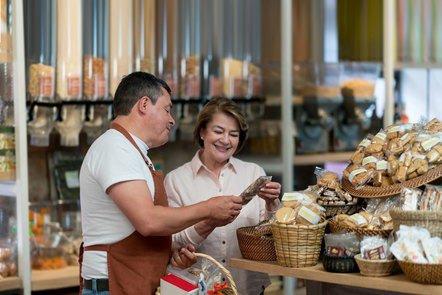
This MOOC course will drive you all to explore the different styles of Food and Beverage around the World. Within this short space you will acquire the knowledge of differentiating the food and beverage operations and various types of service offered in the Hotel industry.

This course is targeted to secondary school levers however anyone can register into this course and participate in the activities.
At the end of this course, the learner will be able to:

  1. Know the different types of restaurant around the World.
  2. Differentiate the restaurant based on service offered and facilities.
  3. Identification of scope for restaurant based on location, people and other related aspects.
  4. Design a restaurant based on your own concept and idea.

*THIS MOOC HAS OFFICIALLY ENDED AND NO CERTIFICATE WILL BE ISSUED NOR COMMENTS BE READ BY THE TEAM AT TAYLOR'S UNIVERSITY. HOWEVER, STUDENTS CAN STILL ENROLL AND VIEW THE CONTENT.

Go to Class
MOOC List is learner-supported. When you buy through links on our site, we may earn an affiliate commission.


Related Courses

Luxury Management (edX) EdX
The Hong Kong Polytechnic University,HKPolyUx

Luxury Management (edX)

Understand the power of a luxury brand and gain the business skills needed to provide premium goods and services within the hotel and tourism industry. Learn strategies and skills for managing luxury brands within the hotel and tourism industry. You will analyze the essence of a luxury brand and learn marketing techniques and trends to better position your services. You will learn how luxury brands are created and how to properly communicate the value of your brand.

Sep 4th 2026
5-12 Weeks
Public Health Perspectives on Sustainable Diets (Coursera) Coursera
Johns Hopkins University

Public Health Perspectives on Sustainable Diets (Coursera)

What we eat and how we produce that food have significant effects on human health and the sustainability of our planet. But what is a ‘sustainable’ diet? A sustainable diet, as defined by the FAO, promotes health and well-being and provides food security for the present population while sustaining human and natural resources for future generations. This short course looks at the urgent need to address the sustainability of our food systems, including better understanding the complex relationship between diet and climate change. We’ll explore current research on dietary shifts needed in high, middle, and low-income countries to achieve both sustainability and food security goals and discuss evidence-based strategies to promote sustainable diets.

Sep 7th 2026
3 Weeks
Sustainable Global Food Systems (edX) EdX
University of Edinburgh,EdinburghX

Sustainable Global Food Systems (edX)

How do we feed 11 billion people? Discover the importance of sustainable food systems on a global scale. We are currently facing one of the biggest challenges worldwide: how to feed a growing population without exhausting global resources. This course examines food security from a food systems perspective and illustrates the major global challenges present, from the environmental impact of food production to the public health impacts of current and future diets.

Self Paced
Self-Paced
Rebuilding Our Relationship with Food (Coursera) Coursera
Stanford University

Rebuilding Our Relationship with Food (Coursera)

Have you ever made a conscious effort to change the way you eat (for health or other reasons) and then felt frustrated when your plans were derailed? You’re not alone. The best laid plans are often sabotaged by a food environment that makes it increasingly hard to make healthier food choices. This can leave many people feeling mistrustful of food or feeling that our relationship with food is somehow broken. In this course, we’ll explore the history of our changing food environment, the science behind cravings for unhealthy foods AND most importantly, you’ll learn some concrete strategies for rebuilding your relationship with food.

Aug 17th 2026
4 Weeks
Small and Mighty: Introduction to Microbiology (FutureLearn) FutureLearn
University of Reading

Small and Mighty: Introduction to Microbiology (FutureLearn)

Understand the basics of microbiology and explore the diversity of microbial life in our world. Discover the fascinating world of microbes. Microbes may be invisible to the eye, but they dominate every environment on Earth – including you. Microbes are often associated with disease yet the majority of species help to keep us alive. How can you distinguish the good from the bad?

Self Paced
3 Weeks
Feeding a Hungry Planet: Agriculture, Nutrition and Sustainability (edX) EdX
SDGAcademyX,SDG Academy

Feeding a Hungry Planet: Agriculture, Nutrition and Sustainability (edX)

How do we create a healthy and sustainable diet for the growing world population? Agriculture is more than waving fields of wheat; our ability to grow food from existing natural resources – and without decimating those resources – is key to sustainably feeding the world. In this course, learn about food security worldwide, the effects of malnutrition, how we manage ecosystems that provide food resources and more.

Self Paced
Self-Paced
Act on Climate: Steps to Individual, Community, and Political Action (Coursera) Coursera
University of Michigan

Act on Climate: Steps to Individual, Community, and Political Action (Coursera)

Are you concerned about climate change? Would you like to learn how to address and respond to this challenge? If so, this course is for you. Act on Climate: Steps to Individual, Community, and Political Action is intended to help learners understand, address and respond to climate change as individuals and in partnership with their communities and political leaders.

Sep 7th 2026
5-12 Weeks
Unravelling solutions for Future Food problems (Coursera) Coursera
Universiteit Utrecht

Unravelling solutions for Future Food problems (Coursera)

Our society depends on the availability of food and accessibility to it. According to the United Nations nearly 800 million people are hungry and on the other hand, over 650 million people are obese. While many people in developing countries experience food shortage, in industrialized countries people are throwing food away. These facts show how paradoxical and complex the world’s food problem is.

Sep 6th 2026
5-12 Weeks