EdX

Wells Hydraulics (edX)

Offered by Purdue University, PurdueX,
Wells Hydraulics (edX)

The Earth is blue for its oceans but green for its groundwater. We use wells to extract water from the ground. In this course we address questions such as: how well tests tell us if an aquifer can provide enough water? how can we use wells to dewater construction sites?

Class Deals by MOOC List - Click here and see EdX's Active Discounts, Deals, and Promo Codes.

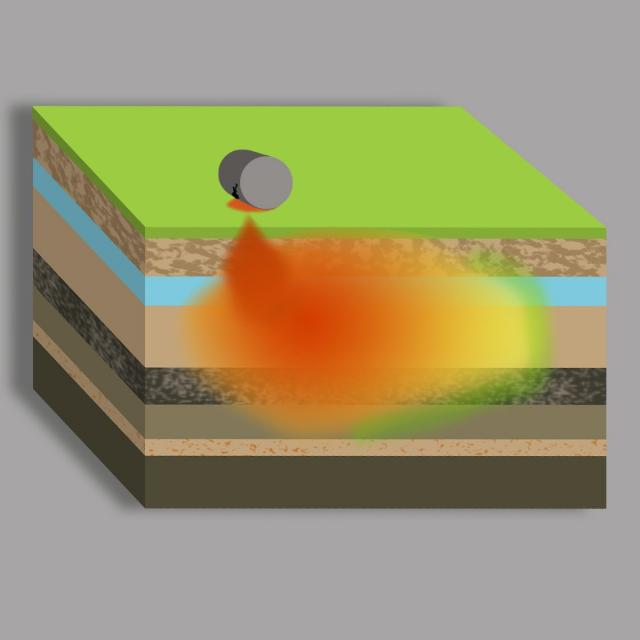
Groundwater is the water beneath the ground surface. It is a vast freshwater reservoir often overlooked because invisible, yet 1000 times greater than all lakes and rivers.

The Earth is blue for its oceans, but green for the freshwater under our feet. Half of the world’s population rely on groundwater for drinking and almost half of the irrigated land now depends on groundwater, a ten-fold increase in the past 50 years. In order to use the water from the ground, we first have to extract it! This course introduces wells hydraulics. Wells are used to provide groundwater for domestic, agricultural or industrial uses. Wells are also used in applications to control groundwater flow and contamination. Pump and treat systems are designed to extract contaminated water before it can be treated. The treated water is released to the environment, sometimes using recharge wells that can replenish aquifers. Wells can also control salt intrusions in coastal environments or the water table level at a construction site.
This course addresses questions such as:

  • How exactly do we extract groundwater?
  • How do we know if an aquifer can provide enough water?
  • How do we model underground flow to wells?
  • How can we use wells to remove water from construction sites or water-logged fields?

This wells hydraulics course starts with a description of steady flow to wells. We introduce the notion of radial coordinates and steady flow to wells in confined and unconfined aquifers. We also introduce finite difference methods to model flow to wells. We introduce transient flows in confined, semiconfined and unconfined aquifers. We use graphic methods and semi-automated methods to calculate aquifer properties from well tests. We also introduce slug tests and their analysis.
After the well and slug tests, we introduce well fields and issues of dewatering. We review the superposition principle and problems of domain boundaries before focusing on dewatering examples. We continue to explore the topic of well fields in the context of extraction and injection wells, with an example of pump and treat design and an in-situ remediation design. We also show an example of a well model in MODFLOW.

What you'll learn

  • Describe the steady-state flow to wells in confined and unconfined aquifers
  • Explain the correspondence between linear and radial coordinates
  • Derive the flow equations for steady flow to wells
  • Build simple aquifer models
  • Apply the flow equations to estimate aquifer parameters
  • Design wells for steady water supply
  • Describe the unsteady flow to wells in confined, semi-confined and unconfined aquifers
  • Explain what well functions are
  • Use graphical methods to calculate transmissivity
  • Compare the (transient) flow behavior in (semi)confined and unconfined aquifers
  • Explain slug tests
  • Contrast slug tests and well tests
  • Choose the appropriate analysis to calculate aquifer properties from slug tests
  • Model aquifers and wells
  • Apply analytical methods to steady state flows
  • Use finite difference methods to model aquifers and wells
  • Use computer models to automate calculations
  • Relate mathematical models to numerical models such as MODFLOW
  • Explain how well fields work
  • Apply flow equations for multiple wells
  • Explain how boundaries can be modeled with multiple (imaginary) wells
  • Plan dewatering systems
  • Interpret pump and treat systems from a hydraulics perspective

Syllabus

Week 1: Steady Flow to well
We start with the description of radial coordinates and steady flow to wellsin confined and unconfined aquifers. We also introduce finite difference methods.
Steady Flow to Well
Radial Coordinates
Steady Flow to Confined Well
Finite Difference
Week 2: Transient Confined and Semi-Confined Flows
We describe transient flows in confined and semiconfined aquifers. We use graphic methods and semi-automated methods to calculate aquifer properties from well tests.
Transient Confined Flow
Transient Confined
Transient Confined: Graphic Method
Transient Confined: Straight Line
Transient Leaky Confined
Week 3: Transient Unconfined Flows
We continue to describe well tests in unconfined aquifers to calculate unconfined aquifer properties. We also introduce slug tests and their analysis.
Transient Unconfined
Slug Tests:
Cooper Method
Hvorslev Method
Bouwer and Rice
Week 4: Well Fields and Dewatering
We start by reviewing the superposition principle and review the problem of domain boundaries. We then focus on dewatering examples.
Wells Fields
Superposition Principle
Boundaries
Dewatering
Week 5: Pump and treat / Capture Zones and MODFLOW models
We continue to explore the topic of well fields in the context of extraction and injection wells. We show an example of pump and treat design and an in-situ remediation design. We also show an example of a well model in MODFLOW.
Pump and Treat/ Capture Zones
MODFLOW

Go to Class
MOOC List is learner-supported. When you buy through links on our site, we may earn an affiliate commission.

Related Courses

Biomedical Equipment: A Practical Approach to Healthcare Technology Management (edX) EdX
Delft University of Technology,DelftX

Biomedical Equipment: A Practical Approach to Healthcare Technology Management (edX)

Enhance your knowledge and skills in effective methods of managing the lifespan of biomedical equipment in a limited-resource environment. With limited resources increasingly prevalent, healthcare technology management is often a challenge. Through this course we offer a practical approach to healthcare management that is tailored to this particular healthcare environment. The course will help you to manage uncertainties, defects and/or the unavailability of resources and personnel that may prevent proper and effective healthcare.

Feb 15th 2024
5-12 Weeks
Fundamentals of Fluid Power (Coursera) Coursera
University of Minnesota

Fundamentals of Fluid Power (Coursera)

In this course, you will be introduced to the fundamental principles and analytical modeling of fluid power components, circuits, and systems. You will learn the benefits and limitations of fluid power compared with other power transmission technologies; the operation, use, and symbols of common hydraulic components; how to formulate and analyze models of hydraulic components and circuits; and how to design and predict the performance of fluid power circuits.

May 11th 2026
5-12 Weeks
Natural Attenuation of Groundwater Contaminants: New Paradigms, Technologies, and Applications (Coursera) Coursera
Rice University

Natural Attenuation of Groundwater Contaminants: New Paradigms, Technologies, and Applications (Coursera)

Cleaning up the large number of groundwater contamination sites is a significant and complex environmental challenge. The environmental industry is continuously looking for remediation methods that are both effective and cost-efficient. Over the past 10 years there have been amazing, important developments in our understanding of key attenuation processes and technologies for evaluating natural attenuation processes, and a changing institutional perspective on when and where Monitored Natural Attenuation (MNA) may be applied.

Jun 8th 2026
5-12 Weeks
Supply Chains for Manufacturing: Inventory Analytics (edX) EdX
MIT,MITx

Supply Chains for Manufacturing: Inventory Analytics (edX)

Learn about effective supply chain strategies for companies that operate globally, with emphasis on how to plan and integrate supply chain components into a coordinated system. This course was formerly known as Supply Chains for Manufacturing I. A supply chain entails two or more parties that are linked together by material, information and money flows.

Mar 6th 2024
5-12 Weeks
Supply Chain Analytics (edX) EdX
MIT,MITx

Supply Chain Analytics (edX)

Master and apply the core methodologies used in supply chain analysis and modeling, including statistics, regression, optimization and probability – part of the MITx Supply Chain Management MicroMasters Credential. Supply chains are complex systems involving multiple businesses and organizations with different goals and objectives. Many different analytical methods and techniques are used by researchers and practitioners alike to better design and manage their supply chains.

Jan 10th 2024
13-24 Weeks
Groundwater Cycle (edX) EdX
Purdue University,PurdueX

Groundwater Cycle (edX)

The Earth is blue for its oceans but green for the blankets of groundwater under our feet. This course explores the water cycle from under the ground. How much groundwater do we use and what for? How much do the trees? How do we model water fluxes? This course explores the water cycle from an underground perspective. We start with the description of groundwater as a resource: How much is there? Where is it? How do we use it? How much groundwater do plants and trees use every year? How much water do aquifers lose during droughts? How much do they gain during rain events or in a typical year?

Jan 10th 2022
5-12 Weeks
Management in Engineering: Strategy and Leadership (edX) EdX
MIT,MITx

Management in Engineering: Strategy and Leadership (edX)

Analyze challenging real-life business cases that engineering managers face on a variety of topics. Apply management tools and relevant skills to manage innovation. This course was formerly known as Management in Engineering II. As part of the Principles of Manufacturing MicroMasters program, this course aims to provide exposure to key principles and practices used in engineering management.

Jan 9th 2024
5-12 Weeks
Hydraulique fluviale 1 - Écoulements à surface libre (edX) EdX
LouvainX,Université Catholique de Louvain - UCL

Hydraulique fluviale 1 - Écoulements à surface libre (edX)

Apprenez à calculer la quantité de sédiments transportés par les rivières et à comprendre leurs interactions avec la rivière et son environnement. Comment décrire l’écoulement d’une rivière ou d’un fleuve ? Quelle influence un rétrécissement local ou une pile de pont dans la rivière peuvent-ils avoir sur le niveau d’eau ? Quels aménagements vont permettre de limiter les impacts d’événements naturels tels qu’une crue ou une inondation sur la population et les villes avoisinantes ? Autant de questions qui reflètent l’importance de la compréhension du fonctionnement des cours d’eau.

Self Paced
Self-Paced