Technology of centrifugal pumps in closed circuits (HVAC Learning)

Offered by ADEGEB,
Technology of centrifugal pumps in closed circuits (HVAC Learning)

Learn how to work with centrifugal pumps.

Objective(s) :
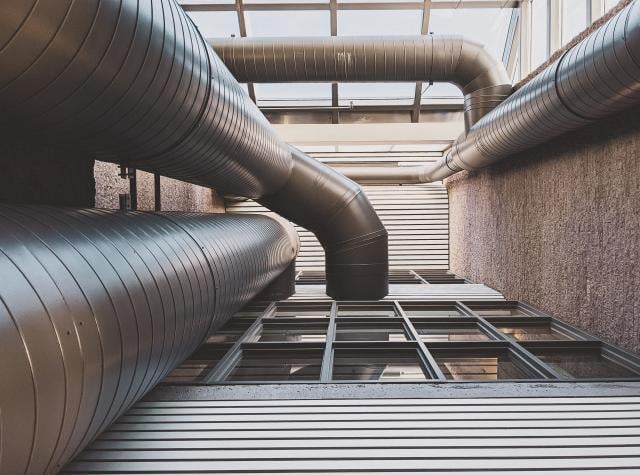
Technology of centrifugal pumps course defines types of centrifugal pumps used in open circuit systems, technology and application fields.

Go to Class
MOOC List is learner-supported. When you buy through links on our site, we may earn an affiliate commission.

Related Courses

Introduction to Particle Accelerators (NPAP MOOC) (Coursera) Coursera
Lund University

Introduction to Particle Accelerators (NPAP MOOC) (Coursera)

Welcome to the Nordic Particle Accelerator Program's (NPAP) Massive Open Online Courses and to the fascinating world of particle accelerators! Did you know that in the year of 2000 there were more than 15 000 particle accelerators in the world? Yet, today it has grown to more than 30 000 of them! A third of the particle accelerators are dedicated to medical applications, such as radio therapy, and a half are used for ion implantation in semiconductor devices.

Jun 8th 2026
5-12 Weeks
AstroTech: The Science and Technology behind Astronomical Discovery (Coursera) Coursera
University of Edinburgh

AstroTech: The Science and Technology behind Astronomical Discovery (Coursera)

Modern astronomy has made some astonishing discoveries - how stars burn and how black holes form; galaxies from the edge of the universe and killer rocks right next door; where the elements come from and how the expanding universe is accelerating. But how do we know all that? The truth is that astronomy would be impossible without technology, and every advance in astronomy is really an advance in technology. But the technology by itself is not enough. We have to apply it critically with a knowledge of physics to unlock the secrets of the Universe.

Jun 1st 2026
5-12 Weeks
Analyzing the Universe (Coursera) Coursera
Rutgers University

Analyzing the Universe (Coursera)

Using publicly available data from NASA of actual satellite observations of astronomical x-ray sources, we explore some of the mysteries of the cosmos, including neutron stars, black holes, quasars and supernovae. We will analyze energy spectra and time series data to understand how these incredible objects work. We utilize an imaging tool called DS9 to explore the amazing diversity of astronomical observations that have made x-ray astronomy one of the most active and exciting fields of scientific investigation in the past 50 years.

Jun 8th 2026
5-12 Weeks
Geometrical and Physical Optics (Coursera) Coursera
Rice University

Geometrical and Physical Optics (Coursera)

This third course serves as an introduction to the physics of waves and light. Upon completion, learners will understand how mathematical laws and conservation principles describe wave propagation and light in the context of both geometrical and physical optics. Learners will gain experience in solving physics problems with tools such as graphical analysis, algebra, vector analysis, and calculus.

Jun 8th 2026
4 Weeks
The Sun and the Total Eclipse of August 2017 (Coursera) Coursera
University of Colorado Boulder

The Sun and the Total Eclipse of August 2017 (Coursera)

A total eclipse is one of the most spectacular sights you can ever see! It looks like the end of the world may be at hand. There is a black hole in the sky where the sun should be. Pink flames of solar prominences and long silver streamers of the sun's corona stretch across the sky. It gets cold, and animals do strange things. People scream and shout and cheer, and remember the experience their whole life. But total eclipses are important scientifically as well.

Jun 8th 2026
5-12 Weeks
Understanding Modern Physics I: Relativity and Cosmology (Coursera) Coursera
The Hong Kong University of Science and Technology - HKUST

Understanding Modern Physics I: Relativity and Cosmology (Coursera)

The 20th century was known as the century of physics. In the past 120 years, concepts such as space, time, energy, entropy and particles were understood to much deeper levels. New paradigms of thinking such as relativity and quantum mechanics emerged. This course is the first course in the Understanding Modern Physics series, which covers an introduction to special relativity, general relativity and cosmology.

Jun 8th 2026
5-12 Weeks