EdX

Groundwater Cycle (edX)

Offered by Purdue University, PurdueX,
Groundwater Cycle (edX)

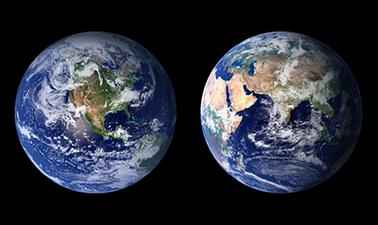
The Earth is blue for its oceans but green for the blankets of groundwater under our feet. This course explores the water cycle from under the ground. How much groundwater do we use and what for? How much do the trees? How do we model water fluxes? This course explores the water cycle from an underground perspective. We start with the description of groundwater as a resource: How much is there? Where is it? How do we use it? How much groundwater do plants and trees use every year? How much water do aquifers lose during droughts? How much do they gain during rain events or in a typical year?

Class Deals by MOOC List - Click here and see EdX's Active Discounts, Deals, and Promo Codes.

Groundwater is the water beneath the ground surface. It is a vast freshwater reservoir often overlooked because invisible, yet 1000 times greater than all lakes and rivers. The Earth is blue for its oceans, but it is green for the blankets of freshwater under our feet. Half of the world’s population relies on groundwater for drinking and almost half of the irrigated land now depends on groundwater, a ten-fold increase in the past 50 years.

In the second objective of this course, we describe underground waters and the properties and classification of aquifers. What is the difference between a confined and unconfined aquifer? What is porosity and does it influence groundwater resources? We then explain and apply Darcy’s law. Darcy is a 19th century hydraulics engineer who famously worked on bringing clean fresh water to the public fountains of Dijon, France. His law describes flow in porous media and is the cornerstone of subsurface hydrology. We will review his experiments and show how he arrived at his law empirically. We even will show in a lab video how to calculate the hydraulic properties of porous media following Darcy’s steps. After this empirical overview, we will demonstrate how we can derive the same law from first principles using Newton’s force balances.
In our third objective, we will build up from Darcy’s law to derive the other principles of groundwater motion. What are the differences between confined and unconfined flows? What happens when it rains and the aquifers recharge? What happens in soils with inhomogeneous properties? What is a water divide? Finally, we will introduce modeling principles to translate these foundations into real-life engineering. How can we solve the equations of motion in excel using finite difference? How can we design tile drains to lower the water table in a cornfield?
This first course of our three-course series introduces groundwater cycling on Earth, from the description of stocks to fluxes and to the basics of modeling. We will use these fundamental principles in our remaining two topical courses: Wells Hydraulics and Groundwater Contamination.

What you'll learn

  • Describe the global and local water balance and quantify groundwater recharge from hydrographs
  • Explain in your own words the terms: groundwater, freshwater, water allocation, drought, water demand

Provide estimates of human water usage, global water reservoirs, water during historic droughts
Sketch the water cycle
Provide a water balance for a wathershed
Apply the concept of water balance to simple situations
Use the displacement and seasonal recession method to calculate groundwater recharge.

  • Identify underground waters, describe the properties of aquifers and recall their classification

Define: zone of saturation, zone of aeration/unsaturated zone, water table, vadose zone, capillary fringe
Define: aquifer, aquitard/aquifuge, pore space, phreatic surface, root zone, confined/unconfined aquifer, piezometric surface, artesian aquifer, perched aquifers
Define porosity, derive its value in packed beds, Understand Grain size distribution and porosity, Understand the porosity of rock formations
Define storativity, elastic storage coefficient, specific yield, storage coefficient, specific retention, specific storage.
Draw piezometric maps from piezometer data
Find recharge and discharge zones from piezometric data

  • Explain and apply Darcy's law

Provide and explain Newton's second law, Newton's second law applied to fluids and Stokes Equation.
Explain the difference between Darcy flux and water velocity.
Derive Darcy's law from first principles: Navier-Stokes to Stokes to Poiseuille to Darcy
Provide physical explanations of the hydraulic conductivity

  • Derive the groundwater flow equations, apply their solutions to solve practical problems

Provide and explain Dupuit's equation.
Solve problems related to unconfined and confined aquifers.
Derive the Boussinesq equation.
Define transmissivity
Write the continuity equation for a leaky aquifer and provide an explanation for each parameter and variable as well as their units
Define transmissivity

Syllabus

Week 1: The Underground Water Cycle
We start with the description of groundwater as a resource: How much is there? Where is it? How do we use it?

Week 2: Aquifers
We describe underground waters and the properties and classification of aquifers. What is the difference between a confined and an unconfined aquifer? What is porosity and does it influence groundwater resources?

Week 3: Darcy’s law
We explain and apply Darcy’s law. This law describes flow in porous media and is the cornerstone of subsurface hydrology.

Week 4: Groundwater Flow
We build up from Darcy’s law to derive the other principles of groundwater motion. What are the differences between confined and unconfined flows? What happens when it rains and aquifers recharge?

Week 5: Modeling and Applications
We introduce modeling principles to translate mathematical models into real-life engineering. How can we solve the equations of motion in excel? How can we design tile drains to lower the water table in a cornfield?

Go to Class
MOOC List is learner-supported. When you buy through links on our site, we may earn an affiliate commission.

Related Courses

Foundations of Data Analysis - Part 1: Statistics Using R (edX) EdX
University of Texas at Austin,UTAustinX

Foundations of Data Analysis - Part 1: Statistics Using R (edX)

This is a hands on course with a data lab to teach fundamental statistical topics such as descriptive statistics, inferential testing, and modeling. In this first part of a two part course, we’ll walk through the basics of statistical thinking – starting with an interesting question. Then, we’ll learn the correct statistical tool to help answer our question of interest – using R and hands-on Labs.

No sessions available
5-12 Weeks
Principles of Modeling, Simulations, and Control for Electric Energy Systems (edX) EdX
MIT,MITx

Principles of Modeling, Simulations, and Control for Electric Energy Systems (edX)

Apply a dynamic systems-level approach and engage emerging research on efficient, sustainable, and physically and economically feasible electric power systems of the future. As global energy demand grows, to mitigate climate change we must drive a swift transition to clean energy resources and enhanced electric power grid infrastructure. In this course, you will explore systemic principles of future electric power system management, such as the role of smart grids, data-enabled machine learning, power electronics-control, and data-driven decision-making.

No session available
5-12 Weeks
Applied Text Mining in Python (Coursera) Coursera
University of Michigan

Applied Text Mining in Python (Coursera)

This course will introduce the learner to text mining and text manipulation basics. The course begins with an understanding of how text is handled by python, the structure of text both to the machine and to humans, and an overview of the nltk framework for manipulating text. The second week focuses on common manipulation needs, including regular expressions (searching for text), cleaning text, and preparing text for use by machine learning processes. The third week will apply basic natural language processing methods to text, and demonstrate how text classification is accomplished. The final week will explore more advanced methods for detecting the topics in documents and grouping them by similarity (topic modelling).

Sep 14th 2026
4 Weeks
Basic Modeling for Discrete Optimization (Coursera) Coursera
University of Melbourne,The Chinese University of Hong Kong

Basic Modeling for Discrete Optimization (Coursera)

Optimization is a common form of decision making, and is ubiquitous in our society. Its applications range from solving Sudoku puzzles to arranging seating in a wedding banquet. The same technology can schedule planes and their crews, coordinate the production of steel, and organize the transportation of iron ore from the mines to the ports. Good decisions in manpower and material resources management also allow corporations to improve profit by millions of dollars.

Sep 14th 2026
4 Weeks
Viscoelasticidad y comportamiento mecánico-dinámico de materiales poliméricos. Modelización (edX) EdX
Universitat Politècnica de València,UPValenciaX

Viscoelasticidad y comportamiento mecánico-dinámico de materiales poliméricos. Modelización (edX)

Aprende sobre el comportamiento viscoelástico de polímeros para el diseño de componentes con materiales poliméricos. Los materiales poliméricos se caracterizan por tener un comportamiento viscoelástico lo cual implica que sus propiedades mecánicas surgen de la combinación de unas propiedades elásticas y viscosas.

Self Paced
Self-Paced
Sustainable Resource Recovery from Used Water (edX) EdX
University of Queensland,UQx

Sustainable Resource Recovery from Used Water (edX)

Learn about the latest resource recovery concepts, technologies and products related to sustainable wastewater management. Wastewater is a major end product generated by humans. Traditionally, wastewater has been treated mostly for sanitary and environmental protection reasons, but this waste product harbours an enormous value, both from an ecological and economical perspective.

Self Paced
Self-Paced
Groundwater Contamination (edX) EdX
Purdue University,PurdueX

Groundwater Contamination (edX)

The Earth is blue for its oceans and green for its groundwater. Access to clean freshwater is essential yet human activities deteriorate water quality. This unit describes contaminant transport in aquifers. Groundwater is the water beneath the ground surface. It is a vast freshwater reservoir often overlooked because invisible, yet 1000 times greater than all lakes and rivers. The Earth is blue for its oceans, but green for the freshwater under our feet.

This course is archived
5-12 Weeks
Basic 3D Modeling using Blender (edX) EdX
IIT Bombay,IITBombayX

Basic 3D Modeling using Blender (edX)

Learn basic 3D modeling skills, including modeling, texturing, and lighting, using free and open source tool: Blender. Animation is an emerging medium of communication, especially in education and entertainment domains. More and more learners are aspiring to make a career in animation. However, the animation training is expensive. One of the reasons is the high cost of proprietary software used for animation.

No sessions available
4 Weeks
Simulating a Quadcopter's Electromechanics (edX) EdX
MathWorks

Simulating a Quadcopter's Electromechanics (edX)

Learn how to integrate multiple physical domains and optimize system performance of a quadcopter. Welcome to Modeling the Quadcopter Electromechanical System, the third course in the Engineering Design and Simulation Program. This course introduces the electrical part of the system to model the battery and the transfer of electrical energy to power the mechanical components powering the flight of the quadcopter.

Self Paced
Self-Paced
Data Science: Capstone (edX) EdX
HarvardX,Harvard University

Data Science: Capstone (edX)

Show what you’ve learned from the Professional Certificate Program in Data Science. To become an expert data scientist you need practice and experience. By completing this capstone project you will get an opportunity to apply the knowledge and skills in R data analysis that you have gained throughout the series. This final project will test your skills in data visualization, probability, inference and modeling, data wrangling, data organization, regression, and machine learning.

Self Paced
Self-Paced
Introduction to 3D Modeling (Coursera) Coursera
University of Michigan

Introduction to 3D Modeling (Coursera)

On this four-week practical course from the University of Michigan, you’ll not only learn how to use the Rhino software to create your 3D models, but you’ll also gain basic design skills to help bring your imagination to life. This course will guide you through 3D modeling within Rhino, so you’ll cover the fundamentals of the software as well as 3D modeling in general. You’ll first look at how to navigate the user interface and the different tools that you’ll be using to create models throughout this course. You’ll familiarize yourself with the 3D space and 3D objects before jumping straight in to create your own objects and building blocks.

Sep 7th 2026
4 Weeks
Aplicaciones de la Teoría de Grafos a la vida real II (edX) EdX
Universitat Politècnica de València,UPValenciaX

Aplicaciones de la Teoría de Grafos a la vida real II (edX)

Aprenderemos a modelizar problemas del mundo real mediante su representación con grafos y a resolverlos mediante sus algoritmos asociados. Este curso trata la Teoría de Grafos desde el punto de vista de la modelización, lo que nos permitirá con posterioridad resolver muchos problemas de diversa índole. Presentaremos ejemplos de los distintos problemas en un contexto real, analizaremos la representación de éstos mediante grafos y veremos los algoritmos necesarios para resolverlos.

Self Paced
Self-Paced