Natural Attenuation of Groundwater Contaminants: New Paradigms, Technologies, and Applications (Coursera)

Offered by Rice University,
Natural Attenuation of Groundwater Contaminants: New Paradigms, Technologies, and Applications (Coursera)

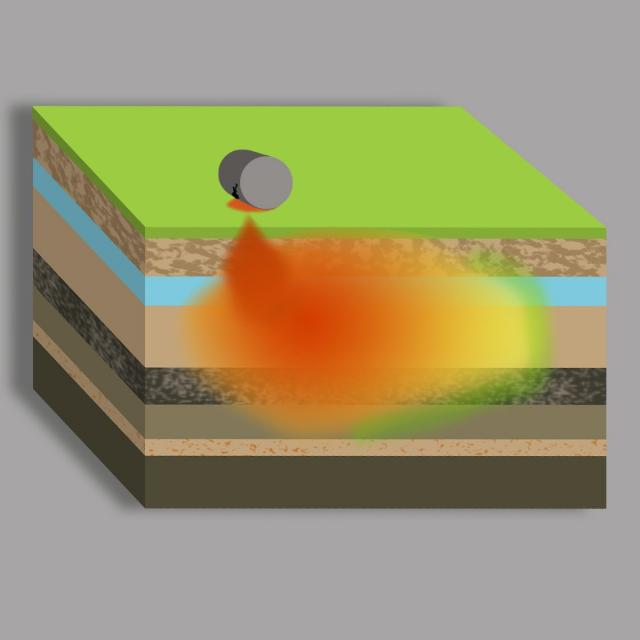
Cleaning up the large number of groundwater contamination sites is a significant and complex environmental challenge. The environmental industry is continuously looking for remediation methods that are both effective and cost-efficient. Over the past 10 years there have been amazing, important developments in our understanding of key attenuation processes and technologies for evaluating natural attenuation processes, and a changing institutional perspective on when and where Monitored Natural Attenuation (MNA) may be applied.

Class Deals by MOOC List - Click here and see Coursera's Active Discounts, Deals, and Promo Codes.

Despite these advances, restoring groundwater contaminated by anthropogenic sources to allow for unrestricted use continues to be a challenge. Because of a complex mix of physical, chemical, and biological constraints associated with active in-situ cleanup technologies, there has been a long standing focus on understanding natural processes that attenuate groundwater contaminant plumes.
We will build upon basic environmental science and environmental engineering principles to discover how to best implement MNA as a viable treatment for groundwater contamination plumes. Additionally we will delve into the history behind and make predictions about the new directions for this technology.
Any professional working in the environmental remediation industry will benefit from this in-depth study of MNA. We will use lectures, readings, and computational exercises to enhance our understanding and implementation of MNA. At the completion of this course, students will have updated understanding and practical tools that can be applied to all possible MNA sites.

Syllabus

WEEK 1
Course Overview and MNA as an Evolving Technology
Welcome to the course! In the Course Overview section, you will find general information about the course as well as instructions on how to navigate the course. In the lectures for this week, we will start with history. We look at a general brief history of groundwater remediation, and then a specific history of MNA featuring a list of the key protocols from 1994 to 2015. Special topics include active remediation vs. MNA, and Neat New MNA Technologies, and how degradation, storage, and dilution are all part of the MNA story.

WEEK 2
Biodegradation Principles
In this series of lectures, we will learn when biodegradation can or cannot occur and what conditions are conducive to faster degradation.

WEEK 3
Abiotic Degradation Principles
In this series of lectures, we will focus on the principles of abiotic degradation and discuss how these processes support monitored natural attenuation. You will be learning about the key reactions and minerals that are involved in abiotic degradation. We will also be covering what methods are used to determine if abiotic degradation is relevant at a particular site, and the rates at which these reactions may be occurring

WEEK 4
Attenuation and Storage in Low K Zones
In these lectures, we will focus on the idea that storage of contaminants in geologic media as a potential natural attenuation mechanism. Under this scenario, certain contaminants diffuse in low permeability media such as silt, clay, and limestone and then eventually reenter the aquifer by a process called back diffusion. Like sorption, this process is not destructive, but attenuates a contaminant plume by sequestering some of the initial loading and then slowly releases it over long time scales. You will learn about diffusion vs. dispersion, see case studies in the lab and field, learn how to sample and model this process, and hear the latest research about degradation processes associated with matrix diffusion.

WEEK 5
Dilution as an Attenuation Process - Sometimes
In this series of lectures, we will discuss how dilution is an attenuation process – sometimes. We start with the basics, and review groundwater flow and one of the “top ten things” that every hydrogeologist should know: the distinction between Darcy Velocity and Seepage Velocity. Next we give some examples of regulatory programs where dilution is considered an acceptable attenuation process. Then we present how dispersion and mixing in wells are dilution-related processes. Finally we show how the emerging field of mass flux/ mass discharge can be used to see if a contaminant plume is strong enough to impact water supply wells and/or streams, and to see where your plume ranks in the “Plume Magnitude Classification System.”

WEEK 6
Better Technologies: Compound Specific Isotopes & Molecular Biological Tools
In this series of lectures, we will focus on several established and emerging methods for demonstrating that biological and other attenuation processes are occurring. We will start with an overview on lines of evidence for biological degradation processes, and then transition to newer molecular methods for identifying and quantifying biodegradation potential for a variety of compounds. Several of this week’s lectures also examine compound-specific isotope analysis, which has been emerging as a key resource for MNA studies. You will learn how stable isotope analyses can provide critical information on whether attenuation is occurring, the rate at which it is occurring, and even the pathway that is responsible.

WEEK 7
Monitoring for MNA
In this series of lectures, we will discuss how you should perform the monitoring that is such an important part of monitored natural attenuation (after all, it’s right there in the title!). We start off with a discussion of how data are collected, including using newer high-resolution techniques, to help build a proper conceptual site model and support the selection of MNA as a remedy. Then we touch on how to design a long-term monitoring program to assess the performance of MNA. Methods for analyzing concentration trends and graphically presenting MNA data are also presented, along with a discussion of the potential sources of variability in monitoring data.

WEEK 8
Modeling Tools to Support MNA
In this series of lectures, we talk about models and how they can be used to understand MNA. We first start with two key MNA questions: How Long? (will the plume get) and How Far? (how long until the site is clean). Then a review of analytical computer models, remediation timeframe models, the more complex but more powerful numerical models, and even a discussion of the “Fourth Paradigm: Big Data”.

WEEK 9
New Directions for MNA
This final series of lectures will cover a mélange of interesting MNA topicsl We start with the brand new ESTCP BIOPIC tool, then talk about the broad universe of MNA that extends to a lot of different contaminant classes. Then some new developments in the LNAPL world: Natural Source Zone Depletion, both with conventional methods and a new method based on thermal monitoring. Then we talk a little bit about low threat closures and transition assessments, and end up with a brief conversation with the three instructors. And then you are done!
Go to Class
MOOC List is learner-supported. When you buy through links on our site, we may earn an affiliate commission.

Related Courses

Global sustainability and corporate social responsibility: Be sustainable (Coursera) Coursera
Macquarie University

Global sustainability and corporate social responsibility: Be sustainable (Coursera)

It is no longer acceptable for organisations to focus entirely on financial success if they are to be competitive on the global stage. As corporate scandals continue to make headlines, you will expand your strategic thinking beyond your organisation’s competitive financial environment to consider its broader impact on society. You will grapple with the conflicting outcomes of maximising financial return and societal impact as you develop the skills to create a balance that is sustainable.

Jun 8th 2026
5-12 Weeks
The Influence of Social Context on Health (Coursera) Coursera
University of Michigan

The Influence of Social Context on Health (Coursera)

Why are some groups healthier than others, and how do these differences emerge and persist over the life course? How do social policies (e.g., housing, transportation, employment) relate to health and health inequalities? Why are there health disparities even in countries that have free universal health care? This course will address conceptual models for understanding health disparities in the US and internationally, how population science identifies the main sources of these disparities, and how public health can inform policy efforts to address these disparities.

Jun 8th 2026
4 Weeks
Oil & Gas Industry Operations and Markets (Coursera) Coursera
Duke University

Oil & Gas Industry Operations and Markets (Coursera)

The oil and gas industry has an enormous impact on all aspects of daily life. Individuals, corporations, and national governments make financial and policy decisions based on the cost, use, and availability of these two natural resources. This two-week course looks at the two most fundamental aspects of the oil and gas industry, its operations and markets, each of which is addressed as a separate module in the course.

Jun 10th 2026
2 Weeks
Predictive Modeling and Transforming Clinical Practice (Coursera) Coursera
University of Colorado System

Predictive Modeling and Transforming Clinical Practice (Coursera)

This course teaches you the fundamentals of transforming clinical practice using predictive models. This course examines specific challenges and methods of clinical implementation, that clinical data scientists must be aware of when developing their predictive models.

Jun 8th 2026
5-12 Weeks
The Economics of Agro-Food Value Chains (Coursera) Coursera
Technische Universität München - TUM

The Economics of Agro-Food Value Chains (Coursera)

In this course, you learn how the agro-food value chain approaches the challenge of constantly improving its competitiveness by producing high quality food and products and also aiming to attain greater sustainability. Some of the topics of this course are: the notion of quality for food and agricultural products and consumer value; how to conduct market research in this field; labelling, branding and pricing strategies, as-well as innovation in the agro-food sector; how sustainability can be used as a competitive advantage through corporate social responsibility: the role and different types of industrial standards; the different forms of coordination in the chain, in particular with regard to the retailing and distribution sector.

Jun 10th 2026
5-12 Weeks
Principles of Sustainable Finance (Coursera) Coursera
Erasmus University Rotterdam

Principles of Sustainable Finance (Coursera)

Finance is widely seen as an obstacle to a better world. Principles of Sustainable Finance explains how the financial sector can be mobilized to counter this. Using finance as a means to achieve social goals we can divert the planet and its economy from its current path to a world that is sustainable for all. Throughout this course, you will learn about the UN Sustainable Development Goals, how social and environmental factors should not be regarded as externalities, you will learn more about sustainable banking and asset management, about effective engagement, sustainable scenario analysis and long-term value creation.

Jun 8th 2026
5-12 Weeks
Arctic Change & the Nexus of Governance, Economics & Culture (Coursera) Coursera
University of Colorado Boulder

Arctic Change & the Nexus of Governance, Economics & Culture (Coursera)

In this course, you will learn how the changing Arctic environment is tied to the growing economic and strategic importance of the North. After setting the stage through a review of the peoples of the Arctic and how they are dealing with change, Arctic governance, economies national defense, attention turns to marine use of the Arctic, oil and gas exploration, mining, fisheries and tourism.

Jun 8th 2026
4 Weeks
Securing Investment Returns in the Long Run (Coursera) Coursera
University of Geneva

Securing Investment Returns in the Long Run (Coursera)

In this course, you will learn about the famous dichotomy between active and passive investing, how to appropriately measure and analyze investment performance and what the future trends in the investment management industry are. You will first learn about absolute and relative performance, risk-adjusted returns and how to decompose investment performance. The focus will then shift to the two main categories of investment vehicles, active and passive funds, and what they entail in terms of expected performance.

Jun 8th 2026
4 Weeks
Sustainable Development in the 21st Century with Ban Ki-moon (Coursera) Coursera
Yonsei University

Sustainable Development in the 21st Century with Ban Ki-moon (Coursera)

The course is designed for people that want to learn about the latest development agenda the international community agreed to achieve by 2030. Structured around the five pillars of Agenda 2030 – people, prosperity, planet, peace and justice, and partnership, students will learn that these pillars are interconnected and need to be integrated in practical policy-making and operational activities for development, in both developed and developing country settings.

Jun 8th 2026
5-12 Weeks
Build Your First Android App (Project-Centered Course) (Coursera) Coursera
CentraleSupélec

Build Your First Android App (Project-Centered Course) (Coursera)

In this project-centered course, you’ll design, build, and distribute your own unique application for the Android mobile platform. We’ll provide you with a set of customizable building blocks that you can assemble to create many different types of apps, and that will help you become familiar with many important specificities of Android development. When you complete the project, in addition to having a personalized app that you can use and share, you’ll have the skills and background you need to move on to more advanced coursework in Android development.

Jun 8th 2026
4 Weeks
Solar Energy Codes, Permitting and Zoning (Coursera) Coursera
University at Buffalo

Solar Energy Codes, Permitting and Zoning (Coursera)

This course equips learners to identify national code and zoning rules specific to photovoltaic (PV) systems, as well as key design elements and points for inspection. Curriculum includes zoning variances, critical elements of the permitting process, planning documents necessary for PV system installation and recommendations for permitting offices to streamline the permit process. Learners gain a code inspector’s perspective in relation to building and electrical code requirements.

Jun 8th 2026
4 Weeks
Cloud Computing Applications, Part 2: Big Data and Applications in the Cloud (Coursera) Coursera
University of Illinois at Urbana-Champaign

Cloud Computing Applications, Part 2: Big Data and Applications in the Cloud (Coursera)

Welcome to the Cloud Computing Applications course, the second part of a two-course series designed to give you a comprehensive view on the world of Cloud Computing and Big Data! In this second course we continue Cloud Computing Applications by exploring how the Cloud opens up data analytics of huge volumes of data that are static or streamed at high velocity and represent an enormous variety of information. Cloud applications and data analytics represent a disruptive change in the ways that society is informed by, and uses information.

Jun 8th 2026
4 Weeks