EdX

The Hidden Side of Energy Access: Understanding Clean Cooking (Virtual Knowledge Exchange) (edX)

Offered by World Bank Group, WBGx,
The Hidden Side of Energy Access: Understanding Clean Cooking (Virtual Knowledge Exchange) (edX)

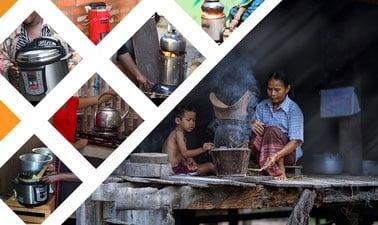
This course is based on the World Bank’s “ The Hidden Side of Energy Access: Understanding Clean Cooking ”. This course explores the hidden side of energy access by uncovering the reality that over 4 billion people around the world currently lack access to modern energy cooking services (MECS) for their daily cooking needs. Throughout the developing world, households still cook with firewood and charcoal on rudimentary stoves in poorly ventilated rooms, resulting in significant negative impacts for health, gender, the environment, and our climate.

Class Deals by MOOC List - Click here and see EdX's Active Discounts, Deals, and Promo Codes.

Access to clean cooking solutions, including modern stoves and cooking fuels, is often overlooked as part of the wider energy access agenda. This is surprising, given that four billion people – over half the world’s population – lack access to modern energy cooking service, also known as MECS, for their daily cooking practices. This means that families around the world continue to rely on fuels like wood or charcoal and rudimentary stoves, leading to devastating health, climate, environmental and gender impacts that cost the world an estimated 2.4 trillion dollars each year.
While the imperatives are clear, attention and focus on clean cooking have not been commensurate. To address this gap, the World Bank’s Open Learning Campus (OLC) and the Energy Sector Management Assistance Program (ESMAP) are partnering in a virtual Knowledge Exchange (KE) that builds on the recently launched, first-of-its-kind self-paced e-learning course titled The Hidden Side of Energy Access: Understanding Clean Cooking. The KE is a month-long interactive workshop series that will feature speaker presentations from various clean cooking innovators and practitioners, discussion forums, and self-paced exercises across the four modules of the e-learning.

What you'll learn
The core objective of this course is to improve awareness and bring renewed attention to the state of access to modern energy cooking services, while also drawing attention to the first comprehensive course on clean cooking. This is the first step to address critical sustainable development challenges and opportunities related to energy, health, the environment, the climate, and gender equality.

Syllabus

Week 1: Making the Case for Modern Energy Cooking Services (MECS)
Ensuring universal access to affordable, reliable, and modern energy cooking services (MECS) is a critical development objective from a health, environment, climate, and gender equality perspective. This session will make the case for clean cooking and introduce you to the concept of MECS and the Multi-Tier Framework.

Week 2: The Entrepreneurial Journey
There are several key demand- and supply-side barriers that stand in the way of greater progress on the clean cooking agenda. This session will explore the entrepreneurial journey in the clean cooking sector, reflecting on both challenges and successes.

Week 3: Innovating Financing Instruments for Clean Cooking
Financing remains a critical challenge in the clean cooking sector, and historical investment levels have not been commensurate with needs. This session will investigate the level of investment needed to achieve universal access to MECS and explore key innovations when it comes to financing.

Week 4: Accelerating Access to MECS: Systems-level Priorities and the Role of Policy
Looking ahead, there are several systems-level priority areas that will move the needle on clean cooking access. This session will explore these sector-wide, systems-level recommendations, while also examining the role of policy in accelerating access to MECS.

Go to Class
MOOC List is learner-supported. When you buy through links on our site, we may earn an affiliate commission.

Related Courses

Electric Cars: Policy (edX) EdX
Delft University of Technology,DelftX

Electric Cars: Policy (edX)

Learn about the role of public policy in steering technological innovation and infrastructural change toward zero-emission mobility. Electric cars are more than a novel means of mobility. They have been recognized as an essential building block of the energy transition. Fulfilling their promise will imply a significant change in the technical, digital and social dimensions of transport and energy infrastructure.

Self Paced
Self-Paced
Energy Subsidy Reform (edX) EdX
International Monetary Fund - IMF,IMFx

Energy Subsidy Reform (edX)

A course on energy subsidies, their costs, and the design of a successful reform based on country case studies. In the first part of the course, economists from the IMF will introduce the definition and measurement of subsidies, and then describe the economic, social, and environmental implications of subsidies.

Self Paced
Self-Paced
From the Ground Up: Managing and Preserving Our Terrestrial Ecosystems (edX) EdX
SDGAcademyX,SDG Academy

From the Ground Up: Managing and Preserving Our Terrestrial Ecosystems (edX)

How can we preserve, restore, manage and sustainably use terrestrial ecosystems? Join us as we explore this question in the Brazilian Amazon and around the world. In this course, you’ll learn the science behind the capacities of various ecosystems including extinction rates, desertification and how their physical makeup has evolved with environmental shifts. You’ll experience the lives of local populations dependent upon these resources, from their economic activities to their societal norms.

Self Paced
Self-Paced
Solar Energy: Photovoltaic (PV) Energy Conversion (edX) EdX
Delft University of Technology,DelftX

Solar Energy: Photovoltaic (PV) Energy Conversion (edX)

Learn how solar cells generate electricity, and about the semiconductor physics and optics required to design and manufacture solar cells. The key factor in getting more efficient and cheaper solar energy panels is the advance in the development of photovoltaic cells. In this course you will learn how photovoltaic cells convert solar energy into useable electricity. You will also discover how to tackle potential loss mechanisms in solar cells.

Self Paced
5-12 Weeks
Science & Cooking: From Haute Cuisine to Soft Matter Science (physics) (edX) EdX
HarvardX,Harvard University

Science & Cooking: From Haute Cuisine to Soft Matter Science (physics) (edX)

Top chefs and Harvard researchers explore how traditional and modernist cooking techniques can illuminate basic principles in chemistry, physics, and engineering. Learn about elasticity, viscosity, mayonnaise, baking, and more! In this course, which investigates physical transformations in food, we will be visited by world-famous chefs who use a number of different styles and techniques in their cooking. Each chef will demonstrate how he or she prepares delicious and interesting creations, and we will explore how fundamental scientific principles make them possible.

Self Paced
Self-Paced
Food Fermentation: The Science of Cooking with Microbes (edX) EdX
HarvardX,Harvard University

Food Fermentation: The Science of Cooking with Microbes (edX)

In Food Fermentation: The Science of Cooking with Microbes, explore the history of food and beverage fermentations and how tiny microbes change and enhance flavors, aromas, and tastes in our food. What’s living in your food? Many of the foods that we consume daily owe their distinct characteristics and flavors to microbes, specifically through a biochemical process of fermentation (using bacteria, fungi, and other microorganisms to produce diverse foods).

Self Paced
Self-Paced
Water Works: Activating Heritage for Sustainable Development (edX) EdX
Delft University of Technology,DelftX

Water Works: Activating Heritage for Sustainable Development (edX)

Address contemporary challenges from a socio-spatial and cultural perspective, and activate water heritage for decision-making in water management. Water has served and sustained societies throughout history. Understanding the complex and diverse water systems of the past is key to devising sustainable development for the future with regard to socioeconomic structures, policies, and cultures. Today, past systems form the framework for preservation and reuse as well as for new proposals.

Self Paced
Self-Paced
Electric Cars: Introduction (edX) EdX
Delft University of Technology,DelftX

Electric Cars: Introduction (edX)

Get a basic understanding of electric cars and learn about leading technologies, development of profitable business models and effective policies. Electric vehicles are the future of transportation. Electric mobility has become an essential part of the energy transition, and will imply significant changes for vehicle manufacturers, governments, companies and individuals.

Self Paced
Self-Paced
Understanding Poverty and Inequality (edX) EdX
SDGAcademyX,SDG Academy

Understanding Poverty and Inequality (edX)

Explore the many facets and faces of poverty and inequality, and discover opportunities for individuals, countries, and a global community to help ensure that no one is left behind. In September 2015, 193 member states of the United Nations adopted the 2030 Agenda for Sustainable Development and committed themselves to the 17 Sustainable Development Goals (SDGs). The SDGs are interconnected, recognizing that poverty cannot be eradicated without improved health and education, sustainable economic growth cannot occur on a planet under threat of climate change, and so forth.

Self Paced
Self-Paced
Work and Employment for a Sustainable Future (edX) EdX
SDGAcademyX,SDG Academy

Work and Employment for a Sustainable Future (edX)

We are living in a financially fragile world. There is economic growth, but not enough opportunities to find decent work. Globally, more than 200 million people are still unemployed, but there has been progress in standards of labour and work. This is not sustainable. Learn from experts from the International Labour Organization, Harvard University, and more about the state of work in our world, and what it will take to ensure steady, inclusive and sustainable economic development for all.

Self Paced
Self-Paced