EdX

Transnational Studies - Japan and the World (edX)

Transnational Studies - Japan and the World (edX)

Learn to think ‘transnationally’ and understand the border-crossing flows of people, things and ideas. In this course, you will gain foundational knowledge about how to think transnationally. An initial module which introduces key concepts and approaches in transnational studies will be followed by four modules that use concrete case studies centered on Japan to spotlight how the transnational can be fruitfully employed across different disciplines, from history to sustainability studies. In doing so, the course offers foundational knowledge in how to navigate the complexities of our globalized world.

Class Deals by MOOC List - Click here and see EdX's Active Discounts, Deals, and Promo Codes.

The contemporary world is marked by a curious state of tension. On the one hand, it is deeply globalized, with goods, people, culture and ideas circulating across borders on an unprecedented scale. Neither can two of the major crises we are facing, climate change and the COVID-19 pandemic, be contained on the level of individual states. Yet, nation states are still the most powerful political entities in the world, and nationalism is resurging, mobilizing the imagination and aspirations of people everywhere. Academic knowledge, too, is still often aligned with national borders and categories.

Transnational studies is an interdisciplinary field that lives in the interstices of this tension. It reflects on why the “nation” has come to have such a powerful grip on the human imagination and social organization. It offers approaches that follow the historical and contemporary movement of ideas, things, people and practices beyond (= “trans”) national borders, explores how they are transformed along the way, and analyzes what enables and limits these movements.
What you'll learn

  • Understand how the idea of nations structures movement and mobility in the contemporary world
  • Understand how people, things and ideas flow and circulate across borders
  • Analyze these flows on the material, conceptual and institutional levels
  • Learn through four case studies how transnational analysis applies to Japan
  • Employ questions from transnational studies in different disciplines from history to sustainability studies
Go to Class
MOOC List is learner-supported. When you buy through links on our site, we may earn an affiliate commission.

Related Courses

Japanese Books: From Manuscript to Print (edX) EdX
HarvardX,Harvard University

Japanese Books: From Manuscript to Print (edX)

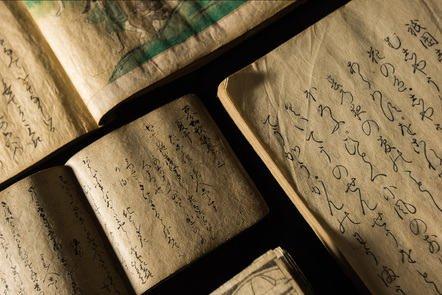
This course expands the definition of the “book” to include scrolls and albums, focusing on the reading experience of a variety of formats in Japan. You will begin by examining rare and beautifully preserved manuscripts in the Harvard Art Museums in an introduction exploring the material properties of Japanese books and scrolls, binding techniques, and important terminology.

Self Paced
Self-Paced
Travel Books: History in Europe and Japan (FutureLearn) FutureLearn
British Library,Keio University

Travel Books: History in Europe and Japan (FutureLearn)

Discover how travelling books sparked cultural exchanges between Europe and Japan, and how they live on in the digital era. Unlock the history of travelling books in Europe and Japan. Books are cultural artefacts that are easily transported and translated. As such, they have been important in fostering relationships between countries for hundreds of years. On this three-week course presented by Keio University and the British Library, you’ll learn more about the history of European and Japanese literature promoting cultural exchange, how this continues in the digital era, and how vital this exchange is.

Jun 27th 2022
3 Weeks
Sino-Japanese Interactions Through Rare Books (FutureLearn) FutureLearn
Keio University

Sino-Japanese Interactions Through Rare Books (FutureLearn)

Learn about the role of books in the relationship between the cultures of Japan and China, with this free online course. Books have played a major role in the formation of Japan’s culture, particularly those brought from China. On this course we’ll examine how big an impact these books have had, as well as looking at how books and religion are connected in Japan and East Asia, and the history of publishing in Japan.

Self Paced
3 Weeks
Business Opportunities and Risks in a Globalized Economy (Coursera) Coursera
IE Business School

Business Opportunities and Risks in a Globalized Economy (Coursera)

This is the last of the three courses part of the Globalization, Economic Growth and Stability Specialization.¨Business Opportunities and Risks in a Globalized World¨ is the the 3rd and final course of the ¨Globalization, Economic Growth and Stability¨ Specialization taught by IE Business School's Professor Gayle Allard. This course is designed to help an investor, businessperson or economist approach macroeconomic, institutional and international data and derive information from the indicators that point to the types of opportunities and risks that they present.

Aug 31st 2026
5-12 Weeks
Words Spun Out of Images: Visual and Literary Culture in Nineteenth Century Japan (Coursera) Coursera
The University of Tokyo

Words Spun Out of Images: Visual and Literary Culture in Nineteenth Century Japan (Coursera)

In their ambition to capture “real life,” Japanese painters, poets, novelists and photographers of the nineteenth century collaborated in ways seldom explored by their European contemporaries. This course offers learners the chance to encounter and appreciate behavior, moral standards and some of the material conditions surrounding Japanese artists in the nineteenth century, in order to renew our assumptions about what artistic “realism” is and what it meant.

Sep 7th 2026
4 Weeks
Cosmopolitan Tang: Aristocratic Culture in China (edX) EdX
HarvardX,Harvard University

Cosmopolitan Tang: Aristocratic Culture in China (edX)

Explore the reunification of China under the Tang with a focus on aristocratic culture — from poetry to calligraphy to literature. By the Tang period, China was divided into northern and southern dynasties with different rulers and political systems. The north was conquered by relatively unsophisticated barbarians, but in the south, the aristocratic families established a refined appreciation of writing and literature.

Self Paced
Self-Paced
Steps in Japanese for Beginners2 Part3 (edX) EdX
Waseda University,WasedaX

Steps in Japanese for Beginners2 Part3 (edX)

Learn how to explain a troubling situation, and how to ask for assistance from people. Andy explains the symptoms of his illness at hospital and describes some problems he has with his room at the dormitory. He also asks for assistance. He asks for help from his friend with a presentation he has to do in Japanese and gets some good advice. He solves his problems using his Japanese.

Self Paced
Self-Paced
Steps in Japanese for Beginners3 Part1 (edX) EdX
Waseda University,WasedaX

Steps in Japanese for Beginners3 Part1 (edX)

Learn manners and rules needed develop personal relationships with various people and expressions necessary for natural disasters. A younger student has entered Andy’s dormitory. Andy feels like he wants to help the new student by teaching him what he knows about life in Japan. Unfortunately, the new student does not seem to need Andy’s help and seems to like doing things in his own way.

Self Paced
Self-Paced
Steps in Japanese for Beginners1 Part3 (edX) EdX
Waseda University,WasedaX

Steps in Japanese for Beginners1 Part3 (edX)

Learn important words and phrases for building relationships with other people. The exchange student Andy is asked to join the university yosokoi dance club. And he decides to join. Through interaction with his yosokoi club mates and his Japanese class teacher, he describes his experiences and we learn more about Andy’s character and how he tries his hardest in these situations.

Self Paced
Self-Paced