Business Opportunities and Risks in a Globalized Economy (Coursera)

Offered by IE Business School,
Business Opportunities and Risks in a Globalized Economy (Coursera)

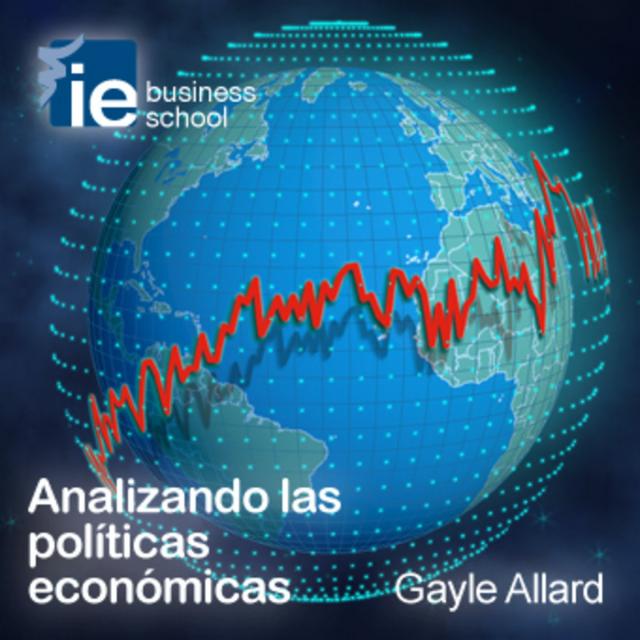
This is the last of the three courses part of the Globalization, Economic Growth and Stability Specialization.¨Business Opportunities and Risks in a Globalized World¨ is the the 3rd and final course of the ¨Globalization, Economic Growth and Stability¨ Specialization taught by IE Business School's Professor Gayle Allard. This course is designed to help an investor, businessperson or economist approach macroeconomic, institutional and international data and derive information from the indicators that point to the types of opportunities and risks that they present.

Class Deals by MOOC List - Click here and see Coursera's Active Discounts, Deals, and Promo Codes.

Students will gain practice by handling the data of some of the largest economies in the world –the United States, Japan, the European Union, China and India—and “reading the story” of their economies from their data, yielding surprisingly profound conclusions about their present and future. The course is the third in a series for the specialization but it is also a stand-alone course for anyone who wants practice in practical macroeconomics.
This course includes 4 modules, each one deep-diving into the macroeconomic circumstances that have been brought up in the recent history of four key regions: the USA, Japan, Europe, and China and India. Students will analyze the ways in which international economies relate with one another, the benefits of trade and migration and economic development and how it occurs, among other themes.
Professor Allard takes overarching macroeconomic theory and turns it into a practical tool for those interested in the opportunities and risks of investment and doing business in each of the four regions covered.
Course 3 of 3 in the Globalization, Economic Growth and Stability Specialization.

Syllabus

WEEK 1
The USA: GDP, Inflation and Unemployment; Growth and Gaps: Reviewing the Basic Relationships.
The US economy is not only the world´s largest, but also one of the most free-market developed economies; and its data is abundant and excellent. It provides an ideal opportunity for students to review the basic macroeconomic and policy variables and relationships, and to identify these or detect their absence in the real world. In the process, they can make the first steps toward determining how “normal” or especially good situations provide business opportunities and how departures from the rules point up situations that are risky for businesses operating in that country.

WEEK 2
Japan: Current Accounts and Currencies: International Economics Relationships
Japan, also one of the world´s giants, has followed a particular growth and development strategy which is reflected in its macroeconomic and international data. We will explore in this segment Japan´s data, in contrast to the United States, and find the unique policy challenges that this strategy presents for Japan, and the opportunities and risks that it implies for investors.

WEEK 3
The European Integration Experiment: The Benefits of Trade and Migration
The EU is the world´s largest trading area and if it were a country, it would be one of the world´s largest. European nations opted for an intense project of economic integration in the postwar period which has incorporated 28 nations, but one of them, the UK, is in the process of leaving. We will discuss in this section how this type of integration conditions growth, crisis and recovery, and the mechanisms that countries with a single monetary policy and a single currency have (and do not have) to adjust their economies. What did we learn from the Eurozone crisis and the vote by so many UK citizens to leave Europe, and what are the implications for businesses operating in this region?

WEEK 4
India and China: Economic Development, How it Occurs, and the World's Upcoming Giants
The final segment of the course turns toward the two emerging giants, India and China, and contemplates their past and future development strategies and thee risks and opportunities that they entail. Development itself is discussed, and how it occurs, and the strategies that nations may choose. The different components of GDP (C, I, G and X-M) are compared between India and China over a long period, to see what have been the different drivers for growth in the two countries over time. Special attention is paid in this section to institutional indicators, which are very different from developed countries, and the divergent demographic trends in the two countries; and the implications of those differences for the future.

WEEK 5
Capstone

Go to Class
MOOC List is learner-supported. When you buy through links on our site, we may earn an affiliate commission.

Related Courses

AWS Database Specialty Certification (Coursera) Coursera
EDUCBA

AWS Database Specialty Certification (Coursera)

This course offers a comprehensive journey through the world of databases and their management on the AWS cloud platform. From understanding the core concepts of databases to mastering advanced topics like migration, automation, and security, participants will gain a solid foundation in database design, deployment, and management using AWS services.

Jun 8th 2026
5-12 Weeks
Understanding the Australian economy: An introduction to macroeconomic and financial policies (Coursera) Coursera
The University of Sydney

Understanding the Australian economy: An introduction to macroeconomic and financial policies (Coursera)

This four-week, four-module course explores selective aspects of the Australian economy, with emphasis on macroeconomic and financial policies. The course introduces participants to several key attributes of the Australian economy and discusses how they are influenced by both domestic and international forces. We will examine some of the key issues and dilemmas facing the Australian economy and how policymakers can deal with them using monetary and fiscal policies.

Jun 8th 2026
4 Weeks
Entrepreneurship (Coursera) Coursera
The Chinese University of Hong Kong

Entrepreneurship (Coursera)

An entrepreneur is someone who is always on the lookout for problems that can be turned into opportunities and finds creative ways to leverage limited resources to reach their goals. In this course, learners will be introduced to the fundamental concepts, theories, and frameworks of entrepreneurship and learn how to apply them within the context of the world's largest market: China.

Jun 8th 2026
4 Weeks
Black Lives Matter (Coursera) Coursera
Johns Hopkins University

Black Lives Matter (Coursera)

The #BlackLivesMatter movement is the most significant political movement in African American life in the United States in the last fifty years. BLM leaders denounced anti-black racism, white supremacy, and police brutality and reshaped how we think about gender, sexuality, social justice, economic injustice, and crime.

Jun 8th 2026
4 Weeks
America Through Foreign Eyes (Coursera) Coursera
Rice University

America Through Foreign Eyes (Coursera)

The United States has always been a source of fascination — both attraction and repulsion — for the people of France, Mexico, China, and African countries such as Nigeria, Ghana, and Sudan. "America Through Foreign Eyes" is a rich, interdisciplinary, international course that features Rice University faculty from a variety of disciplines and area studies. Focused on perceptions of America abroad, the course is a cross between World Cultures and American Studies. The course features five core modules, each covering the perceptions and interactions of particular regions with America, Americans and Americanization.

Jun 1st 2026
5-12 Weeks
An Introduction to Global Health (Coursera) Coursera
University of Copenhagen

An Introduction to Global Health (Coursera)

This course will provide you with an overview of the most important health challenges facing the world today. You will gain insight into how challenges have changed over time, we will discuss the likely determinants of such changes and examine future projections. Successful international strategies and programs promoting human health will be highlighted and global health governance structures will be mapped and the role of the key actors explored.

Jun 8th 2026
5-12 Weeks
More Chinese for Beginners (Coursera) Coursera
Peking University

More Chinese for Beginners (Coursera)

This is an advanced course for Chinese for beginners. Learners will expand vocabularies about personal information, daily life, food and drink, healthy, and expressions about greeting, suggestion, agreement, comparison, complaint, prohibition, experience, plan, recommendation, etc. Learners can improve their listening and speaking and know much more about Chinese social cultures.

Jun 8th 2026
5-12 Weeks
Issues in Supply Chain Management (Coursera) Coursera
University of Illinois at Urbana-Champaign

Issues in Supply Chain Management (Coursera)

Learners in this course will examine global trade agreements -- including policies, barriers, and regulations -- of agricultural commodities, and discuss implications of world and economic disruptions on the food supply chain. Throughout this course, learners will also discuss issues of sustainability, technology, and the environment as it relates to the supply and distribution of food products.

Jun 8th 2026
5-12 Weeks
Principles of Economics: Introduction - Getting to Know You (Coursera) Coursera
Rice University

Principles of Economics: Introduction - Getting to Know You (Coursera)

Economics and economic theory is fundamental to decision making in business, policy, and everyday life. If you're interested in a career in business, law, accounting, or investment then studying economics is a great foundation of knowledge. In this first course of a three course Specialization adapted from my ECON 100 course taught at Rice University, we'll cover the introduction to the basic concepts of microeconomics and macroeconomics.

Jun 8th 2026
5-12 Weeks
China Strategy (Coursera) Coursera
The Chinese University of Hong Kong

China Strategy (Coursera)

This course is designed to help you, as a strategist of a foreign company, better understand how to develop your China strategy. Specifically, after studying China’s changing strategic landscape, you will focus on mastering three strategic issues: who – the major players in China, how – the entry modes, and where – the location strategy for your China business. This course is aimed to deliver updated knowledge and real experiences of developing China strategy.

Jun 8th 2026
4 Weeks