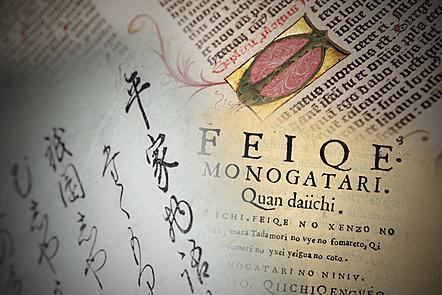
Travel Books: History in Europe and Japan (FutureLearn)

Travel Books: History in Europe and Japan (FutureLearn)

Discover how travelling books sparked cultural exchanges between Europe and Japan, and how they live on in the digital era. Unlock the history of travelling books in Europe and Japan. Books are cultural artefacts that are easily transported and translated. As such, they have been important in fostering relationships between countries for hundreds of years. On this three-week course presented by Keio University and the British Library, you’ll learn more about the history of European and Japanese literature promoting cultural exchange, how this continues in the digital era, and how vital this exchange is.

Class Deals by MOOC List - Click here and see FutureLearn's Active Discounts, Deals, and Promo Codes.

Delve into the history of travelling books
To start you’ll find out how books moved between Europe and Japan, beginning in the 16th century.
Discover how the books were received, compare printing styles, and find out about the role that Jesuit priests played in these book-sharing interactions.

Explore the rich heritage of travelling books and travel books
In the second and third weeks of the course, you’ll get to appreciate how travelling books influenced individuals, society, and European and Japanese literature.
Besides explaining the importance of rare and illustrated books, the course shows you how to trace physical signs on the pages that show what life was like for readers and collectors in the past.
Finally, you’ll learn about the way travel books led to great cultural exchange by allowing people to learn about places that they would never otherwise have experienced. The way these books exist in the digital era will be examined throughout.

Expand your history know-how with leading experts
The course is jointly produced by Japan’s Keio University and the British Library, which are both recognised in their own countries and abroad.
With their rich resources and longtime friendship, these institutions will deepen your understanding and appreciation of European culture, Japanese culture, and how books brought (and bring) them together.
We would like to acknowledge the following experts for providing valuable contributions to this course:

  • Kristian Jensen, Former Head of Collections and Curation, the British Library / Chair of the Consortium of European Research Libraries
  • Karen Limper-Herz, Lead Curator, Incunabula & Sixteenth Century Printed Books, Western Heritage Collections, the British Library
  • Hamish Todd, Head of East Asian Collections, the British Library
  • Alessandro Bianchi, Bodleian Japanese Librarian, Bodleian Libraries, University of Oxford

Syllabus

Week 1: West Met East
Week 2: Travelling Books
Week 3: Travel Books

What will you achieve?
By the end of the course, you‘ll be able to...

  • Explain how books from different cultures interacted and promoted a cultural exchange between the East and the West.
  • Summarise the role of Jesuit missionaries in exchanging book cultures between the East and the West in 16th century.
  • Compare the European-type books printed in Japan in the 16th-century and their European counterparts.
  • Identify the traces in the early books that can tell you about past readers and collectors.
  • Identify the similarities and differences in the physical features of the travel books that make them easy to carry on a journey.
  • Explore the value of the illustrations in the rare books to imagine the places that we have never been to or can visit only in fantasy.
  • Discuss the materiality of the books in the digital era.

Who is the course for?
This course is designed for anyone interested in European and Japanese literature, printing and historical books. Those who want to explore the lessons that can be learned by comparing books from different cultures will especially enjoy it.

Go to Class
MOOC List is learner-supported. When you buy through links on our site, we may earn an affiliate commission.

Related Courses

Basic Japanese Civil Law (edX) EdX
Tokyo Institute of Technology,TokyoTechX

Basic Japanese Civil Law (edX)

Law

Learn Japanese Civil Law, covering various contemporary issues faced in everyday life. This course teaches Japanese law covering the legal system and basic concepts. Starting with the study of concepts common to many countries, such as sovereignty, constitution, separation of three rights, basic human rights and personal security.

Self Paced
Self-Paced
Riesgos y oportunidades empresariales en una economía globalizada (Coursera) Coursera
IE Business School

Riesgos y oportunidades empresariales en una economía globalizada (Coursera)

Oportunidades y riesgos empresariales en un mundo globalizado» es el tercer y último curso de la especialización «Globalización, crecimiento económico y estabilidad» impartido por la profesora de IE Business School Gayle Allard. En este curso, los alumnos aprovecharán los conocimientos y la teoría de sus dos cursos anteriores y los aplicarán a los eventos que actualmente suceden en el mundo. Además, puede funcionar como curso independiente para quienes quieran saber cómo afectan los factores macroeconómicos a las economías, los gobiernos y los ciudadanos en diversos países.

Aug 24th 2026
5-12 Weeks
Business Opportunities and Risks in a Globalized Economy (Coursera) Coursera
IE Business School

Business Opportunities and Risks in a Globalized Economy (Coursera)

This is the last of the three courses part of the Globalization, Economic Growth and Stability Specialization.¨Business Opportunities and Risks in a Globalized World¨ is the the 3rd and final course of the ¨Globalization, Economic Growth and Stability¨ Specialization taught by IE Business School's Professor Gayle Allard. This course is designed to help an investor, businessperson or economist approach macroeconomic, institutional and international data and derive information from the indicators that point to the types of opportunities and risks that they present.

Aug 31st 2026
5-12 Weeks
Cultures and Identities in Europe (FutureLearn) FutureLearn
European University Institute - EUI

Cultures and Identities in Europe (FutureLearn)

What does it mean to be European? Discover European cultures, identities and policies with this course. What is European identity? What do we understand and promote as European culture? On this course you will answer these questions and others as you critically consider the formation of diverse identities and cultures in Europe.

Oct 3rd 2022
3 Weeks
Steps in Japanese for Beginners1 Part3 (edX) EdX
Waseda University,WasedaX

Steps in Japanese for Beginners1 Part3 (edX)

Learn important words and phrases for building relationships with other people. The exchange student Andy is asked to join the university yosokoi dance club. And he decides to join. Through interaction with his yosokoi club mates and his Japanese class teacher, he describes his experiences and we learn more about Andy’s character and how he tries his hardest in these situations.

Self Paced
Self-Paced
Japanese Books: From Manuscript to Print (edX) EdX
HarvardX,Harvard University

Japanese Books: From Manuscript to Print (edX)

This course expands the definition of the “book” to include scrolls and albums, focusing on the reading experience of a variety of formats in Japan. You will begin by examining rare and beautifully preserved manuscripts in the Harvard Art Museums in an introduction exploring the material properties of Japanese books and scrolls, binding techniques, and important terminology.

Self Paced
Self-Paced
International migrations: a global issue (Coursera) Coursera
Sciences Po

International migrations: a global issue (Coursera)

The world is moving, but not all opinions and governments are willing to accept this poorly understood reality. The issue affects both states and the planet, in a process of globalization and of regionalization of migrations, and raises new questions for international relations, now including the South. This course aims at improving knowledge of the subject, addressing the key issues raised by international migration, and assessing the trends of tomorrow.

Aug 24th 2026
5-12 Weeks
Words Spun Out of Images: Visual and Literary Culture in Nineteenth Century Japan (Coursera) Coursera
The University of Tokyo

Words Spun Out of Images: Visual and Literary Culture in Nineteenth Century Japan (Coursera)

In their ambition to capture “real life,” Japanese painters, poets, novelists and photographers of the nineteenth century collaborated in ways seldom explored by their European contemporaries. This course offers learners the chance to encounter and appreciate behavior, moral standards and some of the material conditions surrounding Japanese artists in the nineteenth century, in order to renew our assumptions about what artistic “realism” is and what it meant.

Sep 7th 2026
4 Weeks
The Making of Modern Ukraine (Coursera) Coursera
Yale University

The Making of Modern Ukraine (Coursera)

Ukraine must have existed as a society and polity on 23 February 2022, else Ukrainians would not have collectively resisted Russian invasion the next day. What does it mean for a nation to exist? Is this a matter of structures, actions, or both? Why has the existence of Ukraine occasioned such controversy? In what ways are Polish, Russian, and Jewish self-understanding dependent upon experiences in Ukraine? Just how and when did a modern Ukrainian nation emerge?

Sep 14th 2026
1 Week
Visualizing Postwar Tokyo, Part 2 (edX) EdX
The University of Tokyo,UTokyoX

Visualizing Postwar Tokyo, Part 2 (edX)

Identify the geopolitics historically involved in the practice of “visualizing postwar Tokyo.” The history of postwar Tokyo reveals an essential feature of the modern city, i.e., the city as a place of visualities. In postwar Tokyo, countless gazes fell upon others; gazes from and upon Americans and the Emperor, gazes going up skyscrapers or rushing aggressively through the cityscape, and gazes twining and wriggling among classes, genders, and ethnic groups in downtown Tokyo.

Self Paced
Self-Paced