EdX

Japanese Books: From Manuscript to Print (edX)

Japanese Books: From Manuscript to Print (edX)

This course expands the definition of the “book” to include scrolls and albums, focusing on the reading experience of a variety of formats in Japan. You will begin by examining rare and beautifully preserved manuscripts in the Harvard Art Museums in an introduction exploring the material properties of Japanese books and scrolls, binding techniques, and important terminology.

Class Deals by MOOC List - Click here and see EdX's Active Discounts, Deals, and Promo Codes.

An examination of the illustrated scroll comes next, through a unit on the short story and visual storytelling in premodern Japan. The course concludes with The Tale of Genji , an overview of how this celebrated epic from the eleventh century was read and illustrated in every conceivable format, from scroll, to album, to printed book, into the modern era.
Drawing on the rich collections of Harvard’s libraries and museums, this course is part of a larger series on the history of books, where learners explore the book not merely as a container of content, but as significant physical objects that have shaped the way we understand the world around us.

Module 1: Books, Scrolls, and Religious Devotion
This unit offers special access to a unique group of books and scrolls and sacred objects once interred inside a thirteenth-century Buddhist sculpture of Prince Shotoku, now in the collection of the Harvard Art Museums. The works to be studied represent the most prevalent formats of Japanese books, but they display striking material idiosyncrasies that will help us understand how and why manuscripts were made, and how they could be personalized for individual readers, motivated, in this case, by religious devotion.

Module 2: Visual and Textual Storytelling: Short-Story Scrolls
Enter into the storyworlds of two lively illustrated Japanese tales, The Tale of the Rat (Nezumi sôshi) and The Chrysanthemum Spirit (Kiku no sei monogatari) in the Harvard Art Museums. Both tales are illustrated in the “small scroll” ( ko-e ) format, roughly half the size of standard scrolls, resembling medieval paperbacks, and intended for personal reading and private libraries. This unit focuses on reading experience, exploring the interrelationship between word and image, and explaining how literary and pictorial conventions work together to communicate a story.

Module 3: “Multimedia” Books: The Tale of Genji
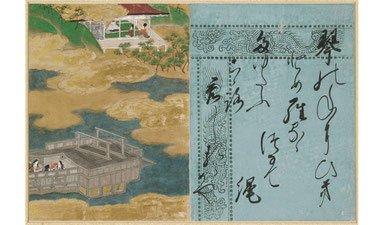
Japan’s most celebrated work of fiction, The Tale of Genji , has been continuously read from the time it appeared in the eleventh-century to the present day and provides a perfect case study for exploring various book formats over the centuries in Japan. Using decorated manuscripts, richly illustrated albums, and a playful printed book of a Genji spin-off, A Fraudulent Murasaki’s Rustic Genji (Nise Murasaki Inaka Genji), this unit showcases the spectacular visual and material properties of Genji volumes that make them suggestive of “multimedia” books.

What you'll learn

  • How to examine Japanese books and scrolls
  • Different types of bindings, scroll formats, printing techniques, and basic terminology
  • Different approaches to visual and textual storytelling
  • Short stories and epic tales— plots, characters, and illustrative devices
  • How to analyze and appreciate illustrated narratives
Go to Class
MOOC List is learner-supported. When you buy through links on our site, we may earn an affiliate commission.

Related Courses

The American Renaissance: Classic Literature of the 19th Century (edX) EdX
DartmouthX

The American Renaissance: Classic Literature of the 19th Century (edX)

Explore the writings of famous American authors from Ralph Waldo Emerson and Harriet Beecher Stowe to Mark Twain, and examine the historic role Dartmouth College played in their formation. What is the American Renaissance? How did Dartmouth help foster the formation of the American Renaissance and its reevaluation and reinvention in the twentieth? Why should we, as twenty-first century readers, concern ourselves with this literature?

Self Paced
4 Weeks
Letteratura latina, dalle origini all'età augustea (edX) EdX
University of Naples Federico II,FedericaX

Letteratura latina, dalle origini all'età augustea (edX)

Una panoramica dei generi letterari tra repubblica e primo impero. La nascita e lo sviluppo della letteratura latina furono profondamente condizionati da un lato dall'influenza della cultura greca con la quale i Romani entrarono in contatto a partire dal II sec. a. C. soprattutto per la loro politica espansionistica nel Mediterraneo e poi in Oriente; dall'altro dalle pressioni esercitate dal potere politico che richiedeva al cittadino di prestare la propria attività innanzitutto a favore della res publica.

Self Paced
Self-Paced
Visualizing Postwar Tokyo, Part 2 (edX) EdX
The University of Tokyo,UTokyoX

Visualizing Postwar Tokyo, Part 2 (edX)

Identify the geopolitics historically involved in the practice of “visualizing postwar Tokyo.” The history of postwar Tokyo reveals an essential feature of the modern city, i.e., the city as a place of visualities. In postwar Tokyo, countless gazes fell upon others; gazes from and upon Americans and the Emperor, gazes going up skyscrapers or rushing aggressively through the cityscape, and gazes twining and wriggling among classes, genders, and ethnic groups in downtown Tokyo.

Self Paced
Self-Paced
Japanese Business Management (edX) EdX
Waseda University,WasedaX

Japanese Business Management (edX)

Learn about Japanese business management and start down a path to becoming a global leader. The Japanese economy was once described as the “rising sun,” overcoming all odds to become an economic superpower. In the late 1980s and early 1990s, many of the largest companies in the world with the highest capitalization were Japanese. Often, the key to Japan's success was attributed to its unique business model, strategies and practices.

Self Paced
Self-Paced
Modern Masterpieces of World Literature (edX) EdX
HarvardX,Harvard University

Modern Masterpieces of World Literature (edX)

Examine how great modern writers capture the intricacies of our globalized world and how their works circulate within that world to find their own audiences. Based on the second half of the Masterpieces of World Literature edX MOOC, this short literature course examines how writers reach beyond national and linguistic boundaries as worldly readers and travelers, and how their modern fictions rise to the status of world literature.

Self Paced
Self-Paced
Steps in Japanese for Beginners1 Part1 (edX) EdX
Waseda University,WasedaX

Steps in Japanese for Beginners1 Part1 (edX)

Learn basic Japanese expressions to survive in Japanese. Andy, an exchange student who as just arrived in Japan, is making greetings and introducing himself through his life in a university dormitory. He learns the taste of the foods he becomes to like by eating with Mr. Sato and Mr. Ono, two upperclassmen in his dormitory. He also orders a hamburger and coffee at local shops as he goes about his daily business.

Self Paced
Self-Paced
Storytelling That Delivers Program and Project Outcomes (edX) EdX
University of Maryland, College Park,University System of Maryland - USM,USMx,UMD

Storytelling That Delivers Program and Project Outcomes (edX)

Storytelling is how leaders lead other leaders. Tell your project’s story to inspire your project teams, encourage your stakeholders, and gain customer commitment to project and program success. Program and project managers are master storytellers. They have to be in order to weave high-priority information into a memorable narrative for their people. Customers must commit to and understand their goals, and how the program is meeting them.

Self Paced
Self-Paced
Defining Virtual Community Projects for Dynamic Change (edX) EdX
DoaneX,Doane University

Defining Virtual Community Projects for Dynamic Change (edX)

Learn the tools necessary for defining virtual community projects and how to share the project to gain buy-in, in a virtual setting. You can’t find a solution until you have a clear idea of what the problem is. Problems come in many different forms, but most community projects are complex and have invisible elements that become apparent as one begins the process of defining the scope of the situation. This course emphasizes the use of tools such as journey mapping, persona’s, testing tools, visualizations, ethnographic interviewing, thematic analysis, prototyping, stakeholder needfinding, and storytelling to understand the problem.

Self Paced
Self-Paced
Ancient Masterpieces of World Literature (edX) EdX
HarvardX,Harvard University

Ancient Masterpieces of World Literature (edX)

Examine how cultures of the ancient world defined themselves through literature and how their vision of literature contributes to our understanding of civilization, culture, and literature today. This short literature course, based on the first half of the Masterpieces of World Literature edX MOOC, examines how civilizations and cultures of the ancient world defined themselves through literature and how that literature has continued to contribute to our understanding of those civilizations and cultures today.

Self Paced
Self-Paced