Sino-Japanese Interactions Through Rare Books (FutureLearn)

Offered by Keio University,
Sino-Japanese Interactions Through Rare Books (FutureLearn)

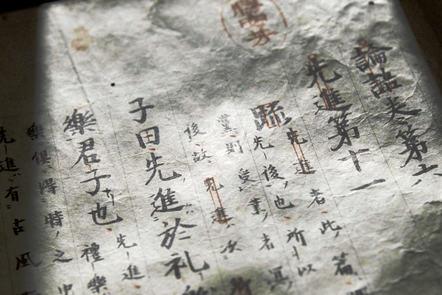
Learn about the role of books in the relationship between the cultures of Japan and China, with this free online course. Books have played a major role in the formation of Japan’s culture, particularly those brought from China. On this course we’ll examine how big an impact these books have had, as well as looking at how books and religion are connected in Japan and East Asia, and the history of publishing in Japan.

Class Deals by MOOC List - Click here and see FutureLearn's Active Discounts, Deals, and Promo Codes.

Understand more about Chinese books, language and culture
Through the course you’ll discover more about the different types of Chinese books, their characteristics and their history. We’ll also look at books with strong Chinese influences and examine the culture of the area of the world that use the Chinese writing system.

Learn about the development of Japanese culture
We’ll then look at how these books made their way to Japan and how Chinese culture influenced Japanese culture. In particular we’ll focus on the Analects of Confucius and how the book has been received in Japan - from its introduction in the 3rd Century to how it’s considered today.
In addition we’ll look at books on Chinese studies from medieval to early modern Japan, how books from China and Korea were studied and disseminated and how the process created new types of book like commentaries and revised editions.

Explore the connection between books and religion in East Asia
You’ll also learn about the connections between publishing and religion - examining the influence of Zen Buddhism on Japanese culture.

Go to Class
MOOC List is learner-supported. When you buy through links on our site, we may earn an affiliate commission.

Related Courses

Travelling Books: History in Europe and Japan (FutureLearn) FutureLearn
British Library,Keio University

Travelling Books: History in Europe and Japan (FutureLearn)

Discover how travelling books sparked cultural exchanges between Europe and Japan, and how they live on in the digital era. Unlock the history of travelling books in Europe and Japan. Books are cultural artefacts that are easily transported and translated. As such, they have been important in fostering relationships between countries for hundreds of years. On this three-week course presented by Keio University and the British Library, you’ll learn more about the history of European and Japanese literature promoting cultural exchange, how this continues in the digital era, and how vital this exchange is.

Self Paced
3 Weeks
An Introduction to Japanese Subcultures (FutureLearn) FutureLearn
Keio University

An Introduction to Japanese Subcultures (FutureLearn)

Explore Japanese subcultures and learn about their history from the 1970s to today. Subcultures have existed for a long time: the greasers of 1950s America, the mods and rockers of the 1960s and 70s in England, the grunge of the 1980s and 90s, to name a few. Each subculture sits within a broader ‘parent’ culture and can often give us an insight into cultural fears and hopes, especially in the youth of the population. On this course you will get an introduction to Japanese subcultures that have developed since the 1970s.

Self Paced
4 Weeks
Intellectual Change in Early China: Warring States and Han (Coursera) Coursera
The Chinese University of Hong Kong

Intellectual Change in Early China: Warring States and Han (Coursera)

This sequence of four courses will propose a multi-disciplinary approach to the study of Chinese cultural history conceived of as a succession of modes of rationality (philosophical, bureaucratic, and economic). The focus will be on the moments of paradigm shift from one mode of rationality to another. For each of these moments, cultural facts and artifacts—thought, literature, ritual—will be examined in relationship to changing social, political, and economic systems.

Aug 10th 2026
5-12 Weeks
Modern China’s Foundations: The Manchus and the Qing (edX) EdX
HarvardX,Harvard University

Modern China’s Foundations: The Manchus and the Qing (edX)

Learn how the Manchus conquered the Qing and established the last of the imperial dynasties. This course, part of a comprehensive series on China, looks at the Qing state in the early 1600s and the challenges that the Manchus faced as minority rulers. While living in Chinese cities and surrounded by Chinese culture — a culture that was far more sophisticated than their own — the Manchus struggled to hold onto their identity as a conquesting people.

Self Paced
Self-Paced
Cosmopolitan Tang: Aristocratic Culture in China (edX) EdX
HarvardX,Harvard University

Cosmopolitan Tang: Aristocratic Culture in China (edX)

Explore the reunification of China under the Tang with a focus on aristocratic culture — from poetry to calligraphy to literature. By the Tang period, China was divided into northern and southern dynasties with different rulers and political systems. The north was conquered by relatively unsophisticated barbarians, but in the south, the aristocratic families established a refined appreciation of writing and literature.

Self Paced
Self-Paced
The Art of Washi Paper in Japanese Rare Books (FutureLearn) FutureLearn
Keio University

The Art of Washi Paper in Japanese Rare Books (FutureLearn)

Learn about the history, production and design of papers used inside Japanese rare books. Deepen your understanding of rare books and Japanese culture. The papers inside books can last hundreds of years if cared for correctly. This course will look at the history of papers used inside Japanese rare books, and in other cultures across the world.

Self Paced
2 Weeks
Understanding China, 1700-2000: A Data Analytic Approach, Part 2 (Coursera) Coursera
The Hong Kong University of Science and Technology - HKUST

Understanding China, 1700-2000: A Data Analytic Approach, Part 2 (Coursera)

The purpose of this course is to summarize new directions in Chinese history and social science produced by the creation and analysis of big historical datasets based on newly opened Chinese archival holdings, and to organize this knowledge in a framework that encourages learning about China in comparative perspective. Our course demonstrates how a new scholarship of discovery is redefining what is singular about modern China and modern Chinese history.

Aug 3rd 2026
4 Weeks
Studying at Japanese Universities (Coursera) Coursera
The University of Tokyo

Studying at Japanese Universities (Coursera)

Are you interested in studying at Japanese universities? Do you want to learn about Japan’s university application and enrollment processes, as well as the types of programs on offer? This course will help you to both discover great programs offered by different Japanese universities and prepare a study plan through project-based learning. We introduce a number of options to match a variety of goals, from full degree to non-degree programs, programs taught in English, as well as short-term programs in Japan. During the course, international students at UTokyo will provide you with useful information and advice to start you on the path to studying in Japan.

Aug 10th 2026
4 Weeks
More Chinese for Beginners (Coursera) Coursera
Peking University

More Chinese for Beginners (Coursera)

This is an advanced course for Chinese for beginners. Learners will expand vocabularies about personal information, daily life, food and drink, healthy, and expressions about greeting, suggestion, agreement, comparison, complaint, prohibition, experience, plan, recommendation, etc. Learners can improve their listening and speaking and know much more about Chinese social cultures.

Aug 3rd 2026
5-12 Weeks
Chinese Politics Part 1 - China and Political Science (Coursera) Coursera
The Hong Kong University of Science and Technology - HKUST

Chinese Politics Part 1 - China and Political Science (Coursera)

This course offers a conceptual framework for understanding China that highlights the intersection of politics and economics. It shows that rather than develop into a full blown market economy, state and party officials at all levels of the political system maintain significant influence in economic development. Such a “political” economy has had both positive and negative outcomes, which we will assess in detail.

Aug 17th 2026
5-12 Weeks