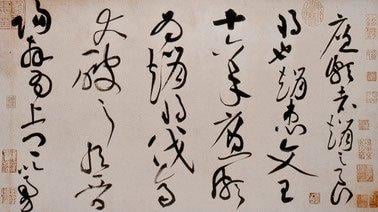
Arts of Asia (saylor.org)

Offered by Saylor.org,
Arts of Asia (saylor.org)

This course serves as an introduction to the major pre-Modern artistic traditions of India, China, and Japan. It is organized into three units that focus on the art and architecture of India, China, and Japan respectively.

This course serves as an introduction to the major pre-Modern artistic traditions of India, China, and Japan. It is organized into three units that focus on the art and architecture of India, China, and Japan respectively. Each unit is structured chronologically. Unit 1 examines Indian Art from the Indus Valley Civilization (c. 2600-1900 BCE) through the art of the Mughal Empire (1526-1858), focusing on Buddhist, Hindu, and Islamic art and architecture. Unit 2 covers the arts of China from the Shang Dynasty (c.1600-1050 BCE) through the Qing Dynasty (1644-1911), detailing the interaction between art, politics, and culture throughout Chinese dynastic history. Unit 3 introduces Japanese Art from the Jomon Period (c.10,500-300 BCE) through the Edo Period (1615-1868), exploring the effects that various sub-traditions and sub-cultures (Tang Dynasty China, Buddhism, and the warrior class) had on the art of Japan.

After completing this course, you will have a comprehensive understanding of the arts and architecture of pre-Modern India, China, and Japan and their relationship to the history and culture of their respective times and places.

Upon successful completion of this course, students will be able to:

Identify major pre-modern Indian, Chinese, and Japanese works of art and architecture.
Identify the major art historical time periods in India, China, and Japan and the important artistic developments that occurred during each of them.
Recognize how art and architecture can be used to understand the politics, history, and culture of India, China, and Japan.
Look at, analyze, and compare and contrast different types of Asian art.

Go to Class
MOOC List is learner-supported. When you buy through links on our site, we may earn an affiliate commission.

Related Courses

文物精品与文化中国:天文与医药 | Relics of Chinese History - Part 2: Astronomy and Medicine (edX) EdX
Tsinghua University,TsinghuaX

文物精品与文化中国:天文与医药 | Relics of Chinese History - Part 2: Astronomy and Medicine (edX)

Discover how Astronomy and Medicine impacted the history of China as we use artifacts and relics as a guide to Chinese civilization. 本课程以精品文物作引子,将学术界探索中华文明的过程作为线索,介绍古代中国在造船、玉器等诸多领域的杰出成就

Self Paced
Self-Paced
中國人文經典導讀 (Coursera) Coursera
The Chinese University of Hong Kong

中國人文經典導讀 (Coursera)

本課程對象為對中國文化有興趣的同學。 課程目的為通過四個不同特色的主題,討論中國文化的四個主要面向。每個主題選取兩篇經典文本作為核心閱讀,並與延伸閱讀做互文探討,以新角度解讀經典文本的意義,展現中國文化的複雜性、多元性。文本難度與大學一年級國文程度相當。

Aug 24th 2026
5-12 Weeks
China Strategy (Coursera) Coursera
The Chinese University of Hong Kong

China Strategy (Coursera)

This course is designed to help you, as a strategist of a foreign company, better understand how to develop your China strategy. Specifically, after studying China’s changing strategic landscape, you will focus on mastering three strategic issues: who – the major players in China, how – the entry modes, and where – the location strategy for your China business. This course is aimed to deliver updated knowledge and real experiences of developing China strategy.

Aug 31st 2026
4 Weeks
Literati China: Examinations, Neo-Confucianism, and Later Imperial China (edX) EdX
HarvardX,Harvard University

Literati China: Examinations, Neo-Confucianism, and Later Imperial China (edX)

Explore China’s imperial period, with a focus on the Song dynasty and the role of the exam system in government. Fundamental changes in government, the economy, and broader society took place between the 8th and 11th centuries in China. The state aristocracy gave way to new literati elite: educated men who sought to enter government through competitive examinations. A new kind of Confucianism also took shape, which prized the moral autonomy of individuals. With this, the later imperial period of China’s history begins.

Self Paced
Self-Paced
English for Doing Business in Asia - Speaking (edX) EdX
The Hong Kong University of Science and Technology - HKUST,HKUSTx

English for Doing Business in Asia - Speaking (edX)

Introducing strategies for developing your spoken English communication skills in the context of doing business in Asia. The use of English for doing business in multinational settings is a fact of life for many business people. As Asian economies expand and become more involved in the global economy, a lingua franca – a language used to communicate among groups of people who do not share a mother tongue – is needed to exchange information.

Self Paced
Self-Paced
China’s First Empires and the Rise of Buddhism (edX) EdX
HarvardX,Harvard University

China’s First Empires and the Rise of Buddhism (edX)

Learn about the Qin and Han dynasties, and how Buddhism and ideas of self-realization influenced the medieval period. This course, the second in a collection on Chinese history and culture, addresses how the Qin dynasty conquered China and established a new system of government and how the Han dynasty built a stable, centralized empire that lasted for hundreds of years. We cover the early history of Buddhism in China and how the rising feudal aristocracy responded to the loss of empire by looking inward.

Self Paced
Self-Paced
Words Spun Out of Images: Visual and Literary Culture in Nineteenth Century Japan (Coursera) Coursera
The University of Tokyo

Words Spun Out of Images: Visual and Literary Culture in Nineteenth Century Japan (Coursera)

In their ambition to capture “real life,” Japanese painters, poets, novelists and photographers of the nineteenth century collaborated in ways seldom explored by their European contemporaries. This course offers learners the chance to encounter and appreciate behavior, moral standards and some of the material conditions surrounding Japanese artists in the nineteenth century, in order to renew our assumptions about what artistic “realism” is and what it meant.

Sep 7th 2026
4 Weeks
China and Communism (edX) EdX
HarvardX,Harvard University

China and Communism (edX)

Explore the Maoist period of China, from the Communist Party to the death of Mao and the reopening of China. How did the Communists conquer China? What role does culture play? What are the successes and failures of the Chinese Communist Party after seizing power in 1949? What constitutes liberation?

Self Paced
Self-Paced
文物精品与文化中国:农业与制造业 | Relics in Chinese History - Part 1: Agriculture and Manufacturing (edX) EdX
Tsinghua University,TsinghuaX

文物精品与文化中国:农业与制造业 | Relics in Chinese History - Part 1: Agriculture and Manufacturing (edX)

Discover manufacturing and agriculture’s role in the history of China as we explore Chinese culture through artifacts and relics. 本课程以精品文物作引子,将学术界探索中华文明的过程作为线索,介绍古代中国在造船、玉器等诸多领域的杰出成就

Self Paced
Self-Paced