FUN

Transitions énergétiques : mécanismes et leviers (FUN)

Transitions énergétiques : mécanismes et leviers (FUN)

Des changements profonds sont à l’œuvre dans le domaine de l’énergie, résumés par le terme de transition énergétique. Ces changements sont impulsés par des contraintes fortes : d’une part les limites des ressources fossiles, d’autre part les impacts environnementaux et les risques associés à la production et à l’usage de l’énergie –en premier lieu bien sûr le changement climatique-. En parallèle, il faut satisfaire les besoins d’une population toujours plus nombreuse, aspirant à de meilleures conditions de vie.

Les énergies fossiles carbonées représentent plus de 80% de l’énergie primaire consommée dans le monde. Réduire de manière drastique leur place implique à la fois de produire de l’énergie autrement (à partir d’énergies renouvelables ou autres sources décarbonées) et de maîtriser nos consommations énergétiques pour tous les usages et dans tous les secteurs.

Une multitude de technologies disponibles ou en développement apportent des éléments de solutions sur les modes de production alternatifs et sur l’efficacité énergétique à l’usage final. Mais aucune technologie, aucune énergie ne sont aujourd’hui des solutions miracles. Des combinaisons sont à mettre en place. En outre, rien ne sera possible sans des changements sur les usages et comportements à travers différentes formes de sobriété énergétique.
Les conséquences sociétales sont fortes. Les solutions centralisées sont concurrencées par des solutions décentralisées voire des solutions individuelles. Le nombre d’acteurs concernés est démultiplié. Les mécanismes économiques sont modifiés. Les conflits autour de l’énergie qu’on croyait limités aux conflits géopolitiques se déplacent à des échelles plus proches.
Dans ces transformations majeures du paysage énergétique, les changements technologiques se combinent et interagissent avec des mutations économiques, politiques et sociales. Les systèmes énergétiques sont plus que jamais des systèmes complexes.
Du fait de la diversité des contextes et des solutions, de la multiplicité des échelles et des acteurs, c’est volontairement que nous parlons de transitions énergétiques au pluriel.
L'ambition du MOOC "Transitions énergétiques : mécanismes et leviers" est de donner les clés de compréhension et d'analyse de ces situations complexes, les enjeux et les leviers d’actions associés et de permettre d'imaginer des réponses adaptées à chaque contexte et à chaque échelle.

Objectifs pédagogiques
Tout au long du MOOC "Transitions énergétiques : mécanismes et leviers" vous apprendrez à :

  • Comprendre les mécanismes physiques de base qui conditionnent les échanges de flux d’énergie, les technologies de transformation ou d’utilisation, et leurs interactions avec la nature
  • Déterminer les caractéristiques technico-économiques des filières énergétiques
  • Exploiter les critères d’évaluation technico-économique et environnementale d'une chaine énergétique
  • Comprendre les mécanismes systémiques économiques, politiques et sociaux autour de l'énergie
  • Hiérarchiser les grands enjeux et les relier aux mécanismes de base
  • Analyser les enjeux et les leviers d’une situation de transition énergétique, quelle qu’en soit l’échelle, à travers une vision systémique et pas seulement technique
  • Identifier les conditions dans lesquelles une solution particulière (technologique par ex) peut contribuer ou non à une transition énergétique, dans quel (éco-)système elle doit s’intégrer

Ce Mooc se concentre sur les questions et mécanismes essentiels, illustrés par des exemples et des outils. Il ne cherche pas à embrasser la totalité des problématiques de transition énergétique, ni à balayer de manière exhaustive toutes les sources d’énergie ou toutes les technologies.

Plan du cours

Les Fondamentaux :
Semaine 1 : Les chaînes énergétiques : Contraintes physiques et caractéristiques techniques
Semaine 2 : Les outils d'évaluation technico-économique et environnementale
Semaine 3 : Les systèmes énergétiques : mécanismes économiques, politiques et sociaux
Semaine 4 : Les transitions énergétiques : pourquoi ? comment ?

Les focalisations :
Semaine 5 : Les modèles et scénarios pour les stratégies énergétiques du futur
Semaine 6 : Les chaines énergétiques du futur : Sources et exploitation (exemples)
Semaine 7 : Les chaines énergétiques du futur : Vecteurs et réseaux (exemples)
Go to Class
MOOC List is learner-supported. When you buy through links on our site, we may earn an affiliate commission.

Related Courses

Energy management for real estate. Methods and digital tools (Coursera) Coursera
Politecnico di Milano

Energy management for real estate. Methods and digital tools (Coursera)

The figure of the Energy Manager (EM), introduced in the United States in the early 1970s, during the first oil crisis, brought to light the need to get more work out of less energy. In Italy, this figure was officially introduced by Law 308/82, but had its first strong impulse thanks to Law 10/91, aimed at implementing the National Energy Plan on the rational use of energy, energy saving and the development of renewable energy sources. More in detail, an Energy Manager is a person whose task is to manage what concerns energy within a company, a public body, or more generally a structure, verifying the energy consumption, optimising it, and promoting interventions aimed at energy efficiency and the use of renewable sources.

Oct 19th 2026
4 Weeks
Strong sustainability and Europe (FUN) FUN
Université Clermont Auvergne

Strong sustainability and Europe (FUN)

Sustainable development, popularized by the Brundtland Report, was defined at the end of the 1980s in three spheres (economic, environmental and social). It is this representation that continues today to be disseminated to the public and to large companies. The objective of this MOOC is to question the major challenges of development for Europe in a perspective of strong sustainability (energy, climate, biodiversity, food, mobility, agriculture, natural resources, education...) and to propose alternatives.

Sep 12th 2022
5-12 Weeks
Electrodynamics: An Introduction (Coursera) Coursera
Korea Advanced Institute of Science and Technology - KAIST

Electrodynamics: An Introduction (Coursera)

The depth and breadth of electromagnetism, the foundation for many fields including materials science, electrical engineering, and physical chemistry, requires a long, steep, and steady learning curve. This course aims to bridge the gap between the fundamental principles taught in electromagnetism and its practical application to specific fields such as materials, physics, and chemistry related to energy storage and harvesting.

Oct 26th 2026
5-12 Weeks
Curanderismo: Traditional Healing of the Mind, Energy & Spirit (Coursera) Coursera
University of New Mexico

Curanderismo: Traditional Healing of the Mind, Energy & Spirit (Coursera)

As the third of four courses on Curanderismo, the art of Hispanic/Latino traditional medicine, this course focuses specifically on traditional healing of mind, energy and spirit. As an educational and cultural platform, this course will share a number of traditional body therapies. Trained traditional healers will share their knowledge of cleansings from different cultures such as spiritual, energetic and Tonalli Cleansing.

Oct 26th 2026
5-12 Weeks
Mechanics: Motion, Forces, Energy and Gravity, from Particles to Planets (Coursera) Coursera
UNSW Sydney - University of New South Wales

Mechanics: Motion, Forces, Energy and Gravity, from Particles to Planets (Coursera)

Most of the phenomena in the world around you are, at the fundamental level, based on physics, and much of physics is based on mechanics. Mechanics begins by quantifying motion, and then explaining it in terms of forces, energy and momentum. This allows us to analyse the operation of many familiar phenomena around us, but also the mechanics of planets, stars and galaxies.

Oct 12th 2026
5-12 Weeks
Introduction to Thermodynamics: Transferring Energy from Here to There (Coursera) Coursera
University of Michigan

Introduction to Thermodynamics: Transferring Energy from Here to There (Coursera)

This course provides an introduction to the most powerful engineering principles you will ever learn - Thermodynamics: the science of transferring energy from one place or form to another place or form. We will introduce the tools you need to analyze energy systems from solar panels, to engines, to insulated coffee mugs. More specifically, we will cover the topics of mass and energy conservation principles; first law analysis of control mass and control volume systems; properties and behavior of pure substances; and applications to thermodynamic systems operating at steady state conditions.

Oct 19th 2026
5-12 Weeks
Fundamentals of Fluid Power (Coursera) Coursera
University of Minnesota

Fundamentals of Fluid Power (Coursera)

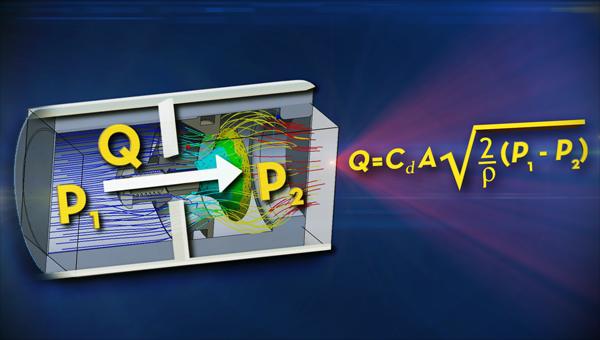
In this course, you will be introduced to the fundamental principles and analytical modeling of fluid power components, circuits, and systems. You will learn the benefits and limitations of fluid power compared with other power transmission technologies; the operation, use, and symbols of common hydraulic components; how to formulate and analyze models of hydraulic components and circuits; and how to design and predict the performance of fluid power circuits.

Oct 26th 2026
5-12 Weeks
Our Energy Future (Coursera) Coursera
University of California, San Diego

Our Energy Future (Coursera)

This course is designed to introduce students to the issues of energy in the 21st century – including food and fuels – which are inseparably linked – and will discuss energy production and utilization from the biology, engineering, economics, climate science, and social science perspectives. This course will cover the current production and utilization of energy, as well as the consequences of this use, examining finite fossil energy reserves, how food and energy are linked, impacts on the environment and climate, and the social and economic impacts of our present energy and food production and use.

Oct 19th 2026
5-12 Weeks
Física: Vectores, Trabajo y Energía (Coursera) Coursera
Tecnológico de Monterrey

Física: Vectores, Trabajo y Energía (Coursera)

Este curso provee al estudiante con conceptos y herramientas matemáticas para modelar problemas en física, que al aplicar podrá enfrentar con éxito los cursos de física universitarios. Así pues, la filosofía de este curso consiste en cubrir temas conceptuales relativos a la Física y desarrollar tu capacidad de aprender y aplicarlos en tu vida profesional.

Oct 12th 2026
5-12 Weeks
Ash-Related Operational Challenges in Energy Utilization of Sustainable Fuels (Coursera) Coursera
Technical University of Denmark - DTU

Ash-Related Operational Challenges in Energy Utilization of Sustainable Fuels (Coursera)

The basic idea behind this MOOC, is to present recent data on fuel characterization, slagging, fouling, corrosion, and trace element transformations, in a course that can be readily provided for students and industry people. This ensures understanding and application of the research, and provides the students and industry with a forum for discussion of the very latest research results, as well as feedback from industry to the research group at DTU, on important new research subjects in the field.

Oct 19th 2026
5-12 Weeks