Wind resources for renewable energies (Coursera)

Offered by École Polytechnique,
Wind resources for renewable energies (Coursera)

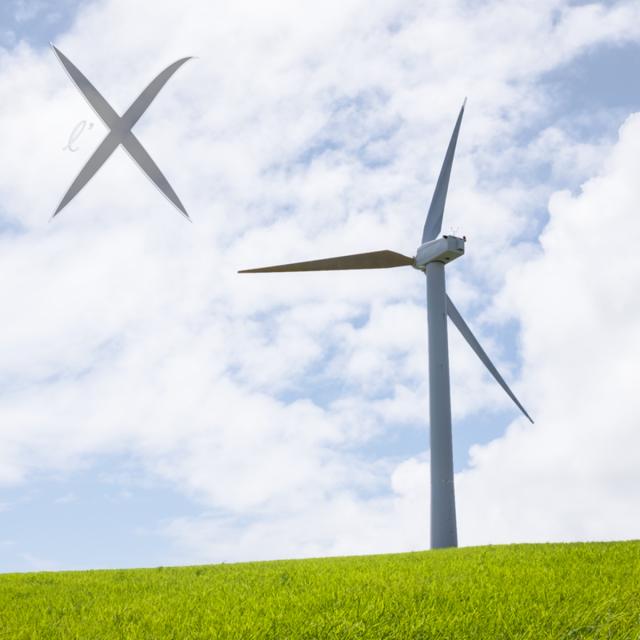
The main goal of this course is to get the necessary knowledge on atmospheric and fluid dynamics in order to quantify the wind resource of a local or regional area.
We’ll learn about basic meteorology, the specific dynamics of turbulent boundary layers and some standard techniques to estimate wind resources regardless of the type of turbine used or the level of efficiency achieved.

Class Deals by MOOC List - Click here and see Coursera's Active Discounts, Deals, and Promo Codes.

Then, we will see what are the turbines characteristics to consider in order to estimate the electricity production from an isolated turbine or from a turbine farm. The differences and similarity between wind or marine resource assessment will also be discussed.
Finally, you will have the opportunity to get hands-on experience with real in-situ data sets and apply what you have learned on wind resource assessment.

Syllabus

WEEK 1
Basics on energy
Basic meteorology

WEEK 2
Atmospheric and marine boundary layers

WEEK 3
Wind or marine turbines

WEEK 4
Wind resources
Data analysis project - wind resource assessment
Go to Class
MOOC List is learner-supported. When you buy through links on our site, we may earn an affiliate commission.

Related Courses

Industrial Biotechnology (Coursera) Coursera
University of Manchester

Industrial Biotechnology (Coursera)

Fossil fuels have been the primary energy source for society since the Industrial Revolution. They provide the raw material for the manufacture of many everyday products that we take for granted, including pharmaceuticals, food and drink, materials, plastics and personal care. As the 21st century progresses we need solutions for the manufacture of chemicals that are smarter, more predictable and more sustainable.

Jun 15th 2026
5-12 Weeks
A Circular Economy of Metals: Towards a Sustainable Societal Metabolism (Coursera) Coursera
Leiden University

A Circular Economy of Metals: Towards a Sustainable Societal Metabolism (Coursera)

Metals are present everywhere around us and are one of the major materials upon which our economies are built. Economic development is deeply coupled with the use of metals. During the 20th century the variety of metal applications in society grew rapidly. In addition to mass applications such as steel in buildings and aluminium in planes, more and more different metals are in use for innovative technologies such as the use of the specialty metal indium in LCD screens. A lot of metals will be needed in the future. It will not be easy to provide them. In particular in emerging economies, but also in industrialized countries, the demand for metals is increasing rapidly. Mining and production activities expand, and with that also the environmental consequences of metal production. In this course, we will explore those consequences and we will also explore options to move towards a more sustainable system of metals production and use.

Jun 15th 2026
5-12 Weeks
Mastering bitumen for better roads and innovative applications (Coursera) Coursera
École des Ponts ParisTech

Mastering bitumen for better roads and innovative applications (Coursera)

During the four coming weeks, best experts in bitumen will bring you their knowledge and experience to build a strong understanding of today’s realities and new perspectives on the future of bitumen. Total is the European leader on bitumen markets. Innovation has always been the key to sustainability and durability in the products they develop. Their main objective here is to share technical knowledge and experience to insure bitumen are being used in the most effective and efficient ways for their different applications in road works.

Jun 15th 2026
4 Weeks
Greening the Economy: Lessons from Scandinavia (Coursera) Coursera
Lund University

Greening the Economy: Lessons from Scandinavia (Coursera)

How can we live a good life on one planet with over seven billion people? This course will explore greening the economy on four levels – individual, business, city, and nation. We will look at the relationships between these levels and give many practical examples of the complexities and solutions across the levels. Scandinavia, a pioneering place advancing sustainability and combating climate change, is a unique starting point for learning about greening the economy. We will learn from many initiatives attempted in Scandinavia since the 1970s, which are all potentially helpful and useful for other countries and contexts.

Jun 15th 2026
5-12 Weeks
Introduction to Household Water Treatment and Safe Storage (Coursera) Coursera
École Polytechnique Fédérale de Lausanne

Introduction to Household Water Treatment and Safe Storage (Coursera)

It is well known that water treatment at the household level can lead to dramatic improvements in drinking water quality. But does Household Water Treatment and Safe Storage (HWTS) also have global relevance? What are the potential treatment solutions and how do they function? Is there a standard strategy for successful HWTS implementation, or can we identify key components which make programs more likely to succeed? In this course you will learn about the most important water treatment methods at household level, successful implementation strategies and about assessing the impact of HWTS.

Jun 15th 2026
5-12 Weeks
English for Science, Technology, Engineering, and Mathematics (Coursera) Coursera
University of Pennsylvania

English for Science, Technology, Engineering, and Mathematics (Coursera)

Welcome to English for Science, Technology, Engineering, and Mathematics, a course created by the University of Pennsylvania, and funded by the U.S. Department of State Bureau of Educational and Cultural Affairs, Office of English Language Programs. This course is designed for non-native English speakers who are interested in improving their English skills in the sciences. In this course, you will explore some of the most innovative areas of scientific study, while expanding your vocabulary and the language skills needed to share scientific information within your community.

Jun 15th 2026
5-12 Weeks
Engineering Systems in Motion: Dynamics of Particles and Bodies in 2D Motion (Coursera) Coursera
Georgia Institute of Technology

Engineering Systems in Motion: Dynamics of Particles and Bodies in 2D Motion (Coursera)

This course is an introduction to the study of bodies in motion as applied to engineering systems and structures. We will study the dynamics of particle motion and bodies in rigid planar (2D) motion. This will consist of both the kinematics and kinetics of motion. Kinematics deals with the geometrical aspects of motion describing position, velocity, and acceleration, all as a function of time. Kinetics is the study of forces acting on these bodies and how it affects their motion.

Jun 15th 2026
5-12 Weeks
The Finite Element Method for Problems in Physics (Coursera) Coursera
University of Michigan

The Finite Element Method for Problems in Physics (Coursera)

This course is an introduction to the finite element method as applicable to a range of problems in physics and engineering sciences. The treatment is mathematical, but only for the purpose of clarifying the formulation. The emphasis is on coding up the formulations in a modern, open-source environment that can be expanded to other applications, subsequently.

Jun 15th 2026
13-24 Weeks
Introduction to Faecal Sludge Management (Coursera) Coursera
École Polytechnique Fédérale de Lausanne

Introduction to Faecal Sludge Management (Coursera)

Do you want learn how to apply concepts of sustainable faecal sludge management (FSM) on a city-wide scale? This course starts with an overview of what faecal sludge is and an introduces you to the engineering fundamentals and required information for the design and selection of technologies. Sanitation solutions are prone to failure if an integrated planning approach that includes stakeholder involvement and the development of appropriate institutional, management and financial arrangements is not implemented.

Jun 15th 2026
5-12 Weeks
Sustainable Food Production Through Livestock Health Management (Coursera) Coursera
University of Illinois at Urbana-Champaign

Sustainable Food Production Through Livestock Health Management (Coursera)

Learn about the impact of infectious disease on sustainable animal-based food production by understanding the science of growth, immunity, and infection and by learning the problem-solving skills needed to advance animal health and food production through optimal management practices. In this course we will explore the effect of infectious disease on sustainable animal-based food production. The content and learning outcomes of this new course will be designed to be relevant across different food production sectors (i.e., beef, dairy, poultry, and pigs).

Jun 15th 2026
5-12 Weeks
Capstone: Creating A Sustainability Proposal (Coursera) Coursera
University of Colorado System

Capstone: Creating A Sustainability Proposal (Coursera)

Congratulations on reaching the Capstone Class of the Become a Sustainable Business Change Agent specialization. The class will help you apply material from the previous three classes. We have developed a case about a hypothetical ski resort that offers lots of opportunities to develop sustainability recommendations. A second option is do develop a proposal for a change in your company or organization. Or you can do both the case and your own proposal.

Jun 15th 2026
3 Weeks