String Music Appreciation (FutureLearn)

String Music Appreciation (FutureLearn)

Explore the history, construction and techniques of different string instruments, and analyse the famous Butterfly Lovers Concerto. Discover the fascinating stories behind stringed instruments. From Haydn and Bach in the West to Chen Gang in China, string instruments have inspired some of the world’s most powerful music and gifted composers. On this course, you’ll examine the history of string instruments. You’ll go on to explore famous composers, and the most-celebrated Chinese classical string composition of all: the Butterfly Lovers Concerto.

Class Deals by MOOC List - Click here and see FutureLearn's Active Discounts, Deals, and Promo Codes.

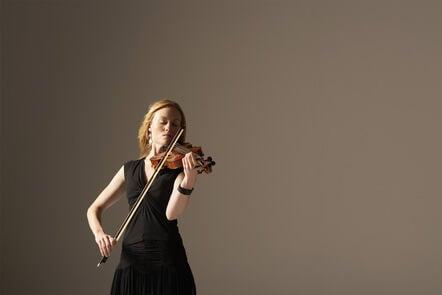
Discover how violins and other instruments are made.
Learning via videos and articles, you’ll delve into individual string instruments – including their origin, history and development. You’ll explore the structure of the instrument and the impact that its shape has on the sound created.
You’ll discover the story behind Chinese instruments such as the Guzheng, Pipa, and Erhu, and learn about the history of the violin, and how it’s made.

Study the history of classical music and famous string composers
You’ll get a comprehensive introduction to the history of classical string music, and learn about legendary string composers, including Haydn, Bach, Dvořák, Vivaldi, and Kabalevsky.
You’ll be able to define the string and chamber music repertoire, including the string trio, quartet, and quintet, as well as learning about string music virtuosos.

Explore the beloved Butterfly Lovers Concerto
The Butterfly Lovers Concerto is perhaps the most well-known and influential piece of Chinese classical string music. You’ll undertake a case study on the Concerto, exploring its history and discovering what makes it so popular.
Finally, you’ll examine plucked string instruments, including the guitar, the bass, and electric string instruments, giving you a rounded and comprehensive overview of string music, advancing your critical faculties and your appreciation of these spellbinding instruments.

What topics will you cover?

  • The history and construction of the violin
  • Bowed string instruments
  • Special topics: the Butterfly Lovers’ violin concerto
  • Plucked string instruments

Learning on this course
You can take this self-guided course and learn at your own pace. On every step of the course you can meet other learners, share your ideas and join in with active discussions in the comments.
What will you achieve?
By the end of the course, you‘ll be able to...
Exploring and understanding string instruments, composers, virtuoso, and repertoire
Developing knowledge of the history and background of classical string music
Developing appreciation of classical string music scales and compositions
Describe the differences and construction of all common western string instruments
Who is the course for?
This course would appeal to anyone about to take up a string instrument or early in their journey of learning one, as well as people studying music theory or global music. It would also appeal to learners interested in history and music in general.

Go to Class
MOOC List is learner-supported. When you buy through links on our site, we may earn an affiliate commission.

Related Courses

Cantonese Opera: from Backstage to the Stage (FutureLearn) FutureLearn
The Hong Kong Academy for Performing Arts

Cantonese Opera: from Backstage to the Stage (FutureLearn)

Interested in Cantonese opera? Join us in an exploration of this artform from the Backstage to the Stage. Get an introduction to how a Cantonese opera show is prepared. Cantonese opera is a form of Chinese opera that can trace its roots back to the 12th century. Combining music, singing, martial arts, acrobatics and acting, Cantonese opera tells stories from Chinese history and myth, reflecting virtues like love, loyalty and patriotism.

No sessions available
4 Weeks
Caring with Music: Can Music Do More In Adult Care Settings? (FutureLearn) FutureLearn
Nordoff Robbins

Caring with Music: Can Music Do More In Adult Care Settings? (FutureLearn)

Learn how music can help you in your work as an adult caregiver and explore ideas from music therapists to use in care settings. Discover the benefits of using music interactively Regardless of our language, culture, or abilities, music speaks to all of us. It can enable us to connect with other people and to the world around us. It can help us express our feelings, increase our socialisation, and communicate in new ways. On this six-week course, you’ll explore the reasons why music ‘works’ and learn how to apply this knowledge in your adult care setting for positive change.

Oct 4th 2021
5-12 Weeks
Guitar for Beginners (Coursera) Coursera
Berklee College of Music

Guitar for Beginners (Coursera)

Grasp the essentials needed to begin playing acoustic or electric guitar. You'll learn an easy approach to get you playing quickly, through a combination of exploring the instrument, performance technique, and basic music theory. For students who have long thought about picking up the acoustic or electric guitar, this course will provide an easy-access foundation that will get you playing.

Oct 26th 2026
5-12 Weeks
Inside Opera: Why Does It Matter? (FutureLearn) FutureLearn
King's College London,The Royal Opera House,V&A

Inside Opera: Why Does It Matter? (FutureLearn)

Discover the hidden world of opera, find out how it works and debate whether it’s still relevant today. How does opera work? How has it changed over 400 years? And most importantly, is opera relevant today? Get the answers to these questions and more with this course taking you behind opera’s velvet curtain.

No sessions available
4 Weeks
Fundamentals of Audio and Music Engineering: Part 1 Musical Sound & Electronics (Coursera) Coursera
University of Rochester

Fundamentals of Audio and Music Engineering: Part 1 Musical Sound & Electronics (Coursera)

In this course students learn the basic concepts of acoustics and electronics and how they can applied to understand musical sound and make music with electronic instruments. Topics include: sound waves, musical sound, basic electronics, and applications of these basic principles in amplifiers and speaker design.

Oct 26th 2026
5-12 Weeks
Creating Sounds for Electronic Music (Coursera) Coursera
Berklee College of Music

Creating Sounds for Electronic Music (Coursera)

What you’ll achieve: In this project-centered course*, you will create sounds and use them in your own musical compositions. Whether you're an aspiring producer, composer, or hobbyist, this course will help you gain skills in music production and confidence using software synthesizers. Along with your classmates, you will create a massive database of designed sounds, or patches, to use in your compositions. As part of the course, you will work with a free version of FXpansion Strobe 2.

Oct 26th 2026
4 Weeks
Music Psychology: Why Does "Bohemian Rhapsody" Feel so Good? (FutureLearn) FutureLearn
Griffith University

Music Psychology: Why Does "Bohemian Rhapsody" Feel so Good? (FutureLearn)

Explore music psychology and find out why music can make us feel, by analysing Queen's famous song, "Bohemian Rhapsody". Toe-tapping and hair-raising: discover the power of music. Some songs make us laugh and some songs make us cry, but why does music have the ability to affect us emotionally? On this course, you’ll learn about music psychology and how our emotions work, by analysing Queen’s famous song, “Bohemian Rhapsody”.

Available now
2 Weeks
History of Rock, Part Two (Coursera) Coursera
University of Rochester

History of Rock, Part Two (Coursera)

This course, part 2 of a 2-course sequence, examines the history of rock, primarily as it unfolded in the United States, from the early 1970s to the early 1990s. This course covers the music of Led Zeppelin, the Allman Brothers, Carole King, Bob Marley, the Sex Pistols, Donna Summer, Michael Jackson, Madonna, Prince, Metallica, Run-DMC, and Nirvana, and many more artists, with an emphasis both on cultural context and on the music itself. We will also explore how developments in the music business and in technology helped shape the ways in which styles developed.

Oct 26th 2026
5-12 Weeks
Exploring Beethoven's Piano Sonatas Part 4 (Coursera) Coursera
Curtis Institute of Music

Exploring Beethoven's Piano Sonatas Part 4 (Coursera)

Please join us for Part 4 of Exploring Beethoven's Piano Sonatas course, taught by Curtis faculty member and extraordinary concert artist, Jonathan Biss. This course is new and contains separate sets of lectures and sonatas that we not previously discussed. Specifically, in Part 4, we will cover Beethoven's Piano Sonatas Op. 2, No. 2, Op. 10, No. 3, Op. 28 and Op. 110.

Oct 23rd 2026
5-12 Weeks
In the Studio: Postwar Abstract Painting (Coursera) Coursera
The Museum of Modern Art

In the Studio: Postwar Abstract Painting (Coursera)

Want to know how some of the 20th century’s most celebrated artists made abstract paintings? This course offers an in-depth, hands-on look at the materials, techniques, and thinking of seven New York School artists, including Willem de Kooning, Yayoi Kusama, Agnes Martin, Barnett Newman, Jackson Pollock, Ad Reinhardt, and Mark Rothko. Through studio demonstrations and gallery walkthroughs, you’ll form a deeper understanding of what a studio practice means and how ideas develop from close looking, and you’ll gain a sensitivity to the physical qualities of paint.

Oct 26th 2026
5-12 Weeks