The Art of Vocal Production (Coursera)

The Art of Vocal Production (Coursera)

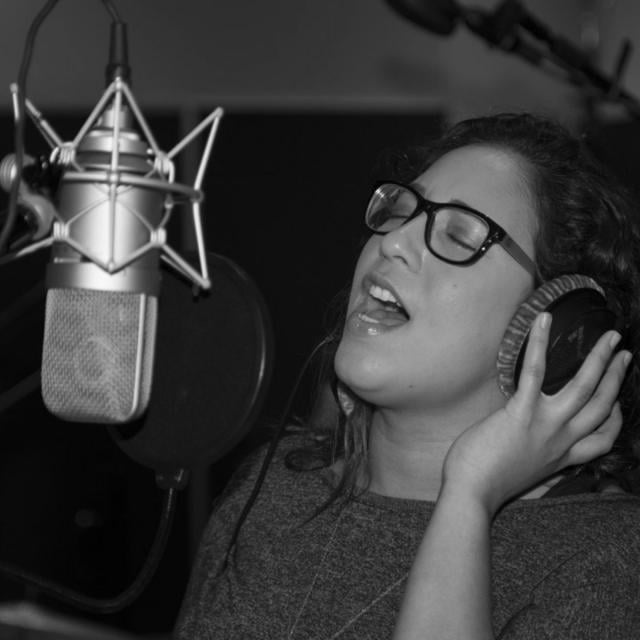
This course addresses recorded vocal performances and the technologies used to highlight and support them in modern record production and mixes. Most of us know that vocals serve as the focal point of modern recordings but many do not know the tools used or when the tools are used best in modern record production. The course begins with simple vocal placement in a mix, where you will also learn the fundamentals of compression and equalization. You’ll further study delays and reverbs before moving to advanced concepts in audio editing, synthetic processing, automatic & graphic pitch correction, time compression, time expansion, flex and elastic audio.

Class Deals by MOOC List - Click here and see Coursera's Active Discounts, Deals, and Promo Codes.

Through analysis and/or hands on projects that the students will post for peer review, the student will gain an understanding of the many choices available to modern record producers as they record and mix with a modern tool set. You’ll see, in action, the Vocoder, Auto Tune, Melodyne, Elastic Audio, Flex Time, Vocalign, tempo based editing and a host of other file modification protocols that are readily available on most Digital Audio Workstations. This course gives students a thorough look at the expanded choices that have risen in the art of vocal production as a result of these modern tools.
The goal of the course is to help interested novices understand the recordings they are listening to, performers find an expanded language for their recorded voices and for vocal producers to be able to create musically artistic visualizations using singers as their paintbrushes.

Syllabus

WEEK 1
Welcome to The Art of Vocal Production! In this module, we will cover all the details about how this course works and what you'll need to know to get the most out of your course experience.
Natural Vocal Design: How Vocal Producers Create
By the end of this lesson you will understand vocal placement within the stereo field and how recording a vocalist multiple times can create various types of listening experiences. You will understand level, phase, phantom center, panning, balance, equalization and compression concepts used in modern recordings. Your ability to listen to music will be expanded and you will probably never listen to vocals in music the same way ever again once you have been exposed to these simple concepts

WEEK 2
Artificial Vocal Design: How Vocal Producers “Sweeten” the Creation
In this lesson, we will lean less on the vocalist and more on tools that can be used to change the way we listen to vocals in music. You will now understand how delays and reverbs have been used in the music you love and their relationship to time and tempo.Your desire to try out some of these techniques will be piqued by the time you finish this lesson.

WEEK 3
Vocal Time Compression and Expansion: Tools of the Trade
In this lesson the nature of the DAW (Digital Audio Workstation) will be demystified and simplified. You will understand time as an absolute concept, time as a relative concept and further grasp the utility of the sample rate and bit depth parameters in your audio software. You will be shown tools that can change a song from a ballad to a dance record and vice versa. Many modern vocal production tools exist in software that might already be on your computer; but if you do not have such tools, you will document the use of these concepts via in depth analysis of current and emerging music.

WEEK 4
Vocal Pitch Correction and Tuning: More tools of the Trade
In this lesson, you will learn some of the industry standard pitch correction and tuning tools. Although you will gain an understanding and appreciation of how easy the job of a vocalist can be when these tools are used, you will also learn that your first lesson in simple performance and placement is still the most potent skill in your art of vocal production arsenal.
Go to Class
MOOC List is learner-supported. When you buy through links on our site, we may earn an affiliate commission.

Related Courses

Korean Music, A Philosophical Exploration (Coursera) Coursera
Sungkyunkwan University - SKKU

Korean Music, A Philosophical Exploration (Coursera)

This course introduces Korean philosophy projected into the subject of Korean music, especially K-POP, which is drawing global attention today. We confirm that Korea's unique philosophy was the basis for maintaining originality while being universally accepted by many people, and seek the role of philosophy for the continuous development and spread of Korean music.

Nov 2nd 2026
5-12 Weeks
How Music Can Change Your Life (Coursera) Coursera
University of Melbourne

How Music Can Change Your Life (Coursera)

Did you ever wonder how music works? This course provides free video, audio and journal resources that explain six basic principles about how music can influence individual and community health and wellbeing. From biology and neuroscience, to psychotherapy and politics, the ways we engage with music can make all the difference. Music has always played an integral role in the lives of individuals and communities all around the globe.

Nov 9th 2026
5-12 Weeks
Music for Wellness (Coursera) Coursera
Berklee College of Music

Music for Wellness (Coursera)

You love music. You listen to music all the time. Maybe you sing, play an instrument, or compose music. You don’t need to have musical talent to use music to enhance your well being, and even your health. Learn simple techniques to enrich your mind, body, and spirit through music. The methods can be applied in your daily life, particularly when you are feeling down or stressed out.

Nov 9th 2026
4 Weeks
Jazz Improvisation (Coursera) Coursera
Berklee College of Music

Jazz Improvisation (Coursera)

Learn the basic concepts of improvisation from Gary Burton, one of the most renowned improvisers in the jazz world, including the mental, melodic, and harmonic processes that contribute to the instinctive skills that an improviser puts to use when taking a solo. While many people are fans of jazz and understand that musicians are often “making up” the notes they are playing during a performance, most people—often including musicians, themselves, who are beginning to learn improvising—aren’t clear about what exact processes take place to enable this to happen. The purpose of this course is to introduce the basic concepts of modern improvisation and how to go about mastering the different musical and mental skills involved.

Nov 2nd 2026
5-12 Weeks
History of Rock, Part Two (Coursera) Coursera
University of Rochester

History of Rock, Part Two (Coursera)

This course, part 2 of a 2-course sequence, examines the history of rock, primarily as it unfolded in the United States, from the early 1970s to the early 1990s. This course covers the music of Led Zeppelin, the Allman Brothers, Carole King, Bob Marley, the Sex Pistols, Donna Summer, Michael Jackson, Madonna, Prince, Metallica, Run-DMC, and Nirvana, and many more artists, with an emphasis both on cultural context and on the music itself. We will also explore how developments in the music business and in technology helped shape the ways in which styles developed.

Oct 26th 2026
5-12 Weeks
Improvisación de jazz (Coursera) Coursera
Berklee College of Music

Improvisación de jazz (Coursera)

Aprenda los conceptos básicos de la improvisación con Gary Burton, uno de los improvisadores más reconocidos en el mundo del jazz, incluidos los procesos mentales, melódicos y armónicos que contribuyen a las habilidades instintivas que aplica un improvisador cuando realiza un solo.

Nov 2nd 2026
5-12 Weeks
Understanding the Music Business: What is Music Worth? (Coursera) Coursera
Vanderbilt University

Understanding the Music Business: What is Music Worth? (Coursera)

This course will examine the music industry in the United States, with the unique perspective gained by Vanderbilt University’s location in Nashville, TN. Nashville is a major center of music in the United States, and the music created here has a global reach, particularly in the country, rock, pop, singer-songwriter, and Americana genres. However, students will learn that the basic principles of recording, marketing, copyright, licensing, and live performance are the same, regardless of musical style or genre.

Nov 9th 2026
5-12 Weeks
Introducción al Arte Sonoro (Coursera) Coursera
University of Barcelona

Introducción al Arte Sonoro (Coursera)

Concebido para personas formadas en cualquier disciplina y que se sientan atraídas por la creación artística vinculada al sonido: la escultura y la instalación sonoras, la música experimental, la improvisación, la poesía, la performance y otras prácticas artísticas que han terminado trascendiendo el ámbito tradicional de las artes plásticas y las escénicas. El seguimiento de este curso les dará una idea general de la creación.

Nov 9th 2026
5-12 Weeks