Copyright for Multimedia (Coursera)

Copyright for Multimedia (Coursera)

Copyright questions about different formats (data, images, music and video) can be especially difficult. Sometimes the law specifically distinguishes between these different formats, and in most cases there are media-specific considerations that impact a copyright analysis. In this course we will look at four different media, paying special attention to the unique issues for each one and the kinds of information that is important when making copyright decisions for each type of material.

Class Deals by MOOC List - Click here and see Coursera's Active Discounts, Deals, and Promo Codes.

We will work through fair use issues for each multimedia format, look at format-specific exceptions in the law, and consider unique issues for seeking permission for film, music, images and data.
At the end of this course, participants will have a deeper understanding of how to apply our framework for making copyright decisions, and will be more comfortable with assessing multimedia issues. They will have gained more and more diverse experience for considering fair use.

Syllabus

WEEK 1
Introduction and Getting Started
Copyright questions about different formats – data, images, music and video – can be especially difficult. Sometimes the law specifically distinguishes between these different formats, and in most cases there are media-specific considerations that impact a copyright analysis. In this course we will look at four different media types, paying special attention to the unique issues for each one and the kinds of information that are important when making copyright decisions. We will work through fair use issues for each multimedia format, look at specific exceptions in the law, and consider unique issues for seeking permission for film, music, images and data. At the end of this course, participants will have a deeper understanding of how to apply our framework for making copyright decisions, and will be more comfortable with assessing multimedia issues.
Data
Data can refer to many different types of materials, and the copyright situation is different depending on what particular type of data is meant. In this module we will consider the different potential types of data, the rights associated with each one, and the copyright considerations involved when using data. We will look carefully at how fair use applies in various data-use situations.

WEEK 2
Images
Those who create or use works of visual arts benefit from an understanding copyright protections and exemptions. Topics covered in this module include which works of visual arts get copyright protection, what special rights are afforded artists under the Visual Artists Rights Act (VARA), how to apply the TEACH Act and fair use to images, and what steps to take if you need to seek permission. Finally, some attention will be given to social media, implied licenses that can arise when posting and using images, and privacy.

WEEK 3
Music and Audio
Copyright for music, and especially for recording music, is extremely complicated and difficult to untangle. In this module we will explore the multiple rights that must be accounted for in almost every musical composition or recording. We will pay special attention to the multitude of licenses that come in to play when creating or using music. Exceptions for using music in teaching will be covered, and we will examine fair use considerations for different musical situations in detail. This is a module that has important implications for musicians, music teachers, librarians, and all those who want to use or reuse music.

WEEK 4
Film and Video
Copyright issues for film tend to be complicated because of the number of creators and creative works that come together to make them. In this module, students will learn to apply the fundamentals of copyright with regard to film. Topics covered include identification of the various rights and rights holders involved in many films, the role of copyright exceptions when creating or using film in educational settings, and when and how to seek permission to make use of copyrighted material in films.
Go to Class
MOOC List is learner-supported. When you buy through links on our site, we may earn an affiliate commission.

Related Courses

Exploring Beethoven's Piano Sonatas Part 4 (Coursera) Coursera
Curtis Institute of Music

Exploring Beethoven's Piano Sonatas Part 4 (Coursera)

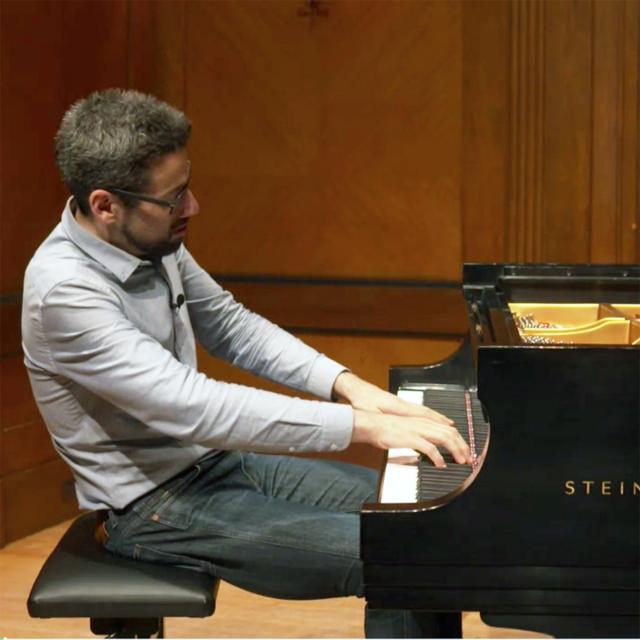
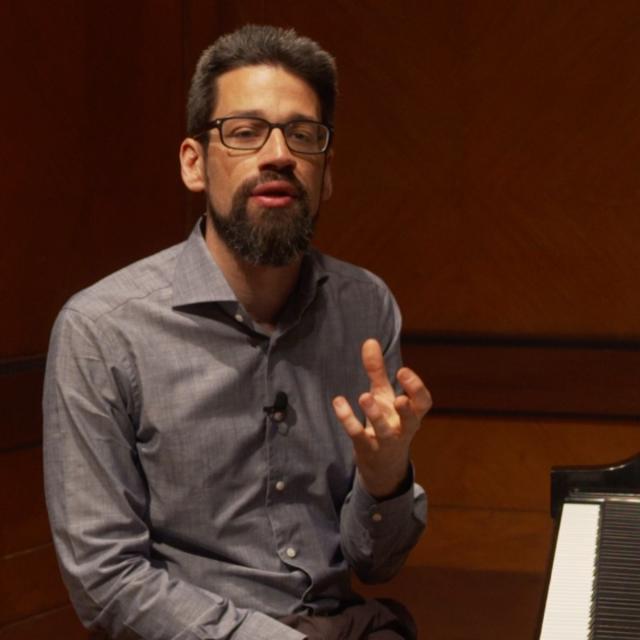
Please join us for Part 4 of Exploring Beethoven's Piano Sonatas course, taught by Curtis faculty member and extraordinary concert artist, Jonathan Biss. This course is new and contains separate sets of lectures and sonatas that we not previously discussed. Specifically, in Part 4, we will cover Beethoven's Piano Sonatas Op. 2, No. 2, Op. 10, No. 3, Op. 28 and Op. 110.

Oct 23rd 2026
5-12 Weeks
Music Business Foundations (Coursera) Coursera
Berklee College of Music

Music Business Foundations (Coursera)

This course has been developed to provide students with the latest instruction on the best way for creators, consumers, and facilitators to navigate the resurgence of one of the world’s most exciting industries: the music business. Three things are clear about today’s music industry: The consumption of music is expanding at the greatest rate in history and from the most portals ever imagined, the cost of producing music is decreasing, and the number of artists creating and seeking to expose their work and develop careers through the Internet has increased dramatically.

Oct 19th 2026
4 Weeks
Creating Sounds for Electronic Music (Coursera) Coursera
Berklee College of Music

Creating Sounds for Electronic Music (Coursera)

What you’ll achieve: In this project-centered course*, you will create sounds and use them in your own musical compositions. Whether you're an aspiring producer, composer, or hobbyist, this course will help you gain skills in music production and confidence using software synthesizers. Along with your classmates, you will create a massive database of designed sounds, or patches, to use in your compositions. As part of the course, you will work with a free version of FXpansion Strobe 2.

Oct 26th 2026
4 Weeks
Creativity And Entrepreneurship (Coursera) Coursera
Berklee College of Music

Creativity And Entrepreneurship (Coursera)

Creativity & Entrepreneurship will help you tap into your inner creativity and learn how to leverage it for career development or business innovation. Presented by Berklee Institute for Creative Entrepreneurship founder Panos Panay, this course features interviews with world renown entrepreneurs, innovators, songwriters, producers, creative directors, educators, performers, visual artists and chefs as they discuss parallels between the creative and entrepreneurial journeys.

Oct 19th 2026
4 Weeks
Music as Biology: What We Like to Hear and Why (Coursera) Coursera
Duke University

Music as Biology: What We Like to Hear and Why (Coursera)

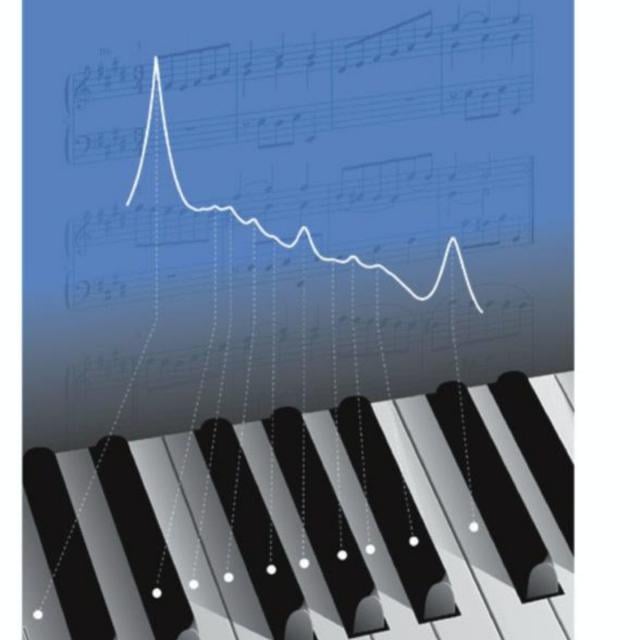
The course will explore the tone combinations that humans consider consonant or dissonant, the scales we use, and the emotions music elicits, all of which provide a rich set of data for exploring music and auditory aesthetics in a biological framework. Analyses of speech and musical databases are consistent with the idea that the chromatic scale (the set of tones used by humans to create music), consonance and dissonance, worldwide preferences for a few dozen scales from the billions that are possible, and the emotions elicited by music in different cultures all stem from the relative similarity of musical tonalities and the characteristics of voiced (tonal) speech.

Oct 19th 2026
5-12 Weeks
Teaching the Violin and Viola: Creating a Healthy Foundation (Coursera) Coursera
Northwestern University

Teaching the Violin and Viola: Creating a Healthy Foundation (Coursera)

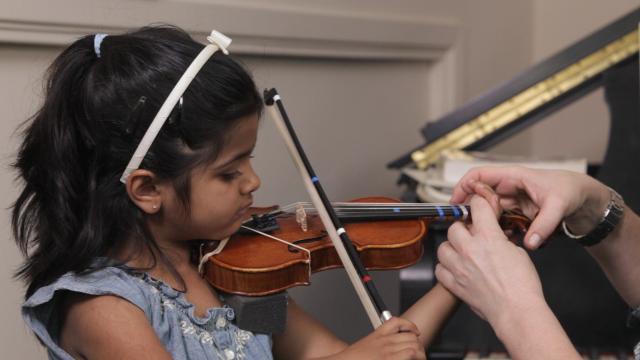
Join us as we explore the fundamental principles and early stages of teaching violin and viola through a series of engaging video lectures and lesson demonstrations, including: 1) Master classes with some of the world’s top string pedagogues, 2) Individual lesson demos of teaching violin/viola set up, left and right hand technique and pieces from the early violin/viola repertoire, 3) Group lesson demos of teaching music theory, ear training and fun activities that encourage good playing habits, and 4) A “field trip” to the violin shop, where we will outfit a new beginning student with a proper instrument and bow.

Oct 26th 2026
5-12 Weeks
Internet Giants: The Law and Economics of Media Platforms (Coursera) Coursera
University of Chicago

Internet Giants: The Law and Economics of Media Platforms (Coursera)

Law

This seven-week course will explore the relationship between law and technology with a strong focus on the law of the United States with some comparisons to laws around the world, especially in Europe. Tech progress is an important source of economic growth and raises broader questions about the human condition, including how culture evolves and who controls that evolution. Technology also matters in countless other ways as it often establishes the framework in which governments interact with their citizens, both in allowing speech and blocking it and in establishing exactly what the boundaries are between private life and the government. And technology itself is powerfully shaped by the laws that apply in areas as diverse as copyright, antitrust, patents, privacy, speech law and the regulation of networks.

Oct 26th 2026
5-12 Weeks