Music Moves: Why Does Music Make You Move? (FutureLearn)

Offered by University of Oslo,
Music Moves: Why Does Music Make You Move? (FutureLearn)

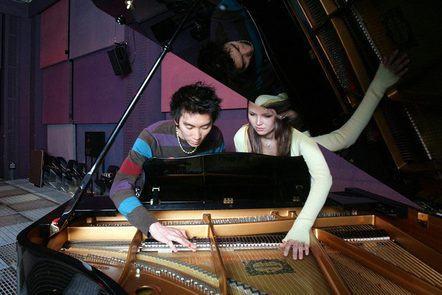
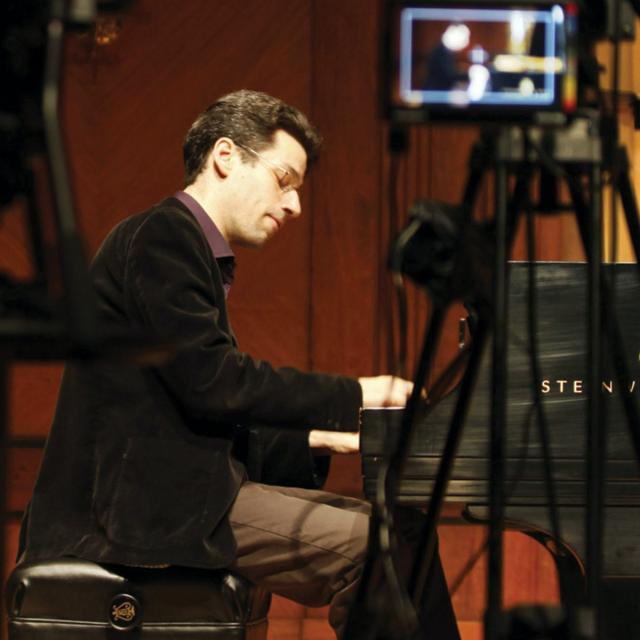
Learn about the psychology of music and movement, and how researchers study music-related movements, with this free online course. Learn about why and how music makes you move. Music is movement. A bold statement, but one that we will explore together in this free online course. Together we will study music through different types of body movement. This includes everything from the sound-producing keyboard actions of a pianist to the energetic dance moves in a club.

Class Deals by MOOC List - Click here and see FutureLearn's Active Discounts, Deals, and Promo Codes.

You will learn about the theoretical foundations for what we call embodied music cognition and why body movement is crucial for how we experience the emotional moods in music. We will also explore different research methods used at universities and conservatories. These include advanced motion capture systems and sound analysis methods.
You will be guided by a group of music researchers from the University of Oslo, with musical examples from four professional musicians. The course is rich in high-quality text, images, video, audio and interactive elements.
Join us to learn more about terms such as entrainment and musical metaphors, and why it is difficult to sit still when you experience a good groove.

What topics will you cover?

  • A historical overview
  • Perception and cognition of music
  • Functional action-sound categories
  • Multimodality
  • Pulse and Entrainment
  • Groove
  • Gestures and Coarticulation
  • Bodily Metaphors
  • Motion Capture
  • Video Analysis
  • Bio Sensors

What will you achieve?
By the end of the course, you‘ll be able to...

  • Reflect on the importance of the human body in the experience of music
  • Classify different types of music-related body movements
  • Collect information about music-related body movements
  • Describe different types of research methods used to study music-related body movements
  • Explain how the body entrains to musical rhythms
Go to Class
MOOC List is learner-supported. When you buy through links on our site, we may earn an affiliate commission.

Related Courses

Fundamentals of Audio and Music Engineering: Part 1 Musical Sound & Electronics (Coursera) Coursera
University of Rochester

Fundamentals of Audio and Music Engineering: Part 1 Musical Sound & Electronics (Coursera)

In this course students learn the basic concepts of acoustics and electronics and how they can applied to understand musical sound and make music with electronic instruments. Topics include: sound waves, musical sound, basic electronics, and applications of these basic principles in amplifiers and speaker design.

Oct 26th 2026
5-12 Weeks
Caring with Music: Can Music Do More In Adult Care Settings? (FutureLearn) FutureLearn
Nordoff Robbins

Caring with Music: Can Music Do More In Adult Care Settings? (FutureLearn)

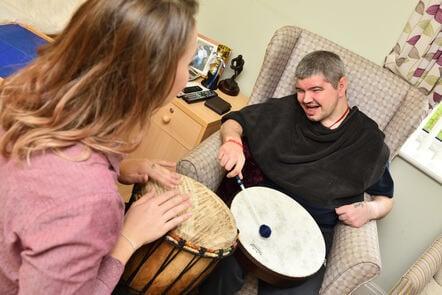
Learn how music can help you in your work as an adult caregiver and explore ideas from music therapists to use in care settings. Discover the benefits of using music interactively Regardless of our language, culture, or abilities, music speaks to all of us. It can enable us to connect with other people and to the world around us. It can help us express our feelings, increase our socialisation, and communicate in new ways. On this six-week course, you’ll explore the reasons why music ‘works’ and learn how to apply this knowledge in your adult care setting for positive change.

Oct 4th 2021
5-12 Weeks
Introduction to Health Psychology (FutureLearn) FutureLearn
University of Padova

Introduction to Health Psychology (FutureLearn)

Learn about the importance of psychology in healthcare, how it can improve policymaking and patient outcomes. Discover why psychology in healthcare matters to both caregivers and patients. Psychology plays a vital role in healthcare services. From a patient learning to cope with a medical condition to a doctor delivering significant diagnostic news – the psychological impact and toll of healthcare are often overlooked.

Self Paced
4 Weeks
Critical listening for studio production (FutureLearn) FutureLearn
Queen’s University Belfast

Critical listening for studio production (FutureLearn)

This free online course is a technical ear training programme designed to improve critical listening in a music studio context. There are many qualities required to be a skilled sound engineer: the theoretical knowledge of sound and audio, the technical mastery of studio hardware and software, and diplomatic people skills, for example. But perhaps the most obvious (and often overlooked) quality required of all sound engineers is the ability to listen.

No sessions available
5-12 Weeks
eHealth: Combining Psychology, Technology and Health (FutureLearn) FutureLearn
University of Twente

eHealth: Combining Psychology, Technology and Health (FutureLearn)

How can technology make you healthy? Learn about the design, application, implementation and evaluation of eHealth. eHealth refers to the use of technologies to improve well-being, health, and healthcare. It is an umbrella term that captures concepts about the health context, technology, and people. In this free online course, we will provide you with insight into the domain of eHealth, describe methods to develop eHealth, and explain theories that enable behaviour change and facilitate implementation.

Available now
5-12 Weeks
Food and Nutrition: The Truth Behind Food Headlines (FutureLearn) FutureLearn
University of Reading,EIT Food

Food and Nutrition: The Truth Behind Food Headlines (FutureLearn)

Learn how to find reliable, scientific information about food and nutrition and identify the truth behind food headlines. Rebuild your trust in nutrition science and look beyond the media headlines. Due to conflicting messages from the media, it’s becoming harder to know what to believe when it comes to following a healthy diet and lifestyle. On this course, you’ll compare how nutrition and health topics are handled by the media and science.

Jan 2nd 2023
3 Weeks
History of Rock, Part One (Coursera) Coursera
University of Rochester

History of Rock, Part One (Coursera)

This course, part 1 of a 2-course sequence, examines the history of rock, primarily as it unfolded in the United States, from the days before rock (pre-1955) to the end of the 1960s. This course covers the music of Elvis Presley, Chuck Berry, Phil Spector, Bob Dylan, the Beatles, the Rolling Stones, Jimi Hendrix, Cream, and many more artists, with an emphasis both on cultural context and on the music itself. We will also explore how developments in the music business and in technology helped shape the ways in which styles developed.

Oct 26th 2026
5-12 Weeks
Game Design and Development: A Bit-by-Bit History of Video Game Music (FutureLearn) FutureLearn
Abertay University

Game Design and Development: A Bit-by-Bit History of Video Game Music (FutureLearn)

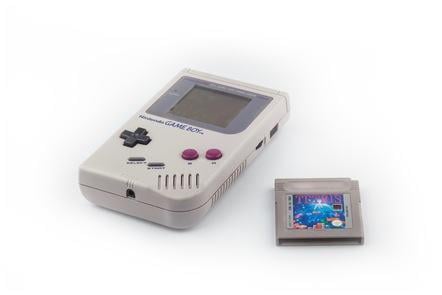
Chart the evolution of the classic 8-bit sound and discover the role of musicians in game design and development. Chart the history of video game music, bit by bit. From early arcade games to modern open-world adventures, video game soundtracks have made an indelible mark on our culture. On this course, you’ll get an introduction to video game music and the platforms that define it (including Atari and NES), focusing on the evolution of the classic 8-bit sound.

Jul 26th 2021
2 Weeks
Exploring Beethoven's Piano Sonatas (Coursera) Coursera
Curtis Institute of Music

Exploring Beethoven's Piano Sonatas (Coursera)

Our relationship to Beethoven is a deep and paradoxical one. For many musicians, he represents a kind of holy grail: His music has an intensity, rigor, and profundity which keep us in its thrall, and it is perhaps unequalled in the interpretive, technical, and even spiritual challenges it poses to performers. At the same time, Beethoven’s music is casually familiar to millions of people who do not attend concerts or consider themselves musically inclined. Two hundred years after his death, he is everywhere in the culture, yet still represents its summit. This course takes an inside-out look at the 32 piano sonatas from the point of view of a performer.

Oct 26th 2026
5-12 Weeks
What is a Mind? (FutureLearn) FutureLearn
University of Cape Town

What is a Mind? (FutureLearn)

Explore the most pertinent scientific and philosophical concepts for understanding our own minds with this free online course. This free online course will bring together learners and practitioners interested in how the mind works. It aims to build bridges between traditionally antagonistic approaches to understanding the mind.

Jul 25th 2022
5-12 Weeks