Introducción a la producción de música (Coursera)

Introducción a la producción de música (Coursera)

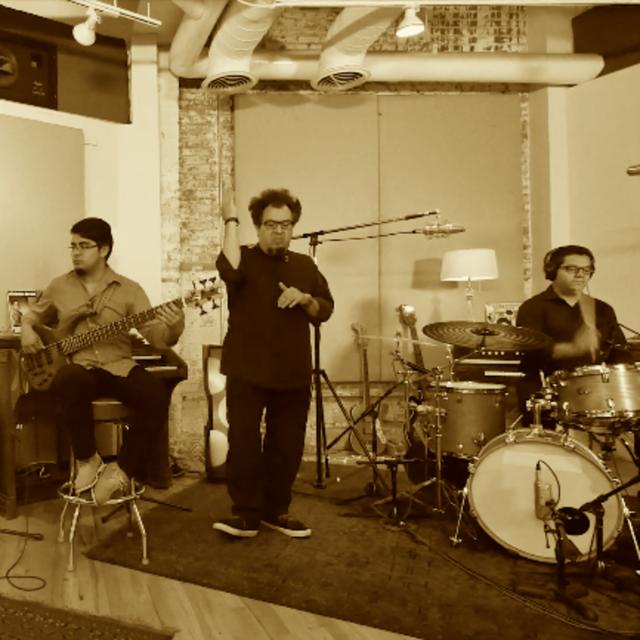
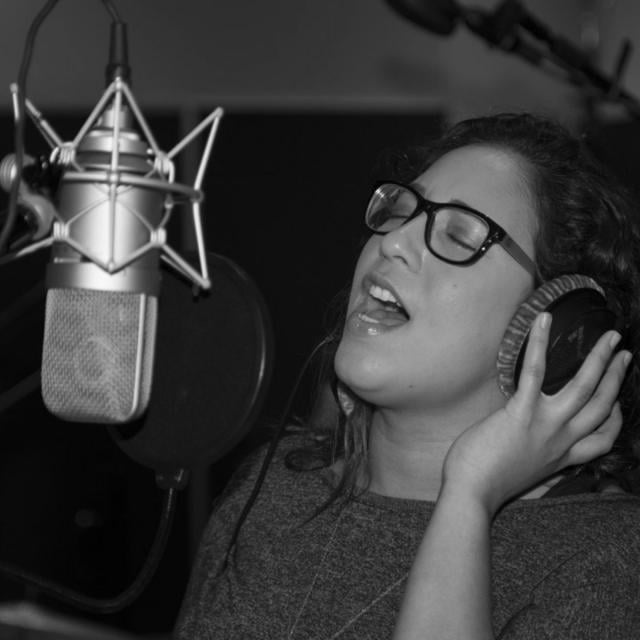
Aprende sobre el proceso de producción de música -incluyendo la grabación, la edición y la mezcla- y sobre las herramientas disponibles para crear música contemporánea en tu computadora.

Class Deals by MOOC List - Click here and see Coursera's Active Discounts, Deals, and Promo Codes.

Course 2 of 4 in the El Músico Moderno Specialization.

Syllabus

WEEK 1
Bienvenido a Introducción a la Producción
Sonido y flujo de la señal
Comenzaremos con algo de información sobre la naturaleza del sonido y la forma en la que lo percibimos. Estudiaremos los componentes necesarios para grabar audio en la computadora, con el fin de comprender los dispositivos que el sonido debe atravesar durante el proceso de producción de música.

WEEK 2
LA EAD
La herramienta de edición contemporánea es la estación de trabajo de audio digital (EAD), un software que almacena y organiza todos los componentes de un proyecto musical. Nos centraremos en las herramientas de edición, esenciales para la producción de música contemporánea, que todas las EAD proveen.

WEEK 3
La mezcladora
Estudiaremos las funciones básicas del hardware y el software de las consolas mezcladoras de sonido, incluidos volumen, panorámicas, mute, buses, inserciones, envíos y submezclas.

WEEK 4
Efectos dinámicos
El sonido debe ser procesado y modificado en el estado de grabación para encajar en el contexto de la música. Esta semana nos centraremos en las herramientas que se pueden utilizar para dar efectos a la dinámica de las pistas y en cómo usarlas en un contexto musical.

WEEK 5
Filtro y efectos de delay
El sonido grabado puede modificarse usando herramientas que efectúan cambios en la calidad real del sonido. Esta semana veremos la ecualización y el delay, y estudiaremos los diversos efectos de sonido que se derivan de estos dispositivos.

WEEK 6
Síntesis
Estudiaremos el sintetizador, una herramienta muy importante dentro de la producción de música contemporánea. Aprenderemos cómo funciona el sintetizador, el cual te dará un lenguaje para describir el sonido. La música es una forma de arte colaborativa, por lo tanto, no hay nada más poderoso que una comunicación efectiva.
Go to Class
MOOC List is learner-supported. When you buy through links on our site, we may earn an affiliate commission.

Related Courses

Richard Schechner's Introduction to Performance Studies (Coursera) Coursera
New York University

Richard Schechner's Introduction to Performance Studies (Coursera)

Performance Studies: An Introduction explores the wide world of performance--from theatre, dance, and music to ritual, play, political campaigns, social media, and the performances of everyday life. Performance studies also ranges across cultures--Asia, Africa, the Caribbean, Europe, the Americas. And it spans historical periods from the art of the paleolithic caves to YouTube and the avantgarde. This course is devised by Richard Schechner, one of the pioneers of performance studies, in dialogue with more than a dozen expert scholars and artists.

Jun 8th 2026
13-24 Weeks
Introduction to Ableton Live (Coursera) Coursera
Berklee College of Music

Introduction to Ableton Live (Coursera)

In the past, Digital Audio Workstations (DAWs) were programs used only by audio engineers with a highly specific knowledge base, on machines inaccessible to most people. But over the past 10-15 years, DAWs and the act of recording music have evolved from being a luxury of the few to being available to the masses.

Jun 1st 2026
3 Weeks
Strategies for Success in your Music Career (Coursera) Coursera
University of Colorado Boulder

Strategies for Success in your Music Career (Coursera)

The Musician's Professional Toolbox is more than just a collection of career-building skills: professional musicians need strategies in place that maximize the impact of those skills. Designed for musicians at any point in their career, this course will provide learners with foundational skills necessary for managing your professional music career, including skill assessment, time management, goal setting and networking. The course can be taken by itself or as the first course in the Musician's Professional Toolbox.

Jun 8th 2026
4 Weeks
Fundamentals of Audio and Music Engineering: Part 1 Musical Sound & Electronics (Coursera) Coursera
University of Rochester

Fundamentals of Audio and Music Engineering: Part 1 Musical Sound & Electronics (Coursera)

In this course students learn the basic concepts of acoustics and electronics and how they can applied to understand musical sound and make music with electronic instruments. Topics include: sound waves, musical sound, basic electronics, and applications of these basic principles in amplifiers and speaker design.

Jun 8th 2026
5-12 Weeks
In the Studio: Postwar Abstract Painting (Coursera) Coursera
The Museum of Modern Art

In the Studio: Postwar Abstract Painting (Coursera)

Want to know how some of the 20th century’s most celebrated artists made abstract paintings? This course offers an in-depth, hands-on look at the materials, techniques, and thinking of seven New York School artists, including Willem de Kooning, Yayoi Kusama, Agnes Martin, Barnett Newman, Jackson Pollock, Ad Reinhardt, and Mark Rothko. Through studio demonstrations and gallery walkthroughs, you’ll form a deeper understanding of what a studio practice means and how ideas develop from close looking, and you’ll gain a sensitivity to the physical qualities of paint.

Jun 8th 2026
5-12 Weeks
History of Rock, Part One (Coursera) Coursera
University of Rochester

History of Rock, Part One (Coursera)

This course, part 1 of a 2-course sequence, examines the history of rock, primarily as it unfolded in the United States, from the days before rock (pre-1955) to the end of the 1960s. This course covers the music of Elvis Presley, Chuck Berry, Phil Spector, Bob Dylan, the Beatles, the Rolling Stones, Jimi Hendrix, Cream, and many more artists, with an emphasis both on cultural context and on the music itself. We will also explore how developments in the music business and in technology helped shape the ways in which styles developed.

Jun 8th 2026
5-12 Weeks
Copyright Law in the Music Business (Coursera) Coursera
Berklee College of Music

Copyright Law in the Music Business (Coursera)

In this course taught by E. Michael Harrington, students will learn the basis for copyright including what is and is not covered by copyright law. This course will help clarify what rights artists have as creators as well as what the public is free to take from their work. Students will also learn what to do if someone copies their work and what to do if they are accused of copying someone else. Finally, the course will discuss how technology has changed copyright for the better (and worse) and how copyright laws may change in the coming years.

Jun 8th 2026
4 Weeks
Fundamentals of Music Theory (Coursera) Coursera
University of Edinburgh

Fundamentals of Music Theory (Coursera)

This course will introduce students to the theory of music, providing them with the skills needed to read and write Western music notation, as well as to understand, analyse, and listen informedly. It will cover material such as pitEli Appleby-Donaldches and scales, intervals, clefs, rhythm, form, meter, phrases and cadences, and basic harmony.

Jun 8th 2026
5-12 Weeks
The Piano Sonata: Russian and 20th-21st Century Composers (Coursera) Coursera
University of Michigan

The Piano Sonata: Russian and 20th-21st Century Composers (Coursera)

In this course, you’ll review sonata form and learn how the piano sonata was revitalized in the 20th century, with a particular attention to composers from Russia, where the sonata was an especially popular and successful genre. You’ll study some of the most influential piano sonatas of the 20th century, in both Neo-Classical and avant-garde styles. This course will also expose you to a variety of lesser-known and more recent compositions, showing how the piano sonata genre continues to expand and to thrive.

Jun 8th 2026
4 Weeks
Space is Everywhere (Coursera) Coursera
University of Colorado Boulder

Space is Everywhere (Coursera)

You are here! Welcome to Course 4 - Space is Everywhere and the last course of this specialization. You are on the final stretch of this journey to finding your Pathway to Space. The topics of Course 4 span four weeks and nine lessons with 36 learning objectives. This course contains some of my most favorite aha moments in the the entire specialization. I hope that you find them and that they impact you in a positive way. We will discuss how space is communicated through news, art, movies, books, music and more. Space is everywhere in our lives and therefore everyone can be involved in it. So keep up the pace. You can do this. Your reward awaits you, finding your pathway to space.

Jun 8th 2026
4 Weeks