FUN

Socle en Mécanique (FUN)

Socle en Mécanique (FUN)

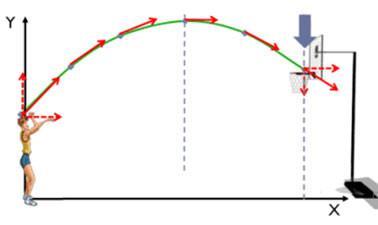
L’objectif du Mooc socle en mécanique est de vous permettre d’analyser des situations et des mécanismes en les rapportant aux principes de base de la mécanique générale: la cinématique est l’étude du mouvement indépendamment de ses causes. Elle permet de décrire des déplacements, des trajectoires, des vitesses et accélérations; et la statique est l’étude des actions mécaniques, des efforts ou des moments.

A l’issue de cette formation, l’apprenant aura acquis une connaissance des concepts clés de la mécanique générale, il sera capable de mettre en œuvre les outils mathématiques associés, d’étudier le mouvement de mécanismes et d’appliquer le principe de la statique à des solides ou à un ensemble de solides.

Le MOOC est proposé sur 10 semaines d’enseignement. Le découpage des 10 semaines se présente de la façon suivante :
6 semaines consacrées à la cinématique
3 semaines consacrées à la statique
1 semaine consacrée à des applications de statique – cinématique
Chaque semaine, nous vous proposons 2 à 4 vidéos de présentation du thème abordé. Ces vidéos sont accompagnées d'exercices qui permettent aux apprenants de s’évaluer. La dernière semaine sera consacrée à une synthèse globale et à l’examen final.

Plan du cours

Semaine 1 : Cinématique 1 : Référentiels et mesure du mouvement
Semaine 2 : Cinématique 2 : Les différents mouvements
Semaine 3 : Cinématique 3 : Vitesses et accélérations
Semaine 4 : Cinématique 4 : Champs de vitesses et torseur cinématique
Semaine 5 : Cinématique 5 : Liaisons cinématiques
Semaine 6 : Cinématique 6 : Composition des mouvements
Semaine 7 : Statique 1 : Actions mécaniques
Semaine 8 : Statique 2 : Principe fondamental de la statique
Semaine 9 : Statique 3 : Adhérence et frottement
Semaine 10 : Synthèse et examen final : Couplage cinématique/statique

Go to Class
MOOC List is learner-supported. When you buy through links on our site, we may earn an affiliate commission.

Related Courses

Quantum Mechanics for Scientists and Engineers 2 (edX) EdX
StanfordOnline

Quantum Mechanics for Scientists and Engineers 2 (edX)

This course covers key topics in the use of quantum mechanics in many modern applications in science and technology, introduces core advanced concepts such as spin, identical particles, the quantum mechanics of light, the basics of quantum information, and the interpretation of quantum mechanics, and covers the major ways in which quantum mechanics is written and used in modern practice.

Self Paced
Self-Paced
Modern Robotics, Course 2: Robot Kinematics (Coursera) Coursera
Northwestern University

Modern Robotics, Course 2: Robot Kinematics (Coursera)

Do you want to know how robots work? Are you interested in robotics as a career? Are you willing to invest the effort to learn fundamental mathematical modeling techniques that are used in all subfields of robotics? If so, then the "Modern Robotics: Mechanics, Planning, and Control" specialization may be for you. This specialization, consisting of six short courses, is serious preparation for serious students who hope to work in the field of robotics or to undertake advanced study. It is not a sampler.

Sep 7th 2026
4 Weeks
Mechanics: Motion, Forces, Energy and Gravity, from Particles to Planets (Coursera) Coursera
UNSW Sydney - University of New South Wales

Mechanics: Motion, Forces, Energy and Gravity, from Particles to Planets (Coursera)

Most of the phenomena in the world around you are, at the fundamental level, based on physics, and much of physics is based on mechanics. Mechanics begins by quantifying motion, and then explaining it in terms of forces, energy and momentum. This allows us to analyse the operation of many familiar phenomena around us, but also the mechanics of planets, stars and galaxies.

Sep 14th 2026
5-12 Weeks
On-Ramp to AP* Physics C: Mechanics (edX) EdX
Weston High School

On-Ramp to AP* Physics C: Mechanics (edX)

This course will help the students who have taken intro-level high-school physics to get ready for more advanced courses including AP Physics C: Mechanics. This short course is intended for the high-school students who have taken an introductory-level physics course, acquired some background in Mechanics and intend to take a more advanced course – for instance, AP Physics C.

Self Paced
Self-Paced
MOOC - Avion Introduction à la mécanique du vol (FUN) FUN
ISAE-SUPAERO

MOOC - Avion Introduction à la mécanique du vol (FUN)

Cela fait à peine plus d’un siècle que les avions volent. Et, de fait, le vol défie souvent l’intuition de l’animal terrestre que nous sommes. Comment vole un avion et comment éviter qu’il échappe au contrôle du pilote ? Jusqu’où peut-il s’élever dans le ciel ? Autant de questions auxquelles ce MOOC s’efforcera de répondre avec passion, simplicité et rigueur scientifique, en s’appuyant sur des explications visuelles, des mises en situation réalistes, des simulations et en se limitant au formalisme mathématique accessible à un élève de terminale scientifique.

No sessions available
5-12 Weeks
Mechanics I (saylor.org) Saylor Academy
Saylor.org

Mechanics I (saylor.org)

Mechanics studies how forces affect bodies in motion—how, for example, a bullet is fired from a gun or a top is set in motion by the flick of a wrist. As an engineer, you will find mechanics of vital importance to any field you choose to pursue.

Legacy Course
Self-Paced
Advanced Engineering Systems in Motion: Dynamics of Three Dimensional (3D) Motion (Coursera) Coursera
Georgia Institute of Technology

Advanced Engineering Systems in Motion: Dynamics of Three Dimensional (3D) Motion (Coursera)

This course is an advanced study of bodies in motion as applied to engineering systems and structures. We will study the dynamics of rigid bodies in 3D motion. This will consist of both the kinematics and kinetics of motion. Kinematics deals with the geometrical aspects of motion describing position, velocity, and acceleration, all as a function of time. Kinetics is the study of forces acting on these bodies and how it affects their motion.

Sep 7th 2026
5-12 Weeks