FUN

MOOC - Avion Introduction à la mécanique du vol (FUN)

Offered by ISAE-SUPAERO,
MOOC - Avion Introduction à la mécanique du vol (FUN)

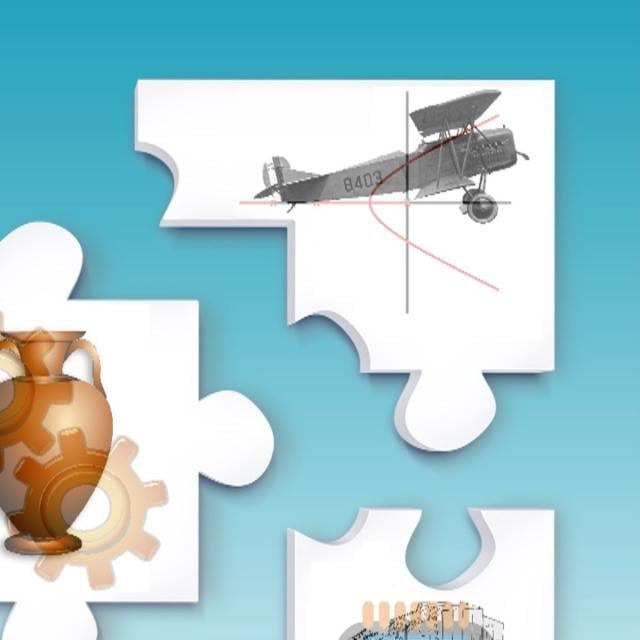
Cela fait à peine plus d’un siècle que les avions volent. Et, de fait, le vol défie souvent l’intuition de l’animal terrestre que nous sommes. Comment vole un avion et comment éviter qu’il échappe au contrôle du pilote ? Jusqu’où peut-il s’élever dans le ciel ? Autant de questions auxquelles ce MOOC s’efforcera de répondre avec passion, simplicité et rigueur scientifique, en s’appuyant sur des explications visuelles, des mises en situation réalistes, des simulations et en se limitant au formalisme mathématique accessible à un élève de terminale scientifique.

A l’issue du cours, les participants seront capables de :

  • Définir et utiliser à bon escient les grandeurs de la mécanique du vol (incidence, pente, assiette, etc.)
  • Comprendre comment un avion vole et décrire les forces qui s’exercent sur lui à l’équilibre et lors de manœuvres en vol
  • Décrire et modéliser l’origine des forces aérodynamiques sur une aile (2D répartition de pression sur un profil, 3D tourbillon de Prandtl)
  • Décrire l’atmosphère standard et expliquer l’effet de l’altitude sur les caractéristiques de vol d’un avion
  • Expliquer l’origine des limites du domaine de vol d’un avion ainsi que celles de son chargement (masse et centrage)
  • Dimensionner grossièrement les surfaces portantes d’un avion et la puissance de son moteur
  • Évaluer la distance de décollage et sa pente de montée notamment en cas de panne d’un des moteurs
  • Expliquer l’effet initial des commandes de vol
  • Expliquer la stabilité statique et dynamique de l’avion.
Go to Class
MOOC List is learner-supported. When you buy through links on our site, we may earn an affiliate commission.

Related Courses

Applications in Engineering Mechanics (Coursera) Coursera
Georgia Institute of Technology

Applications in Engineering Mechanics (Coursera)

This course applies principles learned in my course “Introduction to Engineering Mechanics” to analyze real world engineering structures. You will need to have mastered the engineering fundamentals from that class in order to be successful in this course offering. This course addresses the modeling and analysis of static equilibrium problems with an emphasis on real world engineering systems and problem solving.

Nov 2nd 2026
5-12 Weeks
Wind resources for renewable energies (Coursera) Coursera
École Polytechnique

Wind resources for renewable energies (Coursera)

The main goal of this course is to get the necessary knowledge on atmospheric and fluid dynamics in order to quantify the wind resource of a local or regional area. We’ll learn about basic meteorology, the specific dynamics of turbulent boundary layers and some standard techniques to estimate wind resources regardless of the type of turbine used or the level of efficiency achieved.

Nov 2nd 2026
4 Weeks
Statistique pour l'ingénieur (FUN) FUN
Institut Mines-Telecom

Statistique pour l'ingénieur (FUN)

Les méthodes statistiques sont largement répandues dans presque tous les secteurs de l’activité humaine : sciences et techniques, économie, sciences humaines et sociales. Elles font partie des connaissances de base de l’ingénieur. Parmi les innombrables applications dans le domaine industriel, on peut citer le contrôle de qualité, la fiabilité, l’analyse des résultats de mesure, la prévision et la planification.

No sessions available
5-12 Weeks
Devenir ingénieur, c'est possible! (FUN) FUN
Instituts des Techniques d'Ingénieur de l'Industrie - ITII

Devenir ingénieur, c'est possible! (FUN)

L’objectif du MOOC est de vous présenter les différentes facettes du métier d’ingénieur. A travers le suivi de ce MOOC, vous découvrirez des témoignages d’ingénieurs illustrant leur quotidien et leur vision du métier. Ces témoignages seront complétés par des présentations réalisées par des spécialistes des formations d’ingénieur.

No session available
4 Weeks
Advanced Engineering Systems in Motion: Dynamics of Three Dimensional (3D) Motion (Coursera) Coursera
Georgia Institute of Technology

Advanced Engineering Systems in Motion: Dynamics of Three Dimensional (3D) Motion (Coursera)

This course is an advanced study of bodies in motion as applied to engineering systems and structures. We will study the dynamics of rigid bodies in 3D motion. This will consist of both the kinematics and kinetics of motion. Kinematics deals with the geometrical aspects of motion describing position, velocity, and acceleration, all as a function of time. Kinetics is the study of forces acting on these bodies and how it affects their motion.

Nov 2nd 2026
5-12 Weeks
Nanotechnology and Nanosensors, Part 2 (Coursera) Coursera
Technion - Israel Institute of Technology

Nanotechnology and Nanosensors, Part 2 (Coursera)

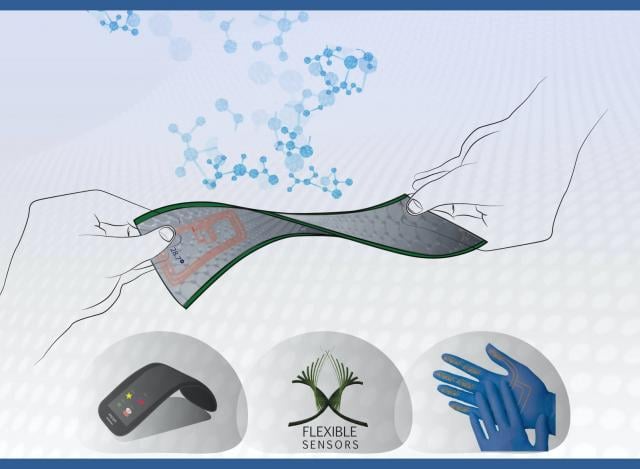
Learn about novel sensing tools that make use of nanotechnology to screen, detect and monitor various events in personal or professional life. Together, we will lay the groundwork for infinite innovative applications, starting from diagnosis and treatments of diseases, continuing with quality control of goods and environmental aspects, and ending with monitoring security issues.

Nov 2nd 2026
5-12 Weeks
Quantum Optics 1 : Single Photons (Coursera) Coursera
École Polytechnique

Quantum Optics 1 : Single Photons (Coursera)

This course gives you access to basic tools and concepts to understand research articles and books on modern quantum optics. You will learn about quantization of light, formalism to describe quantum states of light without any classical analogue, and observables allowing one to demonstrate typical quantum properties of these states. These tools will be applied to the emblematic case of a one-photon wave packet, which behaves both as a particle and a wave.

Nov 2nd 2026
5-12 Weeks
Microwave engineering and antennas (Coursera) Coursera
Eindhoven University of Technology

Microwave engineering and antennas (Coursera)

This unique Master-level course provides you with in-depth know-how of microwave engineering and antennas. The course combines both passive and active microwave circuits as well as antenna systems. Future applications, like millimeter-wave 5G/beyond-5G wireless communications or automotive radar, require experts that can co-design highly integrated antenna systems that include both antennas and microwave electronics. We will provide you with the required theoretical foundation as well as hands-on experience using state-of-the-art design tools. The web lectures are supported by many on-line quizzes in which you can practice the background theory.

Oct 26th 2026
5-12 Weeks
Controle de Sistemas no Plano-s (Coursera) Coursera
Instituto Tecnológico de Aeronáutica

Controle de Sistemas no Plano-s (Coursera)

Após esse curso você será capaz de esboçar o Lugar Geométrico das Raízes (LGR - Root Locus) do denominador da Função de Transferência em Malha Fechada a partir dos polos e zeros da Função de Transferência em Malha aberta. Você também será capaz de projetar controladores de avanço de fase para atender simultaneamente requisitos de desempenho de amortecimento e de velocidade da resposta.

Oct 26th 2026
5-12 Weeks
Materials Data Sciences and Informatics (Coursera) Coursera
Georgia Institute of Technology

Materials Data Sciences and Informatics (Coursera)

This course aims to provide a succinct overview of the emerging discipline of Materials Informatics at the intersection of materials science, computational science, and information science. Attention is drawn to specific opportunities afforded by this new field in accelerating materials development and deployment efforts.

Nov 2nd 2026
5-12 Weeks