EdX

Pre-University Physics (edX)

Pre-University Physics (edX)

Prepare for your technical studies by reviewing the fundamentals of physics. Become familiar with the way physics and physics-related topics are taught at university level. Physics is the foundation of many important science and engineering disciplines. Understanding its basics is fundamental for advanced studies. In this course, you will have the chance to review the fundamentals either for your own interest, or to ensure you have a smooth start in the first year of your Bachelor’s degree.

Class Deals by MOOC List - Click here and see EdX's Active Discounts, Deals, and Promo Codes.

The course aims to close the readiness gap between high school and university. It was specifically developed for potential future students: it covers physics topics that are a prerequisite for many engineering programs, but will also show you how these topics are applied in the various follow-up studies (For example in Applied Physics, Aerospace Engineering, Mechanical Engineering or Electrical Engineering). The course not only covers the content needed for further study but also introduces the different ways in which physics is presented at university level to ensure an easy entry to a new degree program.
This course is intended for:

  • Prospective engineering students who want to refresh their physics knowledge before starting university
  • High school students who would like an additional challenge in physics not offered by their school
  • Engineering students already enrolled in university who realize that they have a gap in their physics knowledge
  • Other people who are interested in university level physics

This course is part of the Science and Engineering Prep: Pre-university Calculus and Physics Professional Certificate.

What you'll learn
On completion of the course, participants will:

  1. have a basic understanding of the following physics topics: mechanics, electricity and magnetism, and waves.
  2. be able to apply this knowledge in various engineering contexts.
  3. be introduced to the academic approach to physics.
  4. be introduced to the academic approach to physics.

In particular, the successful participant will be able to:
1) solve physics problems in an algebraic way without specifying numerical values,
2) provide order-of-magnitude estimations without using calculation aids,
3) apply basic differential and integral calculus to physics problems,
4) work with vectors at a conceptual (non-quantitative) level.

Syllabus

Module 1: Mechanics

  • Force and Motion
  • Multiple Forces
  • Work
  • Energy
  • Circular Motion

Module 2: Electricity and Magnetism

  • Electric Force and Field
  • Electric Potential and Electric Energy
  • Electrical Circuits
  • Magnetic Fields
  • Capacitors

Module 3: Waves

  • Introduction to waves
  • Harmonic motion
  • Coupled oscillations
  • Travelling waves
  • Standing waves

Prerequisites
This course revises high school level physics and moves on to show how it is presented at university level. It closes the readiness gap between high school and university. Participants should have the following background knowledge:
high school level calculus (or equivalent), including knowledge of derivatives and integrals.
high school level physics.
Go to Class
MOOC List is learner-supported. When you buy through links on our site, we may earn an affiliate commission.

Related Courses

Transmisión de energía eléctrica (edX) EdX
Tecnológico de Monterrey,TecdeMonterreyX

Transmisión de energía eléctrica (edX)

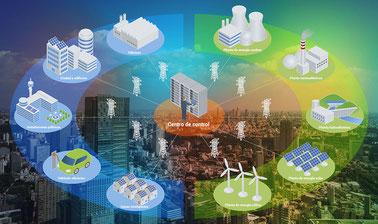
Aprende cómo se transmite y se distribuye la electricidad y cómo este conocimiento puede ser aplicado para maximizar la transmisión de energía eléctrica. Caso de estudio en el sistema eléctrico mexicano. El conocer la manera en que funciona el sistema eléctrico mexicano como caso de estudio genera competencias importantes en el mundo actual y permite tener conocimientos de distribución eléctrica que se pueden usar en otros países.

Self Paced
Self-Paced
Cellular Polymers: Structure, Properties, Processing, Applications (edX) EdX
University of Bayreuth,BayreuthX

Cellular Polymers: Structure, Properties, Processing, Applications (edX)

Take our MOOC and dive deep into Cellular Polymers. Understand what makes them superior to other materials, how they are processed and why they are used in countless applications in our everyday life. This MOOC is your first step in the pioneering field of Cellular Polymers that connects chemistry, physics, materials science, engineering, and technology. Get yourself ready and enroll now.

Self Paced
Self-Paced
Introduction to Quantum Computing for Everyone (edX) EdX
University of Chicago,UChicagoX

Introduction to Quantum Computing for Everyone (edX)

This first course in quantum computing is for novices and requires learners to have only basic algebra. It covers the future impacts of quantum computing, provides intuitive introductions of quantum physics phenomenon, and progresses from single operations to a complete algorithm. Quantum computing is coming closer to reality, with 80+ bit machines in active use. This course provides an intuitive introduction to the impacts, underlying phenomenon, and programming principles that underlie quantum computing.

Self Paced
Self-Paced
Pre-University Calculus (edX) EdX
Delft University of Technology,DelftX

Pre-University Calculus (edX)

Prepare for Introductory Calculus courses. Mathematics is the language of Science, Engineering and Technology. Calculus is an elementary Mathematical course in any Science and Engineering Bachelor. Pre-university Calculus will prepare you for the Introductory Calculus courses by revising four important mathematical subjects that are assumed to be mastered by beginning Bachelor students: functions, equations, differentiation and integration.

Self Paced
Self-Paced
Fundamentos de Mecánica para Ingeniería (edX) EdX
Universitat Politècnica de València,UPValenciaX

Fundamentos de Mecánica para Ingeniería (edX)

Estudiaremos la cinemática y la dinámica del punto, los conceptos de trabajo y potencia y la energía mecánica. Se aborda el estudio del universo físico analizando objetos en movimiento. Se definen y analizan todas las magnitudes y leyes físicas que permiten describir geométrica y causalmente el movimiento de cuerpos representados por un punto.

Self Paced
Self-Paced
Cavity Quantum Optomechanics (edX) EdX
École Polytechnique Fédérale de Lausanne,EPFLx

Cavity Quantum Optomechanics (edX)

Fundamentals of optomechanics. Basic principles, recent developments and applications. Optomechanics is the study of the interaction between light and mechanical systems which can result in the manipulation of the state of both light and the mechanics. The nature of this interaction gives rise to a wide range of applications in both fundamental physics and technological advancements. In this course, you will learn the concepts and tools required for conducting research in the field of cavity optomechanics.

Self Paced
Self-Paced
Cosmic Rays, Dark Matter, and the Mysteries of the Universe (edX) EdX
Waseda University,WasedaX

Cosmic Rays, Dark Matter, and the Mysteries of the Universe (edX)

Join us on a unique exploration of one of the universe’s deepest mysteries: cosmic rays. In the Universe, high-energy cosmic rays are violently propagating in space. While we know these cosmic rays come from outside of the solar system, exactly how and where they originate is a mystery. Professor Shoji Torii from Waseda University and many researchers from around the world, believe that understanding about their origin will help resolve the mysteries of the Universe, such as, supernova remnants, dark matter, and even the Universe’s evolution.

Self Paced
Self-Paced
Quantum Mechanics for Scientists and Engineers 2 (edX) EdX
StanfordOnline

Quantum Mechanics for Scientists and Engineers 2 (edX)

This course covers key topics in the use of quantum mechanics in many modern applications in science and technology, introduces core advanced concepts such as spin, identical particles, the quantum mechanics of light, the basics of quantum information, and the interpretation of quantum mechanics, and covers the major ways in which quantum mechanics is written and used in modern practice.

Self Paced
Self-Paced
The Basics of Transport Phenomena (edX) EdX
Delft University of Technology,DelftX

The Basics of Transport Phenomena (edX)

Learn the basic framework to work on a broad spectrum of engineering problems concerning transfer of heat, mass and momentum. Learn through examples of everyday processes at home, in the lab and in industry. Have you ever wondered why ventilation helps to cool down your hot chocolate? Do you know why a surfing suit keeps you warm? Why iron feels cold, while wood feels warm at room temperature? Or how air is transferred into aqueous liquids in a water treatment plant? How can we sterilize milk with the least amount of energy? How does medicine spread in our tissue? Or how do we design a new cooling tower of a power plant? All these are phenomena that involve heat transfer, mass transfer or fluid flow.

Self Paced
Self-Paced